

Daily Skincare Essentials for Men: What You Actually Need
Most lists say cleanser, moisturiser and sunscreen. Here is what male skin genuinely needs every day, what it needs only sometimes, and what has been sold to you as essential.
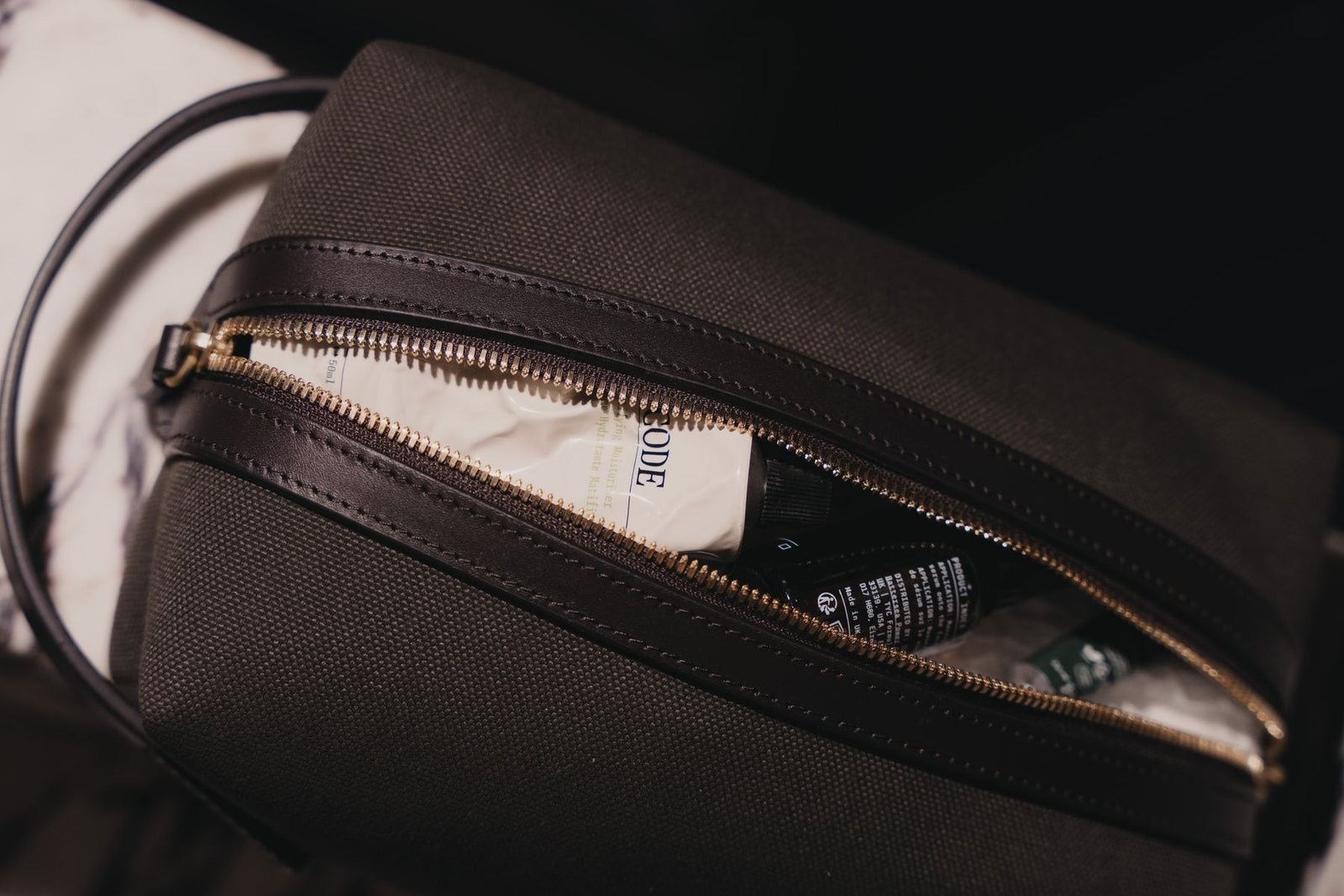
Every list of men's skincare essentials arrives at the same three products: a cleanser, a moisturiser and a sunscreen. That list is not wrong. It is general. It was written to be safe for all skin, which means it does not account for the ways male skin actually differs, and it does not tell you which of the three is doing most of the work on any given day.
This guide takes the question seriously. What does a man's skin genuinely need every day, what does it need only sometimes, and what has been sold to you as essential because it is easy to sell. The answer is shorter than most routines, and the reasoning behind it is well documented.
Those figures come from an independent four-week consumer trial of the two-step YCODE regime, the Hydrating Face Serum used with the Mattifying Moisturiser, across a panel of 50 men.
What Actually Makes Something Essential
A product earns the word essential on one test. Remove it, and the skin measurably gets worse. Everything that fails that test is optional, and optional is not an insult. Optional means you choose it for a reason, on a day when there is a reason.
Judged that way, most of what sits in a bathroom cabinet is optional. Toner is optional. Exfoliant is optional and, used daily, actively counterproductive. Masks, essences and the middle six steps of a ten-step routine are optional. What survives the test is narrow: keep the skin hydrated, keep the barrier intact, and protect it when the sun is genuinely strong.
What Male Skin Actually Asks For
Men's skin runs around 20 to 25% thicker and produces twice as much oil. It also has a different pH, a denser collagen structure, and takes the daily stress of shaving12. Those differences do not call for different marketing. They call for a different formula, and they change which steps matter most.
- Water held in the upper layers is the first requirement. Hydration is not the same as oil. Skin can produce plenty of sebum and still be short of water, which is why oily men so often report tightness3. What you notice? Skin that feels comfortable rather than tight by mid afternoon.
- A barrier that keeps the water there is the second. Humectants draw water in, lipids stop it leaving. Without the second step the first one evaporates45. What you notice? Less shine by lunchtime, because skin stops overproducing oil to compensate.
- Oil balanced, not stripped is the third. Harsh cleansing removes sebum the skin then works to replace, and the rebound is usually worse than the starting point. What you notice? Fewer congested areas around the nose and forehead.
- Protection when exposure is real is the fourth. Ultraviolet light is the primary driver of visible skin ageing, which is a reason to be deliberate about strong sun rather than anxious about daylight6. What you notice? Nothing for years, and then a great deal.
Hydration and moisturisation are two different jobs. One puts water into the skin. The other stops it leaving. A routine that does only the first has done half the work.
Where Cleansing Fits
Washing your face matters, and it is the step people overcomplicate most. The purpose is to remove the day, not to strip the skin. A gentle wash morning and night is sufficient for most men, and the evidence for anything more aggressive is thin. If your skin feels squeaky after cleansing, the cleanser is too harsh, and the oil it removed will be back within hours in greater volume.
What you wash with matters less than how you wash. Keep it mild, keep it brief, and judge a cleanser by how your skin feels ten minutes later rather than by how much it foams. Then spend your attention on the steps that follow, because that is where formulation changes the outcome.
Where Sun Protection Fits
Ultraviolet light is the main driver of the visible signs of ageing, so sun protection belongs in any honest account of skin health6. The useful framing is deliberate rather than reflexive. When the sun is strong or you are out in it for a long stretch, in the middle of a summer day, on holiday, on water or on snow, cover up, find shade, or use a sunscreen. Sensible sun at the right times is good for you, and the body needs some of it to make vitamin D.
What Is Not Essential
Toner was designed to correct the pH swing left by old, alkaline soaps. Modern cleansers are pH balanced, so for most men the step solves a problem that no longer exists. Daily exfoliation removes the barrier you are otherwise trying to build. Ten-step routines borrowed wholesale from other markets add cost and complexity without adding a mechanism. None of these are harmful in moderation. They are simply not the reason anyone's skin improves.
The Two Steps That Do Most of the Work
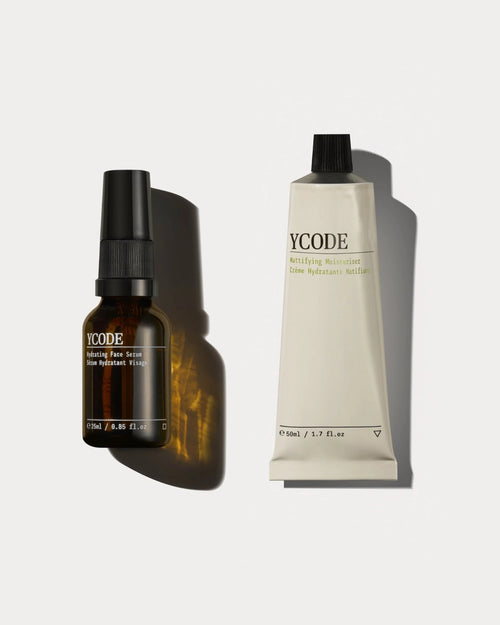
Strip the category back to what survives the essential test, and you are left with two things done consistently: put water into the skin, then stop it leaving. That is the whole argument for a two-step routine, and it is why we built one.
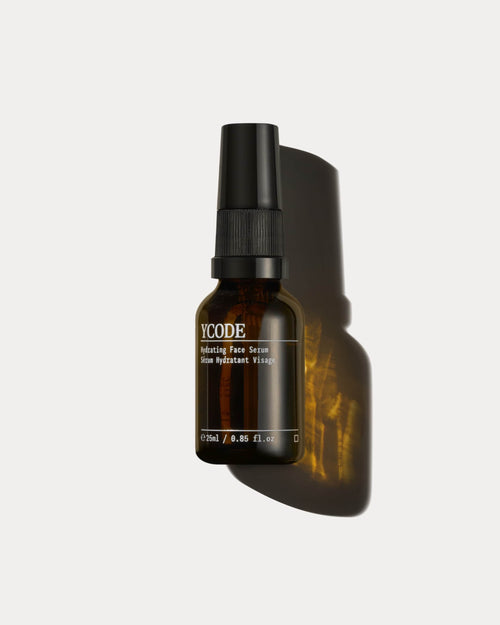
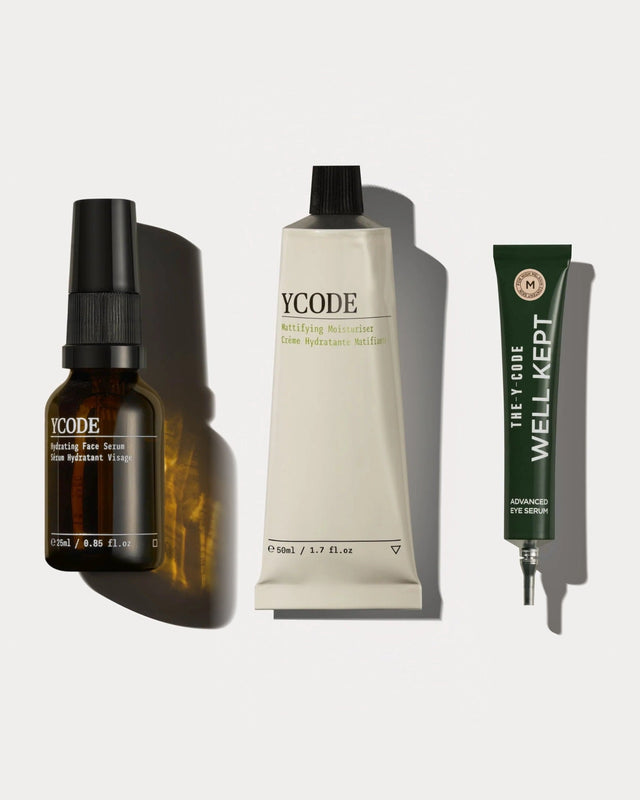
Hydrating Face Serum
Marine actives and sodium hyaluronate carry water into the upper layers of the skin and hold it there. It absorbs in seconds and leaves no film, which is the practical requirement for a routine you will actually keep. 25 mL.
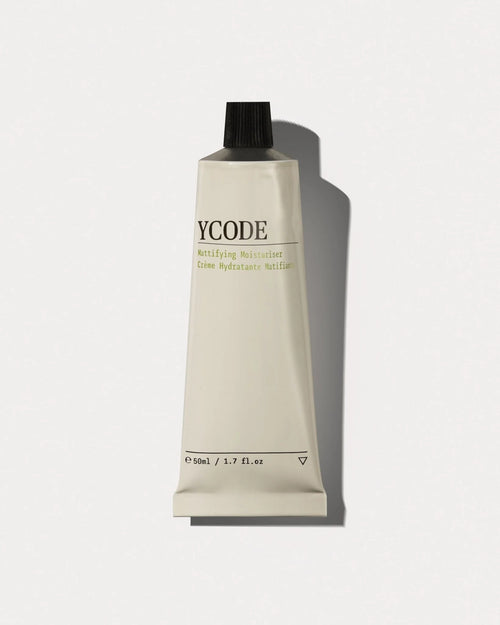
Mattifying Moisturiser
The seal. It supports the barrier so the hydration underneath stays put, and balances oil rather than stripping it, so shine comes down without the rebound. 50 mL.
Together they are The Daily Essentials, and the trial figures at the top of this article are what 50 men reported after four weeks of using exactly that pair. If dark circles or puffiness are your specific concern, that is the conditional tier, and the Advanced Eye Serum is the targeted step.
FAQs
What are the daily skincare essentials for men?
Do men need a different routine to women?
Is a moisturiser enough on its own?
Do I need a toner or an exfoliant?
How long before a two-step routine shows?
If you want the shortest routine that actually holds up, start with hydration and a barrier that keeps it. If you would rather be matched to the right products for your skin, the Find What Works quiz asks nine questions and takes about a minute.
This article is for educational purposes and is not a substitute for professional medical advice.
- Luebberding S, Krueger N, Kerscher M. Skin physiology in men and women: in vivo evaluation of 300 people including TEWL, SC hydration, sebum content and skin surface pH. International Journal of Cosmetic Science. 2013;35(5):477-83.
- Rahrovan S, Fanian F, Mehryan P, Humbert P, Firooz A. Male versus female skin: what dermatologists and cosmeticians should know. International Journal of Women's Dermatology. 2018;4(3):122-30.
- Bravo B, Correia P, Goncalves JE, Sant'Anna B, Kerob D. Benefits of topical hyaluronic acid for skin quality and signs of skin aging. Dermatologic Therapy. 2022;35(12):e15903.
- Purnamawati S, Indrastuti N, Danarti R, Saefudin T. The role of moisturizers in addressing various kinds of dermatitis: a review. Clinical Medicine and Research. 2017;15(3-4):75-87.
- Nisbet SJ, Targett D, Rawlings AV, et al. Single application of lamellar moisturizers provides significantly increased hydration of the stratum corneum. Skin Research and Technology. 2019.
- Rittie L, Fisher GJ. Natural and sun-induced aging of human skin. Cold Spring Harbor Perspectives in Medicine. 2015;5(1):a015370.

I started YCODE because most skincare was never designed for men’s skin. What I write here is what the formulators taught me, and what the trials actually found.
Continue reading
VIEW ALL →
Stress and poor sleep have a way of becoming visible. The eyes look heavier....

Your skin can notice the change of season before you reach for a coat....
Three formulas focus on the major concerns men tend to see across the face...












































































