

What autumn does to a man's skin
Your skin can notice the change of season before you reach for a coat. What autumn actually changes, why oily skin can still be dehydrated, and the small adjustments that matter.

Your skin can notice the change of season before you reach for a coat. As temperatures fall and the air becomes drier, the surface of the skin has to work harder to retain water. Indoor heating, wind, travel and longer days add further pressure.
The first signs are often easy to overlook. Skin feels slightly tighter after washing. Texture becomes more visible. Fine dehydration lines look deeper. The face can appear duller or more tired, even while the forehead and nose continue producing oil.
That combination is not contradictory. Autumn changes several parts of the skin at once.
The weather changes the conditions your skin is working in
Skin is the boundary between your body and the environment. Changes in temperature and humidity alter the conditions on either side of that boundary.
The outermost layer, the stratum corneum, is built from flattened skin cells held together by a mixture of lipids. Together, they form a barrier that slows the movement of water out of the skin and helps protect it from the world around it.
When the surrounding air contains less moisture, the amount of water held within this outer layer can fall.
In a human study, only three to six hours in a low-humidity environment reduced the water content of the stratum corneum and changed the pattern of the skin's surface. Researchers also recorded increased roughness and concluded that repeated exposure could contribute to fine lines associated with dehydration 2.
The visible change is straightforward. A well-hydrated surface reflects light more evenly. When it becomes rougher, light catches every small variation, making texture and fine lines easier to see.
This is why a face can look fresher in humid summer air and more tired as autumn begins, even when nothing else in the routine has changed.
Men's skin changes with the seasons too
Men's skin is thicker, produces more oil and has a denser collagen structure than women's skin 6. None of that makes it immune to seasonal change.
A study involving 100 men measured hydration, water loss, oil, elasticity, wrinkles, pores, sensitivity and skin-surface pH in summer and winter. The researchers found significant seasonal differences in hydration across the forehead and cheeks. Oil production, sensitivity, visible pores and surface pH also changed 1.
The important point is that these measurements did not all move in the same direction.
Skin is not simply oily or dry. Its oil production, water content, barrier function and sensitivity are different systems. Each can respond differently to the same change in weather 45.
That is why a single label such as "oily skin" rarely describes everything happening on a man's face.
Oil is not hydration
Sebum is the oil produced by the sebaceous glands. Hydration is the water held within the skin.
A face can produce plenty of sebum while the outer skin remains short of water. This often appears as shine across the forehead and nose alongside tightness, rough texture or dehydration lines elsewhere.
Trying to solve the whole problem by stripping away oil can leave the skin feeling less comfortable without improving its ability to hold water. Covering the surface with a heavy product can create the opposite problem, leaving it coated without addressing the changing condition beneath.
The better approach is to treat oil and hydration as related but distinct concerns.
Skin needs water drawn into it. It needs support for the barrier that keeps that water there. It can also benefit from ingredients that help manage excess oil, alongside light surface control for the shine already visible.
This is the principle behind using a water-light serum followed by a moisturiser. The two textures are not repeating the same step. They perform complementary jobs.
The barrier determines how well the result lasts
Applying hydration is useful. Retaining it is what makes the difference last.
The skin barrier controls the movement of water out of the skin. When it is working well, the surface remains smoother and more comfortable for longer. When it is under pressure, hydration disappears more quickly and the skin becomes easier to irritate.
Recent laboratory research using a reconstructed human epidermis found that even one hour of low-humidity exposure increased water loss and affected proteins involved in the structure of the outer skin and its tight junctions. Repeated exposure to dry air was considered capable of contributing to the development of dry skin 3.
A stronger barrier does more than reduce tightness. By helping skin hold water, it supports a smoother surface, softer-looking dehydration lines and a more consistent appearance through the day.
It also gives skin greater resilience when several demands arrive together, such as colder air outside, heating indoors, a flight, poor sleep and a long working day.
Autumn does not change your skin type. It changes the conditions your skin is working in.
Why the face can look older when it is dehydrated
Autumn does not alter the underlying age of your skin. It can, however, make several signs of ageing more visible.
When the outer skin loses water, its surface becomes less supple. Fine lines can look more pronounced, particularly across the forehead and around the eyes. Rougher texture creates small shadows, while dullness reduces the healthy reflection associated with smoother skin.
The effect can make the whole face look older or more tired without representing a sudden structural change.
Restoring hydration helps soften that surface effect. Supporting collagen and the underlying structure is the longer piece of the work.
This is why a useful routine needs both. Hydration improves what you can see and feel quickly. Niacinamide, microalgae, prebiotics and peptides continue supporting tone, texture, the barrier and skin structure with consistent use.
The eye area often shows the change first
The skin around the eyes is thinner than the skin across most of the face. It has less room to disguise changes in hydration, texture and fluid retention.
When the surface becomes dehydrated, fine lines are easier to see. When sleep or travel changes, puffiness and shadow can become more pronounced. Rougher skin also reflects light less evenly, making the eye area appear darker or less rested.
That is why the eye area can look tired before the rest of the face feels particularly dry.
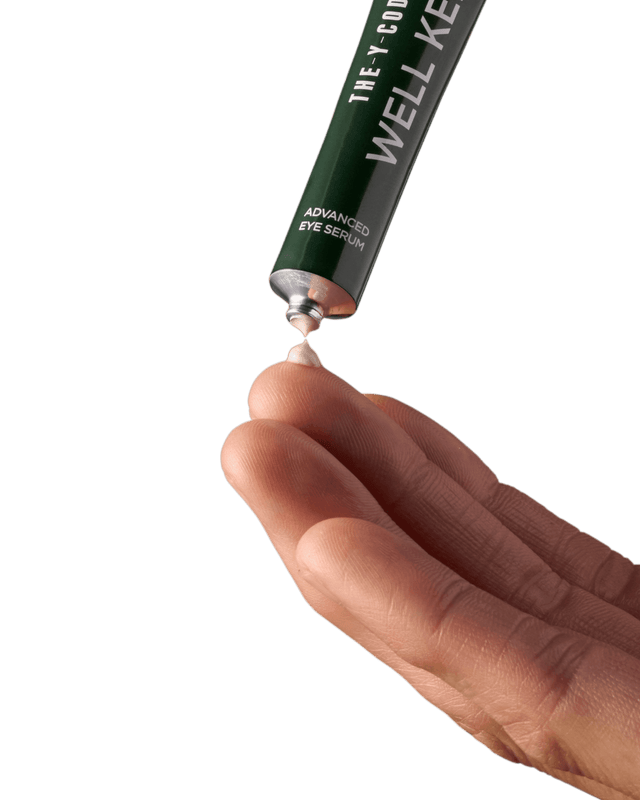
A face serum and moisturiser support the wider face and neck. A dedicated Advanced Eye Serum gives the thinner skin around the eyes concentrated support for hydration, smoothness, dark circles, puffiness and fine lines.
The aim is not simply to add another product. It is to give a visibly different area the specific support it requires.
Where biological intelligence becomes useful
Last Sunday, we explained what biologically intelligent skincare means.
Microalgae have survived for billions of years in environments where light, temperature, nutrients and salinity continually change. They respond by adjusting the compounds they produce, a natural process known as osmoadaptation.
YCODE uses Chlorella cultivated under controlled laboratory conditions. The active reads the condition of the skin and provides a blend of vitamins, minerals and peptides according to what it needs.
That support is not decided only on the first application. It continues adapting as the condition of the skin changes.
This matters because skin rarely experiences one demand at a time. A cold morning can become a heated office, followed by a flight or a late night. Hydration, comfort, oil and barrier resilience can all shift within the same week.
Biological intelligence allows one formula to remain relevant through those changes.
It does not mean that the product changes its ingredients inside the bottle. It means the microalgae-derived active responds to the condition it encounters and supports the skin accordingly.
How The Daily Essentials respond
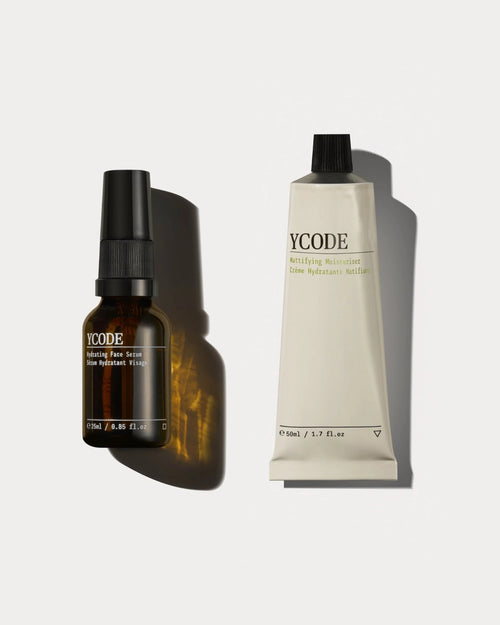
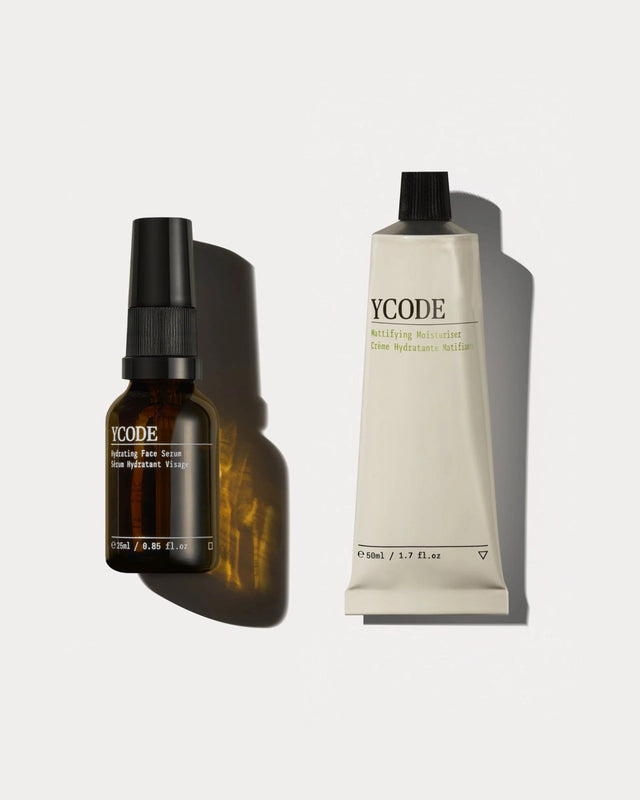
The Hydrating Face Serum and Mattifying Moisturiser approach seasonal change from two directions.
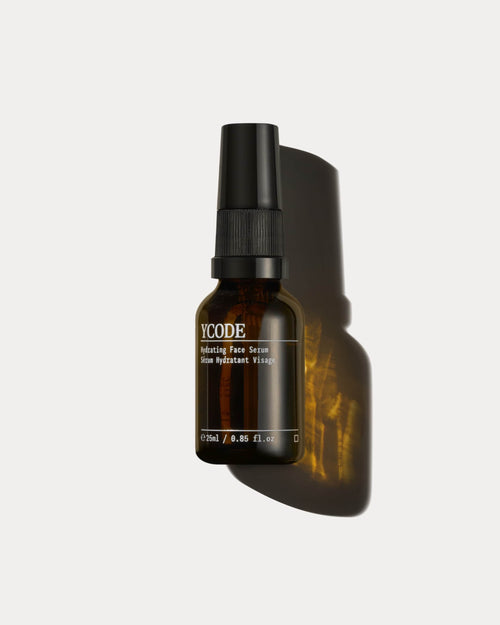
Hydrating Face Serum
Hyaluronic acid and glycerin draw water into the skin, helping it feel deeply hydrated and look smoother.
Niacinamide supports more even tone and texture while helping manage visible pores and excess oil. Prebiotics support the microbiome and skin barrier. A biomimetic peptide begins the longer work of supporting skin structure.
Biologically intelligent Chlorella adapts the vitamins, minerals and peptides it provides as the condition of the skin changes.
The formula is water-light and absorbs quickly, so it can increase hydration without leaving a heavy layer on the face.
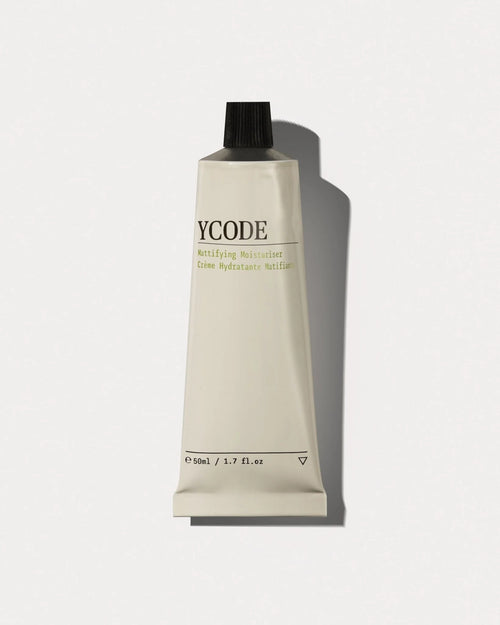
Mattifying Moisturiser
The moisturiser follows by helping reduce water loss, allowing the hydration provided by the serum to remain in the skin for longer.
Rice starch controls the shine already visible on the surface while preserving the natural reflection that makes skin look healthy. Chlorella adds further support for excess oil, while hyaluronic acid, prebiotics and a collagen-supporting peptide reinforce hydration, the barrier and skin structure.
Used together, the two products provide a broader range of active ingredients and a higher combined amount of several important ones.
The visible result is not only less tightness or shine. It is skin that looks smoother, fresher, more even and better cared for as the conditions around it change.
What to change in autumn
You do not need to replace your entire routine when the temperature falls. A few details make a larger difference.
- Apply serum to slightly damp skin. This gives the humectants water to work with. Apply one pump across the face and neck, working right up to the hairline and beneath facial hair.
- Follow with moisturiser. Use a pea-sized amount over the same area. The moisturiser helps reduce the escape of water and supports a more comfortable, consistent surface.
- Cover the whole face and neck. The hairline, neck and skin beneath facial hair are commonly missed. These areas experience the same changes in temperature and humidity as the rest of the face.
- Use the routine morning and night. Consistency gives the barrier, microbiome and longer-term structural ingredients time to work. Waiting until the skin feels tight means responding after the change has already become noticeable.
- Pay attention to the end of the day. The morning finish tells you how the products feel. The six o'clock result tells you how well the routine is working.
What to look for as the season changes
The earliest improvement is usually comfort. Skin feels less tight after washing and remains hydrated for longer.
Next comes the surface. Rough texture begins to look smoother, dehydration lines appear softer and the face reflects light more evenly.
As hydration, excess oil and the barrier improve together, the wider result becomes visible: skin that looks fresher, healthier and more resilient, even when the weather, travel or the demands of the day change.
Autumn does not change your skin type. It changes the conditions your skin is working in. A useful routine understands the difference.
Why does my skin feel drier in autumn?
Can oily skin still become dehydrated?
Why does my skin look more tired in colder weather?
Do men need a heavier moisturiser in autumn?
Should men with oily skin use moisturiser in autumn?
Why use a serum and moisturiser together?
Does the skin barrier become weaker in cold weather?
How quickly can low humidity affect skin?
What does biologically intelligent skincare do in autumn?
How long does an autumn skincare routine take?
Shop the Story
- A study on seasonal variation of skin parameters in Korean males. International Journal of Cosmetic Science, 2015. Source
- Effect of exposure of human skin to a dry environment. Skin Research and Technology, 2002. Source
- Effect of low humidity on the barrier functions of keratinocytes in a reconstructed human epidermal model. International Journal of Cosmetic Science, 2025. Source
- Regional and seasonal variations in facial sebum secretions. Skin Research and Technology, 2005. Source
- Evaluation of seasonal changes in facial skin with and without acne. Journal of Drugs in Dermatology, 2015. Source
- Male versus female skin: what dermatologists and cosmeticians should know. International Journal of Women's Dermatology, 2018. Source

I started YCODE because most skincare was never designed for men’s skin. What I write here is what the formulators taught me, and what the trials actually found.
Continue reading
VIEW ALL →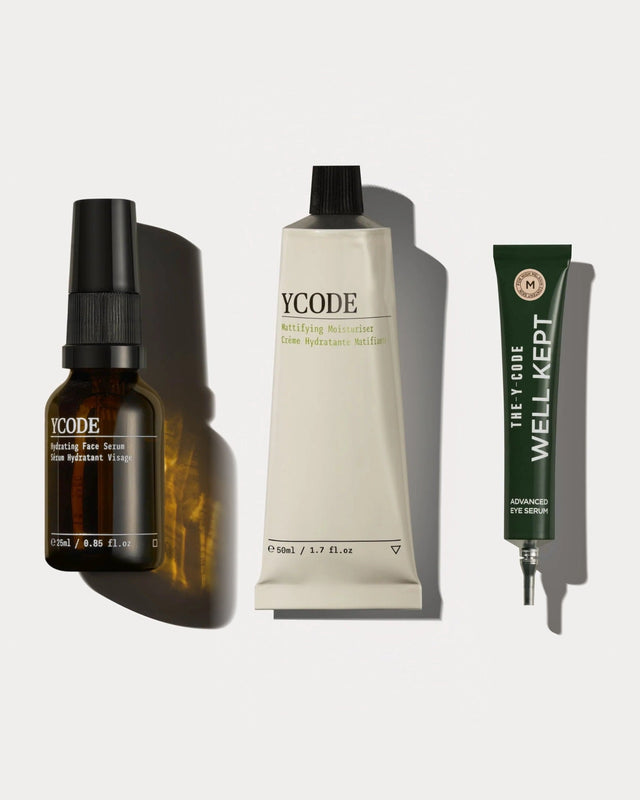
Three formulas focus on the major concerns men tend to see across the face...
The Daily Essentials improves the face and neck. Advanced Eye Serum adds concentrated support...
At one month, the smaller changes begin to read as one result: skin that...












































































