

Eye serum vs eye cream for men: which one does your skin need?
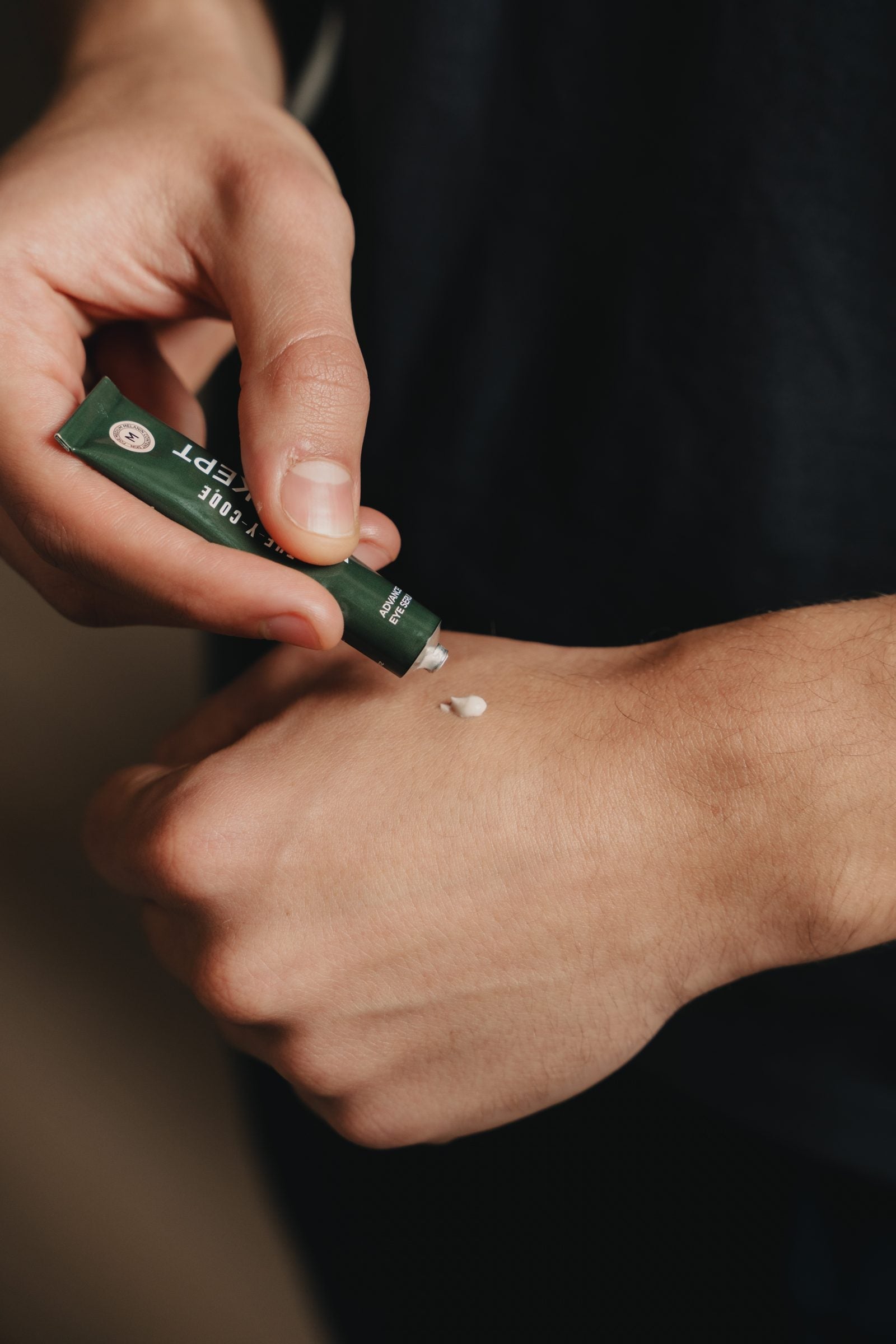
In short: a serum is lighter and more concentrated, and it absorbs faster; a cream is richer and more occlusive, meaning it sits on the surface to slow water loss. For most men, and for anyone with oilier skin, a serum is the better daily choice around the eye. A cream earns its place when skin is genuinely dry, tight or flaking. Below is how the two differ, and how to tell which one your face is asking for.
Advanced Eye Serum, ingredient study, 111 people, 15 days. These are figures for the actives the serum is built on, not a consumer trial of the finished product.
What is the actual difference between an eye serum and an eye cream?
The difference is not the marketing. It is the base. A serum is built on a thin, mostly water-based system carrying a high load of active ingredients, designed to sink in quickly and leave little behind. A cream is an emulsion of oil and water, thickened and often carrying occlusive agents that form a film on the skin. Those occlusives, petrolatum being the textbook example, work by sitting on top of the stratum corneum and cutting the rate at which water evaporates from it.1 It is an effective mechanism, and a heavy one.
Moisturisers do their work through three routes: occlusives that seal the surface, humectants that pull water into the upper layers, and emollients that fill the gaps between skin cells and improve the feel.2 A cream tends to lean on all three, occlusives included. A serum usually leaves the heavy occlusives out and concentrates on delivery. That single decision explains most of what you notice on the skin: the weight, the speed, the finish.
Which one suits men's skin?
Men's skin is measurably different, and the difference points towards a serum. On average it is thicker than women's, and it produces more sebum.3 A study of 300 people found that sebum output in men is not only higher but stays high with age, while in women it falls over a lifetime.4 More oil on the surface changes how a product behaves. A rich, occlusive cream layered onto skin that is already generating its own film tends to feel greasy, sit in the crease and, by mid-morning, look shiny rather than groomed.
A serum sidesteps that. Because it carries fewer of the thickening and sealing agents, it absorbs before it has a chance to pool, and it leaves the skin looking like skin. For the man who dislikes the feel of skincare, which is most men, this is usually the deciding factor. The category itself is the advantage, not any one brand's claims.
There is a second, less obvious reason the format matters: getting the active in. The skin's barrier is selective by size. Small molecules can pass through the stratum corneum, while large ones are mostly held at the surface, which is the basis of the well-established "500 Dalton rule" of skin penetration.6 A serum is built around that principle: a light, low-viscosity vehicle designed to carry small, bioavailable actives into the skin rather than to seal the surface, which is the job a rich, occlusive cream does well.1 On skin that is thicker and oilier to begin with, that delivery-first approach is the more logical way to reach the concern than to coat the face. It is why we formulate the treatment as a serum, around actives chosen to be small enough to work.
Does the under-eye really need something different?
Yes, and the reason is structural. The skin around the eye is the thinnest on the entire face. Mapping studies of facial skin place the least total thickness at the eyelid, well below the cheek, nose or brow.5 Thin skin shows what is underneath it, which is why tiredness reads first in this region and why it is the area men most often want to address.
Thin skin also has a smaller margin for error. Load it with a heavy, occlusive formula and product can migrate, settle into fine lines and feel congested. A lighter vehicle that absorbs cleanly is the more sensible match for the terrain. This is where the serum format and the anatomy happen to agree.
A serum is not a weaker cream. It is a different vehicle, built to deliver rather than to seal, and on skin that already makes its own film that is usually the better bargain.
When does an eye cream still make sense?
There is an honest case for a cream, and it is worth stating plainly. If your skin is genuinely dry, if it feels tight after washing, flakes in winter or has been roughened by wind and cold, the occlusive quality of a cream is doing something a serum cannot. Sealing the surface slows water loss and gives a compromised barrier time to recover.2 Occlusion is a real tool, and dry skin benefits from it.
The other case is habit. Some men simply prefer the cushion of a richer texture and will use it more consistently because they like how it feels. Consistency beats theory. The best formula is the one that gets used, and a cream that a man actually applies every morning will outperform a serum that stays in the drawer.
For most men most of the year, though, the balance tips the other way. Skin that runs normal to oily, in a temperate climate, does not need to be sealed. It needs a light, well-formulated treatment that goes on without fuss.
What is the YCODE approach?
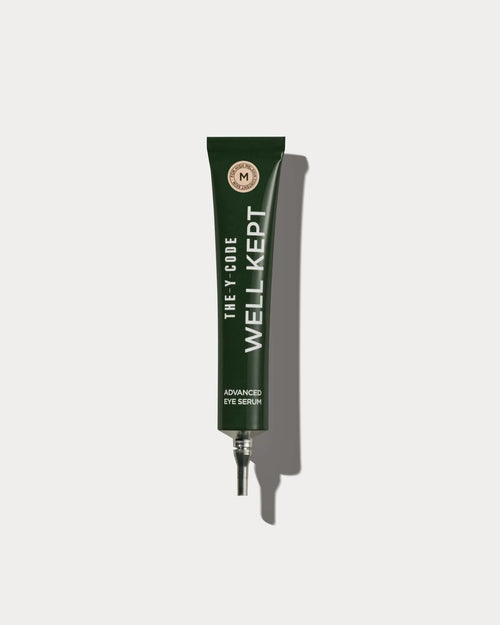
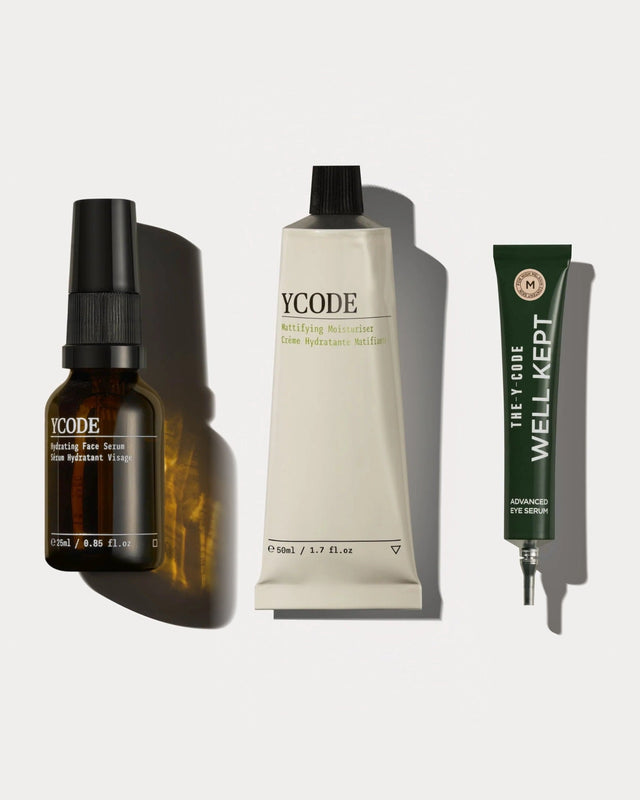
We built the Advanced Eye Serum as a serum on purpose. It is lightweight, it carries marine bioactives and wild ginger, and it comes in three formulas, M, M+ and M-, each developed for the different requirements of a different skin tone, so it works with your skin rather than sitting on top of it. The under-eye is the concern men raise most, and the format is chosen to suit the way men's skin actually behaves.
The actives in the Advanced Eye Serum come with their own evidence. In a 111-person, 15-day ingredient study, 90% saw dark circles reduced, 89% saw under-eye bags reduced and 86% saw the look of fine lines reduced. Those are ingredient-study figures rather than a trial of the finished serum, and we label them that way on purpose.
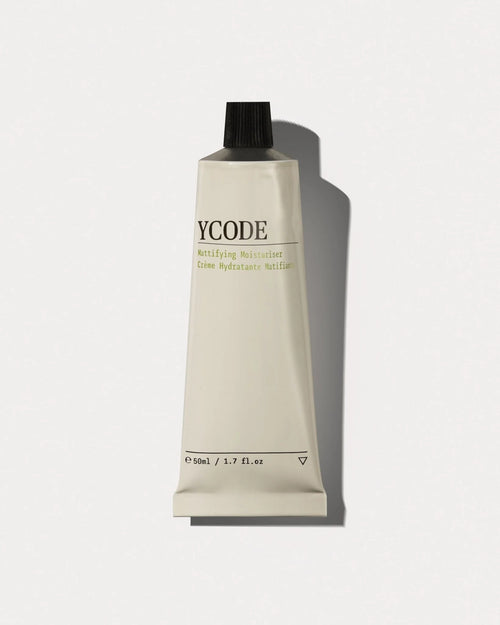
If your skin runs oilier and shine is part of the picture, pairing the serum with the Mattifying Moisturiser covers the wider face without adding weight.
Can I use a face serum around the eyes instead of a dedicated eye product?
Do I need both an eye serum and an eye cream?
Will an eye serum feel too light to do anything?
Is an eye serum better for oily skin than a cream?
When will I see a difference?
- Lodén M. Role of topical emollients and moisturizers in the treatment of dry skin barrier disorders. American Journal of Clinical Dermatology. 2003;4(11):771-788. PubMed
- Rajkumar J, Chandan N, Lio P, Shi V. The Skin Barrier and Moisturization: Function, Disruption, and Mechanisms of Repair. Skin Pharmacology and Physiology. 2023;36(4):174-185. PubMed
- Rahrovan S, Fanian F, Mehryan P, Humbert P, Firooz A. Male versus female skin: What dermatologists and cosmeticians should know. International Journal of Women's Dermatology. 2018;4(3):122-130. PubMed
- Luebberding S, Krueger N, Kerscher M. Skin physiology in men and women: in vivo evaluation of 300 people including TEWL, SC hydration, sebum content and skin surface pH. International Journal of Cosmetic Science. 2013;35(5):477-483. PubMed
- Chopra K, Calva D, Sosin M, et al. A comprehensive examination of topographic thickness of skin in the human face. Aesthetic Surgery Journal. 2015;35(8):1007-1013. PubMed
- Bos JD, Meinardi MMHM. The 500 Dalton rule for the skin penetration of chemical compounds and drugs. Experimental Dermatology. 2000;9(3):165-169. Wiley

I started YCODE because most skincare was never designed for men’s skin. What I write here is what the formulators taught me, and what the trials actually found.

Continue reading
VIEW ALL →
Stress and poor sleep have a way of becoming visible. The eyes look heavier....
Your skin can notice the change of season before you reach for a coat....
Three formulas focus on the major concerns men tend to see across the face...












































































