

Marine actives vs traditional anti-ageing ingredients: what works for men
The short answer is that no single ingredient wins outright. Traditional anti-ageing actives, chiefly the retinoids, carry the deepest clinical evidence for visible photoageing. Vitamin C and peptides sit behind them with useful but narrower data. Marine-derived actives are a newer, promising category with strong antioxidant and barrier credentials, though much of their most exciting work is still preclinical. At YCODE we lean marine for men's skin, and we would rather explain why than pretend the debate is settled.
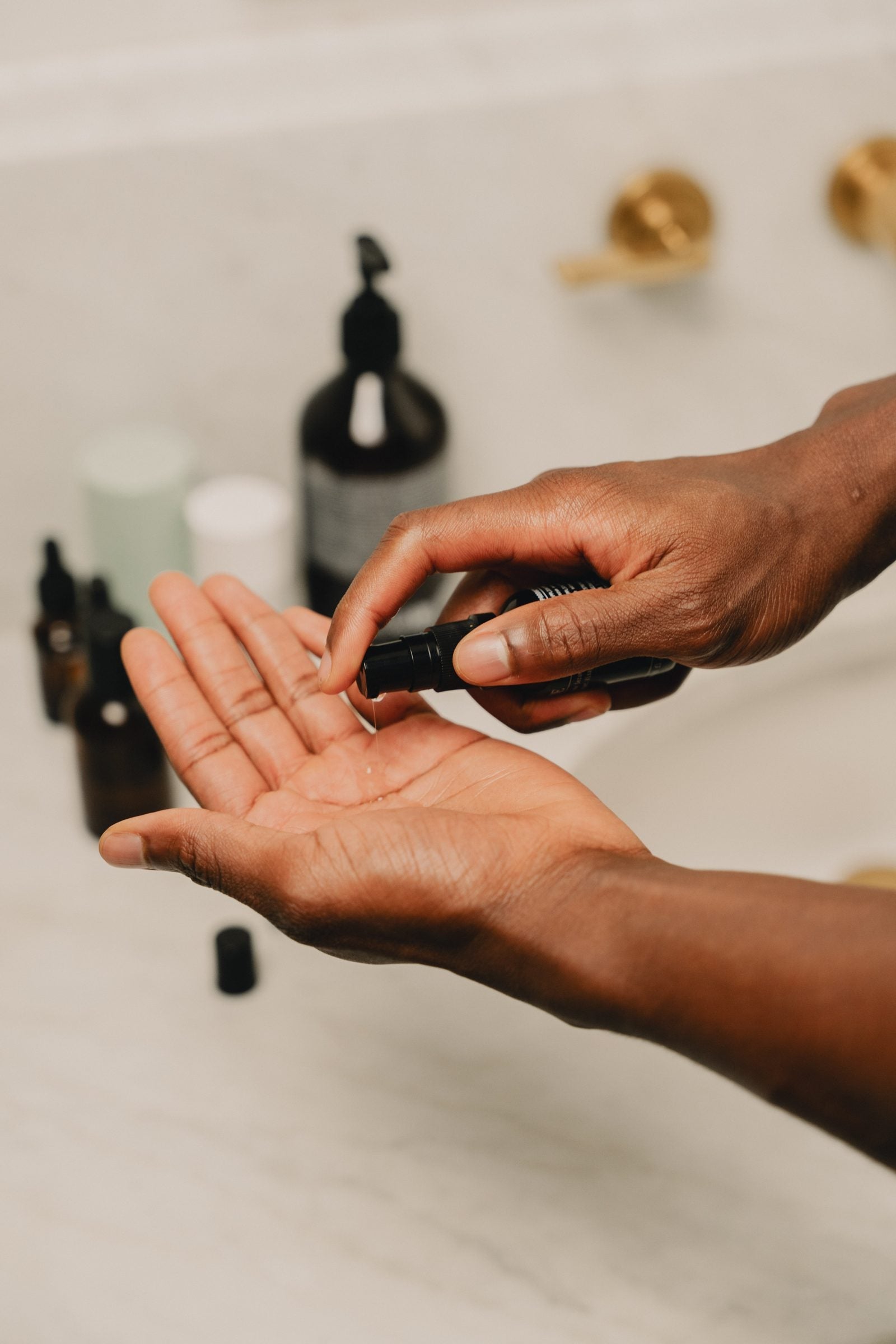
YCODE Regime, independent consumer trial, 50 men, four weeks.
What counts as a traditional anti-ageing ingredient?
The classics are the ones your dermatologist has recommended for decades. Retinoids, the family that includes retinol and prescription tretinoin, are the most studied. A broad clinical review found that various natural and synthetic retinoids produced both histological and clinical improvement in photoaged skin, largely by regulating cell turnover and prompting new collagen formation 1. That is a genuinely strong record, and it is the reason retinoids remain the reference point against which everything else is measured.
Vitamin C is the next name most people know. As one of the skin's principal antioxidants, ascorbic acid can reduce oxidative stress and promote collagen gene expression, and clinical evidence supports its role in increasing dermal collagen 2. The catch is practical. Ascorbic acid is notoriously unstable in formulation, which is why so much recent research focuses on stabilising it rather than on new proof of benefit 2.
Peptides are the third pillar, and here honesty matters most. A 2026 systematic review and meta-analysis of nineteen randomised controlled trials found that peptides were well tolerated and improved some measures, yet the pooled effect on wrinkles was modest and several endpoints were non-significant 3. Peptides are not a miracle. They are a gentle, evidence-light option that suits people who cannot tolerate stronger actives.
What are marine actives, and do they work?
Marine actives are compounds drawn from algae, seaweeds and other marine organisms. The category is broad, spanning polysaccharides, polyphenols, pigments, mycosporine-like amino acids and trace minerals. Marine algae carbohydrates in particular have been shown to carry antioxidant, anti-melanogenic and skin anti-ageing properties, and they are already widely used in cosmetic formulation 4.
The mechanism is where marine actives earn their place. A 2025 review of marine bioproducts describes how these compounds help maintain redox homeostasis, reduce oxidative stress, calm inflammation and, in some cases, absorb ultraviolet light 5. Since oxidative stress and low-grade inflammation are two of the main drivers of visible ageing, that is a sensible line of attack. The honest caveat is that a good deal of this evidence comes from laboratory and cell studies rather than large human trials. Marine actives look excellent on mechanism and safety. They do not yet have the decades of clinical head-to-head data that retinoids enjoy 5.
Which is better for tolerability?
This is where the comparison tilts, and it is the reason YCODE made the choice it did. Retinoids work, but they are famous for irritation, redness and peeling during the adjustment period, which is exactly what stops many men persisting past the first fortnight. Vitamin C is better tolerated but can sting at low pH and degrades quickly 2. Peptides are gentle but, as the meta-analysis showed, deliver only modest results 3.
Marine actives tend to be well tolerated, with antioxidant and barrier-supporting behaviour rather than the controlled irritation that retinoids rely on 45. For a man who wants something he will actually use every morning, without a stinging break-in period, tolerability is not a footnote. It is often the deciding factor between a routine that works and a bottle that gathers dust.
Retinoids have the deeper evidence base. Marine actives have the better tolerability. For daily use on men's skin, tolerability is often the deciding variable.
Why does YCODE lean marine for men's skin?
Men's skin is generally thicker and oilier, and most men want a routine that is quick, calm and hard to get wrong. Marine actives fit that brief. Our formulas are built around marine microalgae, specifically Chlorella vulgaris, alongside a wider set of marine bioactives chosen for antioxidant and barrier support. The category's tolerability profile suits daily use, and daily use is what actually moves the needle over months.
That is the category in general. Our specific active goes further. The marine microalgae at the heart of our face serum and moisturiser, a Chlorella vulgaris extract, is not a passive moisturising agent. It works with the skin's own biology: it drives cell renewal by stimulating the skin's growth-factor signalling, feeds and rebalances the skin microbiome, and prompts the skin to produce its own antimicrobial peptides, all while calming rather than stripping. That is a fundamentally different approach from forcing turnover with a retinoid. In its own placebo-controlled in-vivo testing it improved radiance by 51% on mature skin, with further measured gains in hydration and reductions in redness, sebum and blemishes.6 These are the ingredient maker's studies on small panels, presented as that, not as our own consumer trial. But the mechanism is exactly why we build on marine microalgae rather than chase a single hero molecule.
We are careful not to overclaim. We are not telling you that marine beats retinol in a trial, because that trial does not exist. What we can share is our own data. In an independent four-week consumer trial of the YCODE Regime across 50 men, 88% reported a stronger barrier and 84% said skin looked healthier and clearer. Those are consumer-trial figures rather than clinical proof, and we present them as exactly that.
The pragmatic view is that the best active is the one you will use correctly for long enough to see a change. For many men, a tolerable marine-led routine clears that bar more reliably than a potent retinoid they abandon in week two. If you are unsure where you sit, our two-minute skin quiz will point you to the right starting point.
And the category is not standing still. The most interesting recent work in marine actives has moved from the surface down to the cell. A newer generation of microalgae actives is being studied for its effect on the machinery of skin ageing itself, targeting pathways such as SIRT1 and NAD+ and helping protect the telomeres that cap our DNA, with early clinical data pointing to gains in firmness, elasticity and radiance and reductions in the look of wrinkles and fatigue. This is a long way from seaweed as a moisturiser. It is marine biotechnology aimed at how skin ages from the inside, and it is one reason we keep marine science at the centre of what we build.
Can you combine marine and traditional actives?
Yes, and often you should. These categories are not rivals so much as teammates. A stable vitamin C in the morning, a marine antioxidant layer for daily defence and a retinoid at night for those who tolerate it is a perfectly coherent stack. The evidence for each is strongest in different places, so combining them lets you draw on the antioxidant story of vitamin C and marine actives 245 and the collagen and turnover story of retinoids 1 without asking one ingredient to do everything.
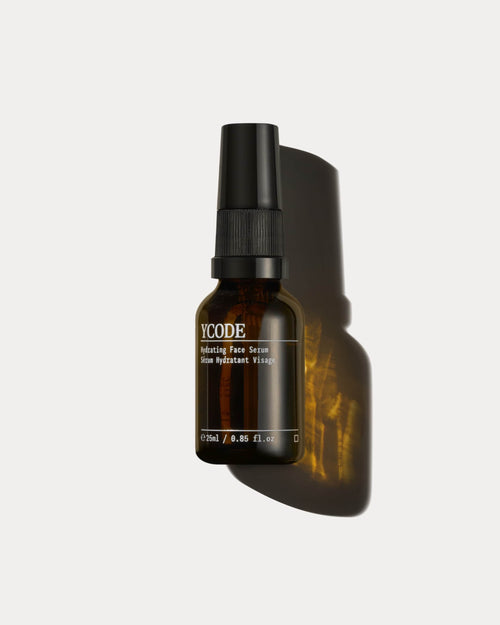
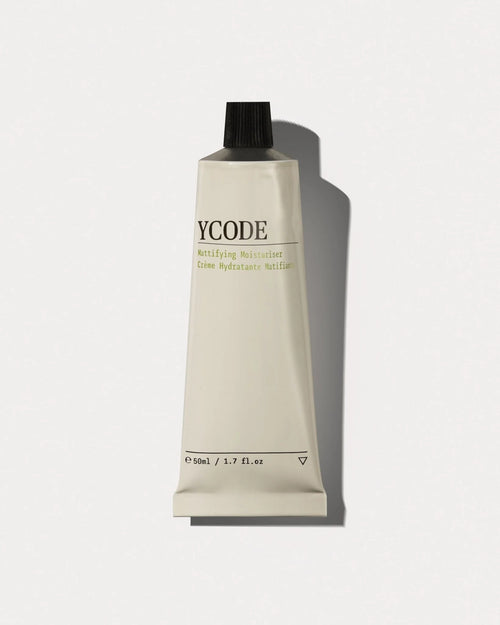
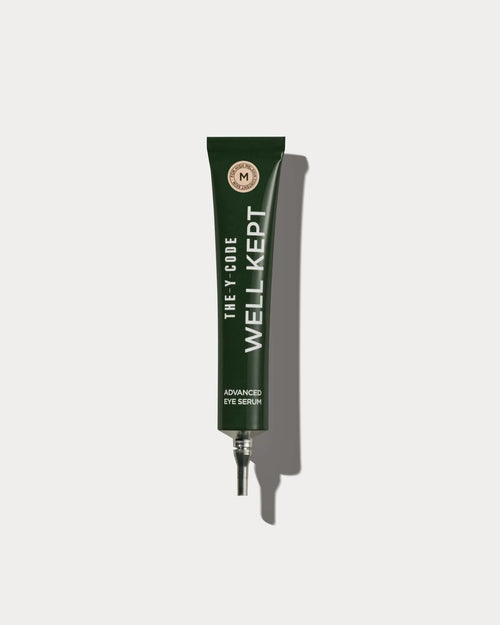
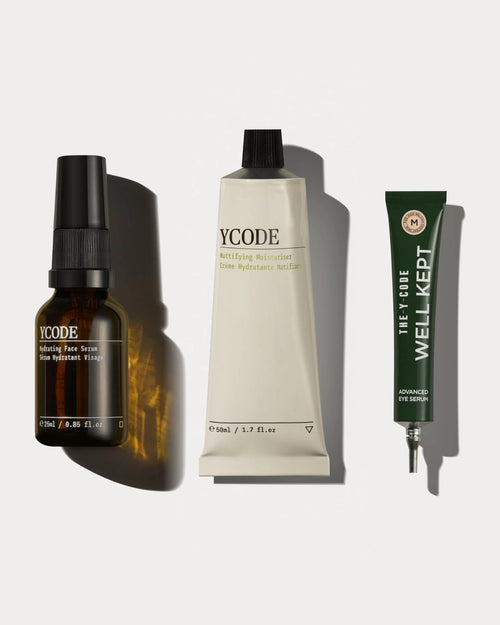
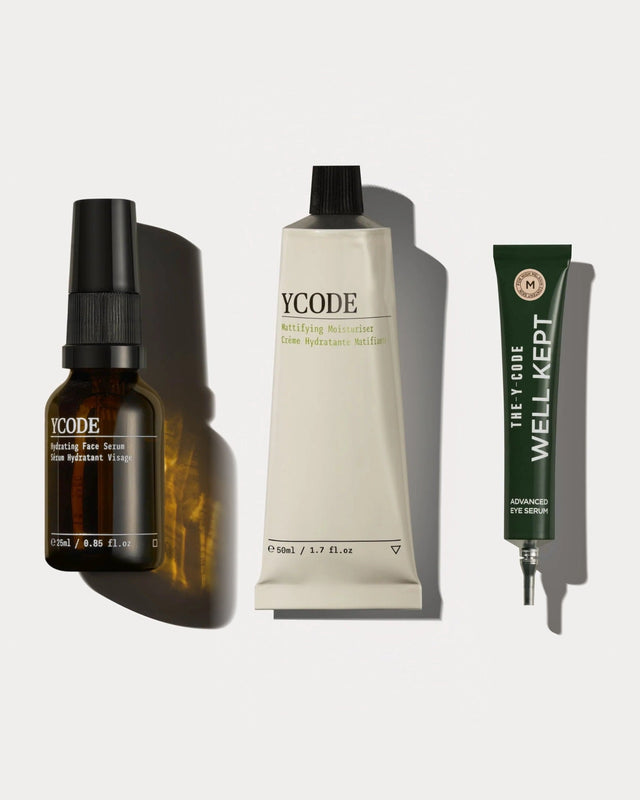
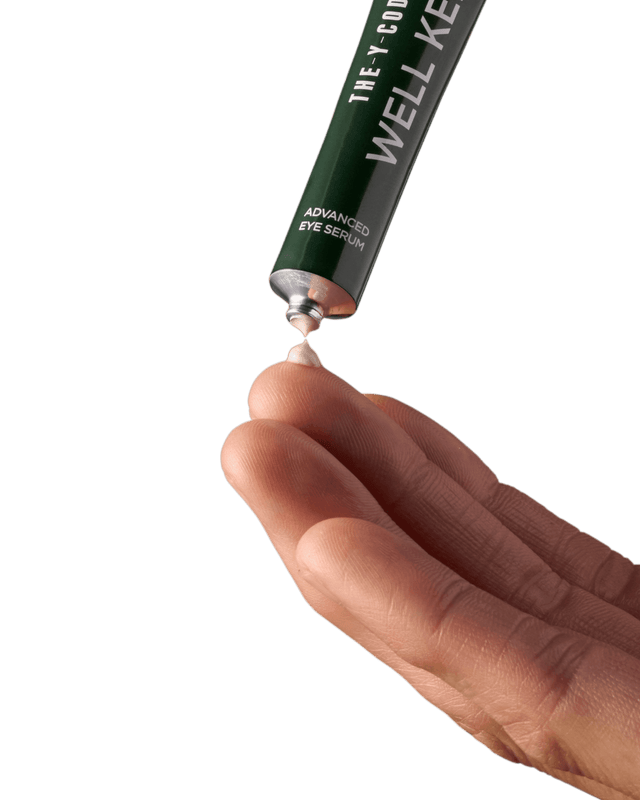
Our own system is deliberately marine-led and layered for men who want simplicity. If you want the full routine in one step, the YCODE Core Trio brings together the Advanced Eye Serum, Hydrating Face Serum and Mattifying Moisturiser, with the eye serum offered in three formulas, M, M+ and M-, for different skin tones.
None of this is only about ingredients. It is about the quiet difference a good routine makes when you catch yourself in the mirror and nothing pulls your eye, when your skin looks looked-after and you stop thinking about it at all. Looking well and feeling well travel together, and the reason to choose an active you will actually keep using is that, months in, it is not only your skin that is better for it.
Are marine actives better than retinol?
Do peptides really do much?
Is vitamin C worth using?
Why does YCODE use marine microalgae?
Can I use marine actives and retinol together?
Shop the Story
- Mukherjee S, Date A, Patravale V, Korting HC, Roeder A, Weindl G. Retinoids in the treatment of skin aging: an overview of clinical efficacy and safety. Clinical Interventions in Aging. 2006;1(4):327-348. Source
- Boo YC. Ascorbic Acid (Vitamin C) as a Cosmeceutical to Increase Dermal Collagen for Skin Antiaging Purposes: Emerging Combination Therapies. Antioxidants. 2022;11(9):1663. Source
- Nukaly HY, Halawani IR, Irtaza HM, et al. Oral and topical peptides for skin aging: systematic review and meta-analysis of randomized controlled trials. Frontiers in Medicine. 2026;13:1618306. PubMed
- Kim JH, Lee JE, Kim KH, Kang NJ. Beneficial Effects of Marine Algae-Derived Carbohydrates for Skin Health. Marine Drugs. 2018;16(11):459. Source
- Rosic N. Unveiling the Anti-Aging Potential of Marine Natural Bioproducts. Marine Drugs. 2025;23(4):165. Source
- Marine microalgae active (Chlorella vulgaris extract): in-vivo, double-blind, placebo-controlled efficacy studies. Ingredient manufacturer technical data, on file.

I started YCODE because most skincare was never designed for men’s skin. What I write here is what the formulators taught me, and what the trials actually found.
Continue reading
VIEW ALL →
Your skin can notice the change of season before you reach for a coat....
Three formulas focus on the major concerns men tend to see across the face...
The Daily Essentials improves the face and neck. Advanced Eye Serum adds concentrated support...












































































