

Men's Skincare Formulation Explained | YCODE
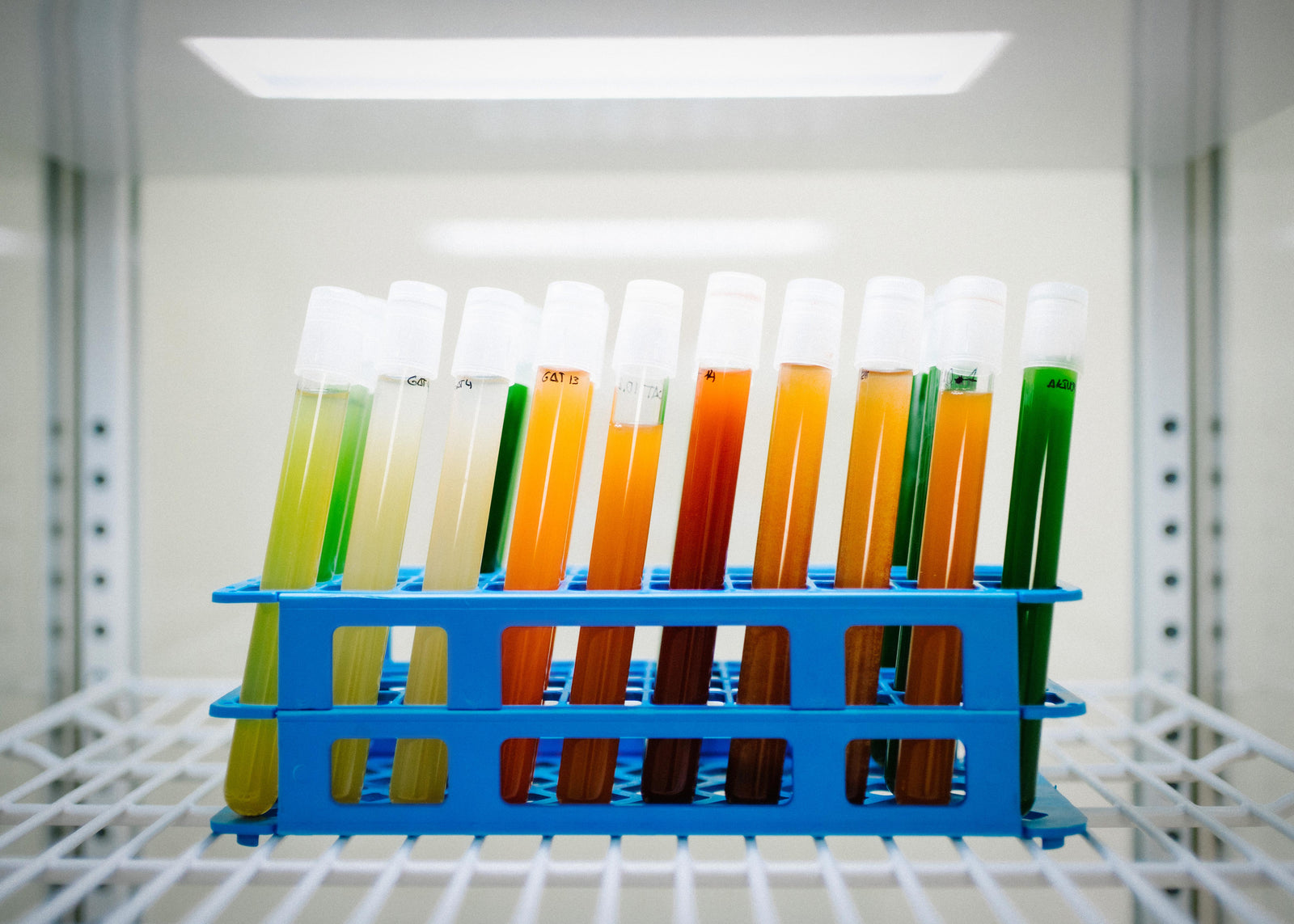
Male Skin Biology Is Well Documented
Male skin is 20 to 25% thicker than female skin, with greater collagen density across the dermis 1. It produces roughly twice the sebum, driven by higher testosterone activity in the sebaceous glands. It operates at a lower pH. It carries a stronger inflammatory response, particularly after shaving, which disrupts the men's skin barrier repeatedly across the most sensitive areas of the face.
These are documented characteristics of male skin biology. They affect how ingredients penetrate, how moisture is retained, how oil is managed, and how the barrier responds to daily stress. The question is whether all men's skincare products account for any of them.
What the Industry Says About Formulating for Men
In 2025, Augusto Garzon, Global Vice President of Men's Personal Care at Unilever, described the company's approach to Glossy:
"We're now building on the understanding we had of female skin care, for men."2
This is Unilever. Dove Men+Care and Axe each generate over a billion dollars in annual revenue. Garzon is the most senior executive responsible for men's personal care at the world's largest personal care company. His statement describes a formulation philosophy: start with female skincare knowledge. Apply it to men. He presents this as a current direction. It is worth considering what the previous one was.
A 2023 study published in Marketing Science by researchers at Northwestern University and UC Berkeley examined gender-based pricing across personal care. They found that more than 80% of personal care products carry a 'for men' or 'for women' label, but the differences between versions often sit in the branding rather than the active ingredients 3.
The label changes. The scent changes. The packaging changes. The question is what changes at the ingredient level.
Why the Formula Matters More Than the Label
Formulation is where the cost sits. New active ingredient systems require sourcing, stability testing, safety assessment, and often clinical validation. A scent adjustment and a packaging redesign require a fraction of that investment.
For male skin specifically, the formulation challenge is penetration. Formulations originally designed for women's skin, which is thinner, produces less oil, and operates at a different pH, can sit on the surface of a man's thicker dermis, reducing the delivery of active ingredients to their target depth 4. Higher sebum output means a formula needs to manage oil at the surface while preserving the moisture beneath. A stronger inflammatory response means post-shave calming requires targeted anti-inflammatory actives at the formulation level.
When a product is formulated around these characteristics from the start, every ingredient decision follows from the biology. When a product is adapted from an existing formula, the biology is accommodated rather than led. The distinction sits at the level of the INCI list (International Nomenclature of Cosmetic Ingredients). It is readable, verifiable, and usually obvious.
What Formulation Built for Male Skin Looks Like
The best skincare for men starts with three requirements: penetration through thicker dermis, oil regulation that preserves barrier integrity, and adaptive hydration that responds to the skin's changing condition.
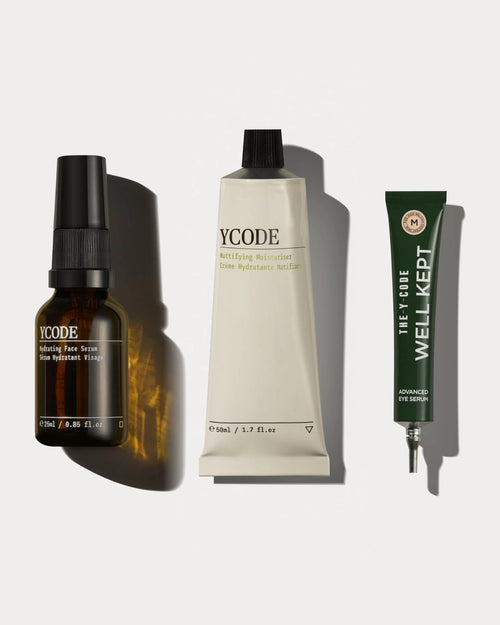
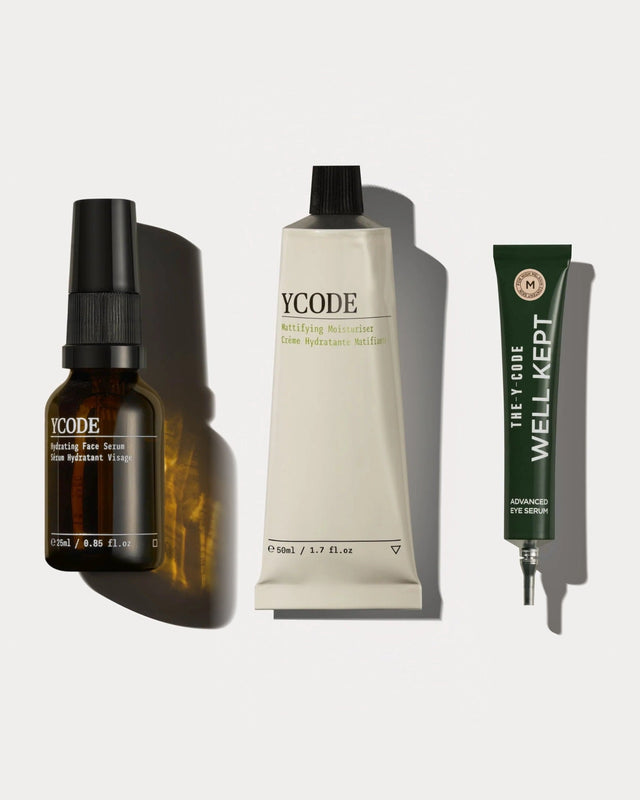
The ingredient list is the proof. Below are the full INCI lists for three formulations built from scratch around male skin biology. Beneath each one, the key actives selected specifically for the structural and functional characteristics of male skin, with the clinical evidence behind them.
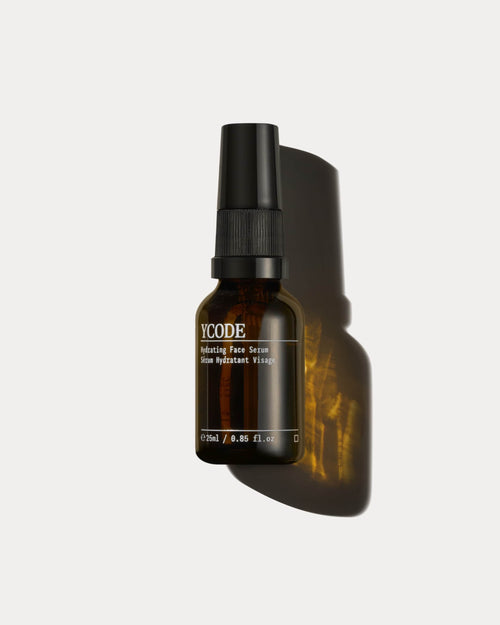
Hydrating Face Serum
Full INCI list: Aqua, Niacinamide, Glycerin, Propanediol, Inulin, Saccharide Isomerate, Phenoxyethanol, Benzyl Alcohol, Ethylhexylglycerin, Fructose, Sodium Hyaluronate, Citric Acid, Chlorella Vulgaris Extract, Benzoyl Dipeptide-18 D-Phenylalanyl Arginyl D-Tryptophan Dipropylamide Mesylate, Lactic Acid.
- Niacinamide (Vitamin B3) Second ingredient by concentration. Stimulates ceramide biosynthesis, strengthening the barrier from within 10. Regulates sebum production 15. Supports even skin tone. In a consumer trial with 50 men (aged 18-50, four weeks, Fitzpatrick spread), 88% reported a strengthened skin barrier, 88% reported reduced redness, and 92% reported consistently hydrated skin. All 27 claims validated under EU Regulation (EC) No 655/2013. Why? Male skin produces roughly twice the sebum and carries a thicker barrier that needs ceramide support to stay structurally intact.
- Chlorella Vulgaris Extract (freshwater microalgae) Delivers adaptive hydration through osmoadaptation: reading the skin's environment and adjusting its biological response in real time. Supports collagen synthesis via amino acids (proline, glycine), provides anti-inflammatory calming through chlorophyll, and strengthens the barrier via polysaccharides 11. Why? Male skin varies significantly across age, environment, and oil output. An adaptive ingredient responds to the biology as it finds it.
- Sodium Hyaluronate Binds up to 1000 times its volume in water, hydrating both the stratum corneum and the dermis 12. Why? Thicker dermis requires hydration that penetrates to depth rather than sitting on the surface.
- Saccharide Isomerate Binds directly to lysine amino acids in the stratum corneum, mimicking the skin's own natural moisturising factors. Clinical ingredient testing confirms hydration lasting up to 72 hours. Consumer trial validated: 82% of men reported deep hydration lasting 72 hours. Why? Higher sebum production and daily shaving both disrupt moisture retention. A 72-hour hydration lock holds between applications.
- Inulin + Fructose (plant prebiotics) Selectively support beneficial micro-organisms on the skin's surface for barrier repair and inflammation reduction 9. Why? A stronger inflammatory response and higher oil output both benefit from a microbiome that self-regulates.
- Benzoyl Dipeptide Complex (biomimetic peptide) Signals cellular renewal by mimicking the skin's own repair mechanisms 13. Why? Natural renewal signals slow with age. A biomimetic peptide supports the skin's own repair process at the cellular level.
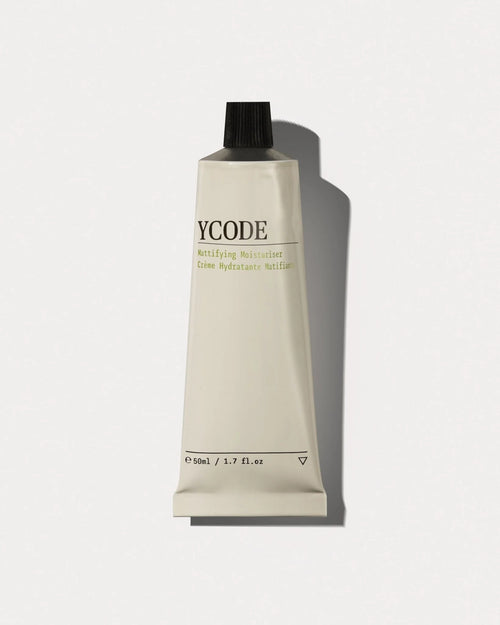
Mattifying Moisturiser
Full INCI list: Aqua, Caprylic/Capric Triglyceride, Cocos Nucifera Oil, Glycerin, Cetearyl Alcohol, Butyrospermum Parkii Butter, Pentylene Glycol, Cetearyl Olivate, Inulin, Sorbitan Olivate, Ammonium Acryloyldimethyltaurate/Vp Copolymer, Phenoxyethanol, Benzyl Alcohol, Ethylhexylglycerin, Sodium Hyaluronate, Fructose, Oryza Sativa Starch, Propanediol, Citric Acid, Sodium Phytate, Chlorella Vulgaris Extract, Palmitoyl Tripeptide-5, Lactic Acid.
- Chlorella Vulgaris Extract Continues the adaptive barrier work initiated by the serum. Osmoadaptation reads the skin's condition at the point of application and responds accordingly 11. Why? The moisturiser seals what the serum delivered. Adaptive barrier support means the formula adjusts to oil levels that fluctuate throughout the day.
- Palmitoyl Tripeptide-5 (collagen-supporting peptide) Signals fibroblasts to produce new collagen via TGF-β activation. In vitro studies show a 119% increase in collagen synthesis. Clinical study with 60 volunteers showed significant wrinkle reduction after 84 days 14. Why? Male skin has higher collagen density but loses approximately 1% per year after 30. Supporting synthesis maintains the structural advantage.
- Oryza Sativa Starch (rice starch) Absorbs excess sebum at the surface and sets to a natural matte finish. Addresses the higher oil output characteristic of male skin through physical absorption rather than chemical stripping. Why? Male skin produces roughly twice the oil. Physical absorption controls shine while preserving the moisture layer beneath.
- Sodium Hyaluronate Deep hydration at the dermal level 12. Why? Locks moisture into thicker dermis where it is needed, rather than at the surface where it evaporates.
- Inulin + Fructose (plant prebiotics) Microbiome support for barrier defence and balanced oil regulation 9. Why? A balanced microbiome helps the skin self-regulate oil and inflammation between applications.
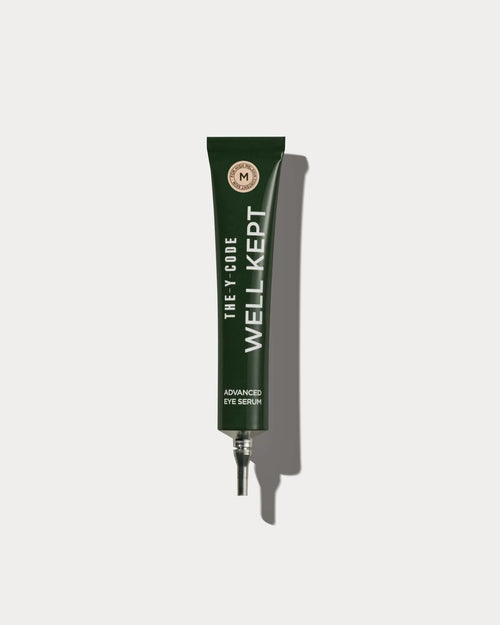
Advanced Eye Serum
Full INCI list: Aqua (Water), Coco-Caprylate/Caprate, Glycerin, Cetearyl Alcohol, Octyldodecyl Neopentanoate, Cetearyl Olivate, Titanium Dioxide, Butylene Glycol, Octyldodecyl Oleate, Sorbitan Olivate, Panthenol, Phenoxyethanol, Hydroxyethyl Acrylate/Sodium Acryloyldimethyl Taurate Copolymer, Octyldodecyl Stearoyl Stearate, Hydroxyacetophenone, Sodium Stearoyl Glutamate, Fructooligosaccharides, Synthetic Fluorphlogopite, Beta Vulgaris (Beet) Root Extract, Cellulose Acetate, Sodium Gluconate, Magnesium Stearate, Propylene Glycol Stearate, Tocopherol, Citric Acid, Amylopectin, Pentylene Glycol, Ethylhexylglycerin, Helianthus Annuus (Sunflower) Seed Oil, Potassium Lactate, Lactic Acid, Fucus Vesiculosus Extract, Octyldodecanol, Polyhydroxystearic Acid, Lithothamnium Calcareum Extract, Sodium Benzoate, Xanthan Gum, Gluconolactone, Potassium Sorbate, Zingiber Zerumbet Extract, Sodium Chloride, Tin Oxide, Ci 77492 (Iron Oxides), Ci 77891 (Titanium Dioxide), Ci 77499 (Iron Oxides).
- Fucus Vesiculosus Extract (marine algae fucoidan) Stimulates heme oxygenase-1 to degrade the pigment causing dark circles beneath the thinner periorbital skin. Clinical ingredient testing: 11% reduction in dark circle pigmentation and 14% improvement in skin roughness within one week 5 6. Why? The eye area is where fatigue, stress, and age show first on a man's face. Targeted depigmentation works better than concealment.
- Zingiber Zerumbet Extract (CO₂-extracted wild ginger) Reduces melanin production by 10% and increases oxygen saturation by 13.6%. Tested across 111 volunteers. Supplier clinical ingredient data. Peer-reviewed anti-melanogenic mechanism (zerumbone pathway) confirmed separately 7. Why? Dark circles in men are often more pronounced due to higher blood flow and thinner periorbital skin showing vascular structure. Reducing melanin at the source provides correction at the biological level.
- Lithothamnium Calcareum Extract (marine mineral complex) Red algae calcified minerals delivering 120 hours continuous hydration and stimulating ceramide synthesis. Strengthens the barrier around the most exposed area of the face. Why? The periorbital barrier is the weakest on the face. 120 hours of hydration lock means the area holds moisture between applications.
- Panthenol (Pro-Vitamin B5) Reduces transepidermal water loss and supports barrier repair 8. Why? Daily shaving and a stronger inflammatory response mean the barrier needs consistent repair support.
- Fructooligosaccharides (prebiotic) Feeds the skin's microbiome to support barrier defence and reduce inflammation 9. Why? Higher oil production and a stronger inflammatory response both benefit from a microbiome that regulates them naturally.
FAQs
Is men's skincare actually different from women's skincare?
Are most men's skincare products repackaged women's formulas?
How can I tell if a skincare product is genuinely formulated for men?
What are the best skincare ingredients for men?
Does YCODE formulate differently from other men's skincare brands?
This article is for informational purposes only and is not a substitute for professional medical advice. Consult a dermatologist for personalised skincare recommendations.
- Rahrovan S et al. "Male versus female skin: What dermatologists and cosmeticians should know." Int J Women's Dermatol. 2018. ncbi.nlm.nih.gov
- Garzon A, quoted in Zwieglinska Z. "The grooming boom: Men are finally buying skin care for themselves." Glossy. November 2025. glossy.co
- Moshary S, Tuchman A, Bhatia Vajavelu N. "Gender-Based Pricing in Consumer Packaged Goods: A Pink Tax?" Marketing Science. 2023. pubsonline.informs.org
- Established formulation principle. Male dermal thickness (Rahrovan et al. 2018 [1]) reduces transdermal delivery efficiency when formulations are optimised for thinner skin types. Supported by clinical skincare formulation literature.
- BASF Care Creations Seanactiv™ in vivo clinical study, 24 volunteers aged 18-65, 2021. 11% pigmentation reduction, 14% roughness improvement within one week.
- Chavan M, Sun Y, Litchauer J, Denis A. "Fucus extract: cosmetic treatment for under-eye dark circles." J Cosmet Sci. 2014;65(2):103-13. pubmed.ncbi.nlm.nih.gov
- Saho B et al. "Zerumbone, a Tropical Ginger Sesquiterpene of Zingiber officinale Roscoe, Attenuates α-MSH-Induced Melanogenesis in B16F10 Cells." Int J Mol Sci. 2018;19(10):3149. pmc.ncbi.nlm.nih.gov
- Camargo FB Jr et al. "Skin moisturizing effects of panthenol-based formulations." J Cosmet Sci. 2011;62(4):361-70. pubmed.ncbi.nlm.nih.gov
- Open-label prospective study on prebiotic gel cream efficacy and skin microbiome effects. PMC. 2025. pmc.ncbi.nlm.nih.gov
- Tanno O et al. "Nicotinamide increases biosynthesis of ceramides." Br J Dermatol. 2000. pubmed.ncbi.nlm.nih.gov
- Putri et al. "Microalgae: revolutionizing skin repair and enhancement." PMC. 2025. ncbi.nlm.nih.gov
- Bravo B et al. "Benefits of topical hyaluronic acid for skin quality and signs of skin aging." Dermatologic Therapy. 2022;35(12):e15903. pmc.ncbi.nlm.nih.gov
- Ferreira MS et al. "Bioactive Peptides: Applications and Relevance for Cosmeceuticals." Cosmetics. 2018;5(1):21. mdpi.com
- Schagen S. "Topical Peptide Treatments with Effective Anti-Aging Results." Cosmetics. 2017;4(2):16. mdpi.com
- Gehring W. "Nicotinic acid/niacinamide and the skin." J Cosmet Dermatol. 2004;3(2):88-93. pubmed.ncbi.nlm.nih.gov

I started YCODE because most skincare was never designed for men’s skin. What I write here is what the formulators taught me, and what the trials actually found.
Continue reading
VIEW ALL →
Stress and poor sleep have a way of becoming visible. The eyes look heavier....

Your skin can notice the change of season before you reach for a coat....
Three formulas focus on the major concerns men tend to see across the face...












































































