

A World Within a Drop
When you stand beside the sea, it is usually the scale that gets your attention. As we explored its biology, our attention moved towards something much smaller.

When you stand beside the sea, it is usually the scale that gets your attention. The distance to the horizon, the movement of the water, the amount of sky.
As we began exploring the biology behind it, my attention moved towards something much smaller.
In the first article in this series, I wrote about our relationship with the sea and some of the research into its effects on wellbeing. Following that curiosity led us into the world of algae. It was here that the possibilities for YCODE began to take shape.
Most of us have a fairly familiar picture of algae: seaweed along the shoreline, strands moving beneath the surface, something green on a rock. But the word covers an enormous variety of organisms, including microscopic forms that we would never notice simply looking at the water.
Microalgae are part of that world. Chlorella vulgaris, one of the species we work with, is a single-celled green alga. An entire living organism contained within a cell too small to see with the naked eye.
There is something compelling about that. All the activity required to sustain its life happens at a scale we can barely imagine.
For a living alga, changes in light, temperature and nutrient availability are part of its environment. Its biology has to respond. The compounds these organisms produce, and the ways scientists can cultivate and extract them, have opened up possibilities across food, biotechnology and skincare.
That became the question we wanted to explore: which of those possibilities could be useful for skin?
One study published in 2023 investigated extracts of Chlorella vulgaris in human mesenchymal stromal cells exposed to hydrogen peroxide, used by the researchers to induce oxidative stress. Certain extracts reduced the build-up of reactive oxygen species and helped protect the cells from that stress. The method of extraction also affected the composition and antioxidant activity of the material.1
These were laboratory findings, rather than a trial of a skincare product. What interested me was both the potential and the specificity. The species mattered. The way it was processed mattered. Understanding an ingredient meant looking beyond its name.
As we explored further, we also wanted to give ourselves the freedom to follow what we learned.
Our journey began with the sea, but Chlorella vulgaris is a freshwater microalga. By then, we had become interested in the wider possibilities of algae, and we wanted to find the options best suited to the formulas we were developing. That exploration also brought other algae into the range, including the Fucus vesiculosus and Lithothamnium calcareum extracts in our Advanced Eye Serum.2
From Sea to Cell™ describes that journey. The sea gave us our starting point, and the research helped determine where we went next.
Getting from an organism to a finished product involves a whole further set of decisions. How it is grown, which components are extracted, how they are preserved and how the resulting ingredient behaves alongside everything else in the formula.
The finished product then needs to be assessed on its own terms. An interesting result for an extract cannot tell you everything about the bottle someone will eventually take home.
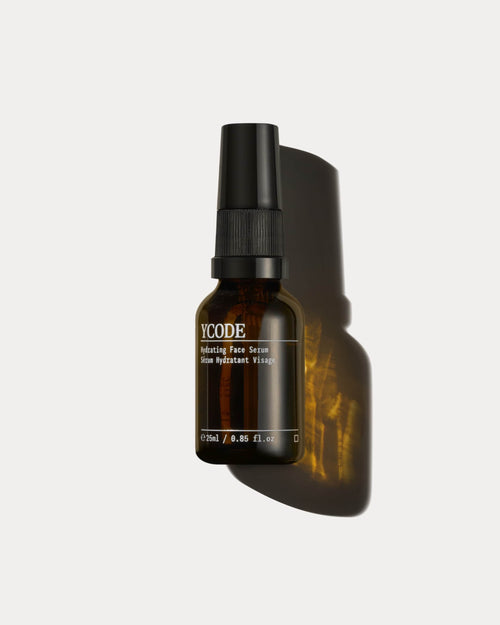
Our Hydrating Face Serum is one expression of that work.
Chlorella vulgaris extract sits alongside niacinamide, glycerin, hyaluronic acid, prebiotics and a biomimetic peptide. We brought them together in a lightweight formula designed to support hydration, the skin barrier and the appearance of tone and texture.3
For someone using it, the questions are much more immediate. Does my skin feel comfortable? Does it look smoother? Does the product absorb well enough that I want to use it again tomorrow?
In our independent consumer self-assessment involving 50 men, 96% reported that their skin felt hydrated after first use. After four weeks, 96% reported that their skin looked smoother. These are the participants’ assessments of the finished serum, rather than measurements of what Chlorella does in isolation.3
That connection between the research and the daily experience matters to me. A formula can contain fascinating ingredients, but it also has to earn its place in someone’s life.
If you have never quite understood where a serum fits, ours is the first step after cleansing, before your moisturiser. It absorbs quickly and is designed to be used morning and evening. The purpose is straightforward: hydrated, smoother-looking skin, with a light feel that makes the habit easy to keep.
The more we learned about algae, the more possibilities we could see. Our job was to make considered choices from that complexity and turn them into something simple to use.
A small bottle beside the sink, with a much bigger world behind it.
Discover the Hydrating Face Serum
Next: Coming Back to the Body, exploring how human anatomy inspired YCODE’s colour palette and continues to shape our thinking.
- Savvidou et al. (2023). Extracts from Chlorella vulgaris Protect Mesenchymal Stromal Cells from Oxidative Stress Induced by Hydrogen Peroxide. Plants, 12(2), 361.
- YCODE. Advanced Eye Serum: full ingredient list.
- YCODE. Hydrating Face Serum: formulation and published consumer trial results. Independent consumer self-assessment, ADSL 2025-0056, 50 men, after first use and four weeks.

I started YCODE because most skincare was never designed for men’s skin. What I write here is what the formulators taught me, and what the trials actually found.
Continue reading
VIEW ALL →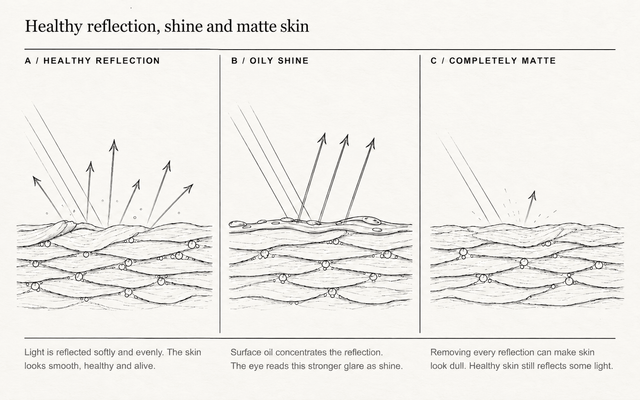
Healthy-looking skin is shaped by hydration, surface texture, oil, tone and the eye area....
Tiredness is not one line, shadow or colour. It is a pattern the eye...

One of the first things you notice about a product is its colour. Long...


