

From Sea to Cell™: The Science and Nature of Our Microalgae
For years, science and nature felt like opposites in skincare. Our microalgae is the case where both do their best work: shaped by the sea over billions of years, then grown clean and captured whole.

For a long time, the story of skincare and science was not a happy one. In the search for something that worked, the industry reached for synthetic shortcuts, and more than a few of them turned out to have a cost that only showed up later. It is why so much of the market now sells itself on what it leaves out. That reaction is understandable, but it has left a lot of people believing that nature and science are on opposite sides. They are not. YCODE exists because of one case where they pull in the same direction, and both do their best work.
The active at the centre of everything we make is a green microalgae, Chlorella vulgaris. What follows is where it comes from, how it is made, and why that method matters more than any single claim on the bottle.
Nature ran the research
Photosynthetic microorganisms are among the oldest life on Earth. The lineage has been refined over roughly two and a half billion years, through an atmosphere with little protection from the sun and conditions that would end most living things quickly.1 To survive that, these organisms evolved an unusual set of tools: the ability to turn light into energy, to repair their own cells, and to hold water and nutrients against a hostile environment. None of it was designed for skin. It was designed for survival, over a timescale no laboratory could ever run.

The Atlantic coast. Rock pressed into layers over deep time, where the lineage was shaped.
That is the part science cannot take credit for. The chemistry that makes microalgae useful to skin was written long before anyone thought to look. Our job was not to invent it. It was to find it, and to bring it across cleanly.
Nature spent billions of years on the research. The work of science was to know where to look, and to keep it clean on the way out.
One strain, chosen from many
Chlorella vulgaris is not a single, uniform thing. Within the species there are many variants, and they are not equal. Some express the growth-factor and barrier-supporting activity we care about far more strongly than others. So the first act of science here is selection: screening the variants and choosing the single strain that performs best, rather than taking whatever a harvest happens to bring up.
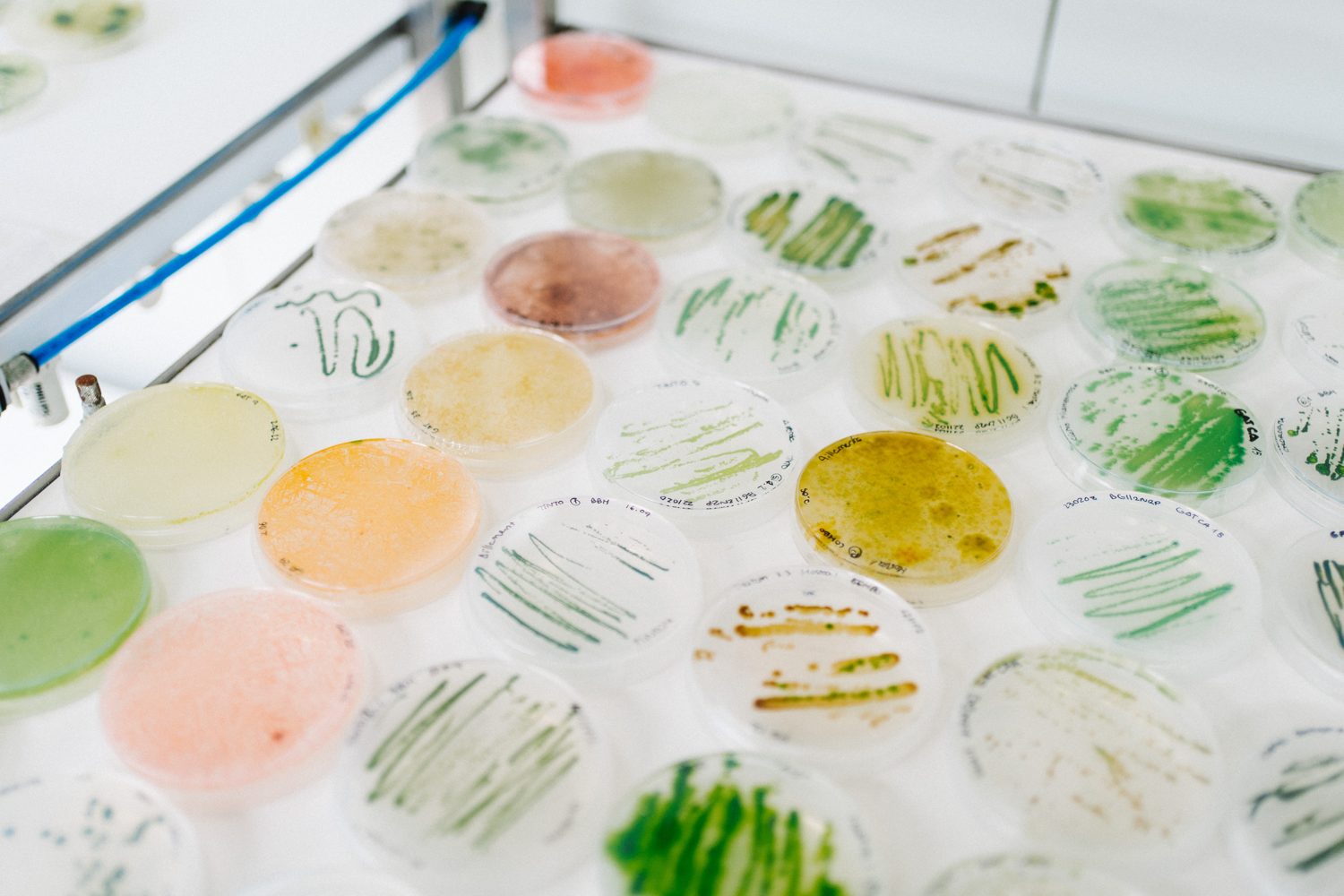
Many variants, one chosen. Selection is the first act of science in the process.
Grown, not harvested
Here is the decision that defines everything. The open ocean is not clean. Anything grown there is exposed to whatever passes through it: heavy metals, agricultural run-off, microplastics, pollutants that concentrate up the food chain. Wild-harvested marine ingredients carry that history with them.
So we do not take it from the sea. The chosen strain is grown in closed photobioreactors, sealed systems fed a clean, controlled medium, given light and nothing else it should not have. The result is the full activity of the microalgae with none of the contamination that the open water would add. It is where the name comes from: From Sea to Cell™. The organism the sea shaped, made in a place clean enough to trust.

Closed photobioreactors. Light, a clean medium, and nothing the open sea would add.
Because the system is sealed, we know exactly what is in it, and what is not.
- No heavy metals The closed medium removes the route by which marine ingredients pick them up.
- No pesticides or agricultural run-off Nothing from the wider environment enters the system.
- No microplastics A problem inherent to the open ocean, absent by design here.
- Certified clean The active is vegan (Vegan Society), COSMOS and NATRUE approved, and preservative-free in its own right.2
What the microalgae actually does
The point of all this care is that the activity arrives intact. In laboratory studies, the Chlorella vulgaris extract does several useful things for skin. It raises the skin's own renewal signalling, increasing transforming growth factor alpha by around 171% in human skin cells, a marker of the skin repairing and refreshing itself.2 It calms the inflammatory response at the source rather than masking it. And it rebalances oil rather than stripping it, reducing sebum by roughly a third over four weeks in an ingredient study, while supporting a healthy skin microbiome.2
A note on honesty, because it matters. Those figures come from studies on the ingredient itself, in the laboratory. They are not the same as the results our own customers report in independent trials of the finished YCODE products, which we keep as a separate and clearly labelled set of numbers. Ingredient science tells you what the active can do. Consumer trials tell you what the product did. We do not blur the two.

Grown at scale under glass. Life being made, rather than taken.
The part that gives back
There is one more thing worth saying. Growing microalgae is photosynthesis at scale, the same exchange that made this planet breathable in the first place.
The scale of it is easy to miss. Microalgae and the other drifting photosynthesisers of the ocean produce around half of all the oxygen on Earth, which means roughly every other breath you take began with an organism like this one.3
They are also unusually good at it. Microalgae are about half carbon by dry weight, so growing a kilogram of biomass takes up roughly 1.8 kilograms of carbon dioxide, and they fix it at rates ten to fifty times higher than land plants.4
Every tank we grow runs that same exchange. Carbon dioxide goes in, oxygen comes off, and the active we need accumulates while it happens.
We will be careful about what that does and does not mean. We are not claiming it offsets anyone's footprint, and we will not put a figure on our own production until we can stand behind it. But it is a rare thing for the making of a skincare ingredient to give something back to the air rather than only take from it. This one does.
Science and nature, both at their best
Put the two halves together and you have the whole idea of YCODE. Nature did the long, patient work of building a microorganism that knows how to protect and renew a living surface. Science did the careful work of choosing the best of it, growing it clean, and capturing it whole. Neither half gets there alone. The naturalist who distrusts all science ends up with a wild ingredient full of the sea's problems. The technologist who distrusts all nature ends up back at the synthetic shortcuts that started the mistrust in the first place. The answer was always going to be both.
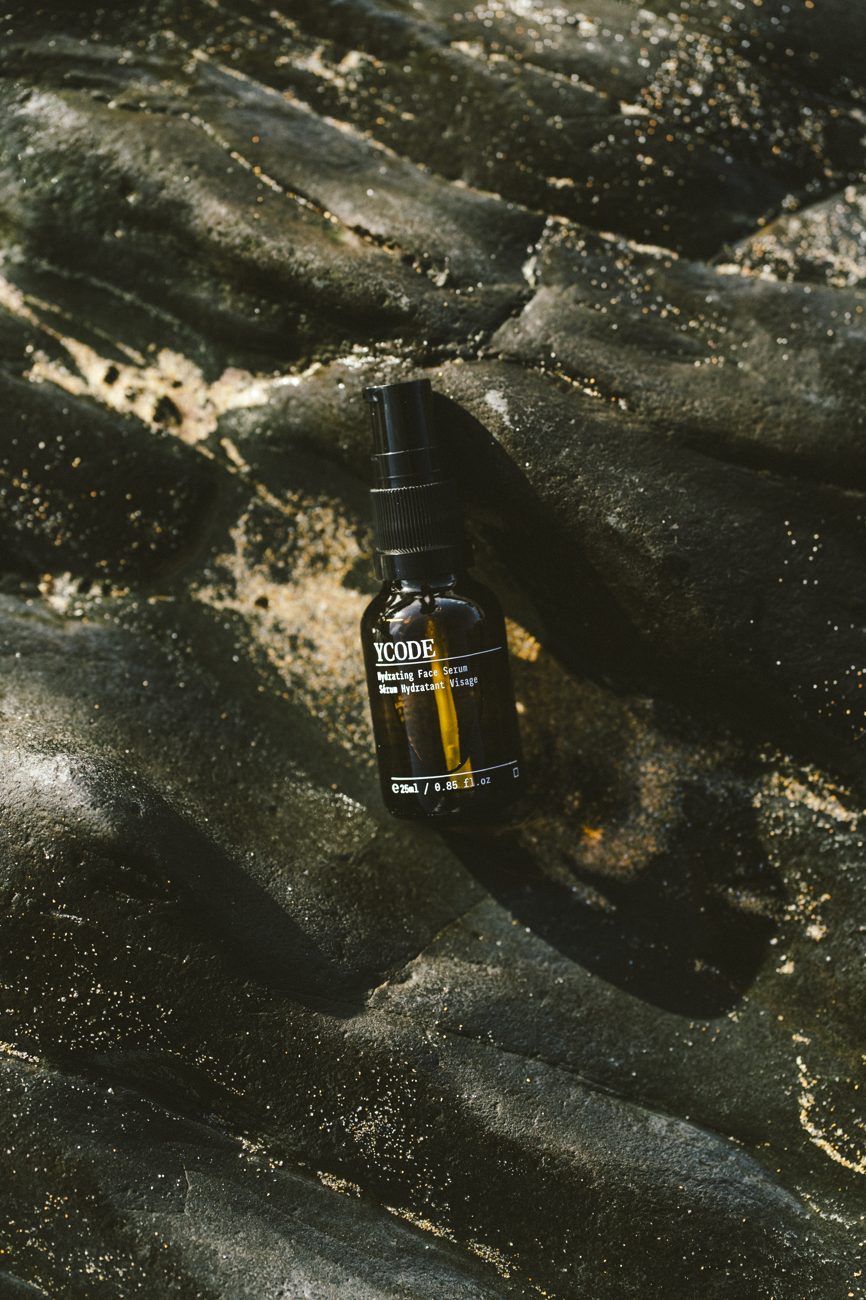
The finished thing, returned to the world it came from, clean.
Two and a half billion years of evolution, one strain chosen from many, grown sealed and clean, and captured whole. That is what ends up in your hand, and on your skin, in the two minutes a day it takes to use it.
Common questions
Is the microalgae taken from the sea?
What does From Sea to Cell™ mean?
How is this different from seaweed or marine extract?
Is it clean and vegan?
- On the antiquity of oxygenic photosynthesis and the rise of atmospheric oxygen approximately 2.4 to 2.5 billion years ago (the Great Oxidation Event). nature.com
- Manufacturer technical and clinical dossier for the Chlorella vulgaris extract, covering in-vitro mechanism data (growth-factor, inflammatory and sebum markers), closed-photobioreactor production and cleanliness credentials, 2024. On file.
- How much oxygen comes from the ocean? US National Oceanic and Atmospheric Administration. At least 50% of Earth's oxygen production comes from the ocean, the majority of it from oceanic plankton. noaa.gov
- Microalgae are approximately 50% carbon by dry weight, such that roughly 1.8 kg of carbon dioxide is fixed per kilogram of biomass produced, at CO2 fixation rates 10 to 50 times higher than terrestrial plants (Chisti, 2007). frontiersin.org

I started YCODE because most skincare was never designed for men’s skin. What I write here is what the formulators taught me, and what the trials actually found.
Continue reading
VIEW ALL →
Your skin can notice the change of season before you reach for a coat....
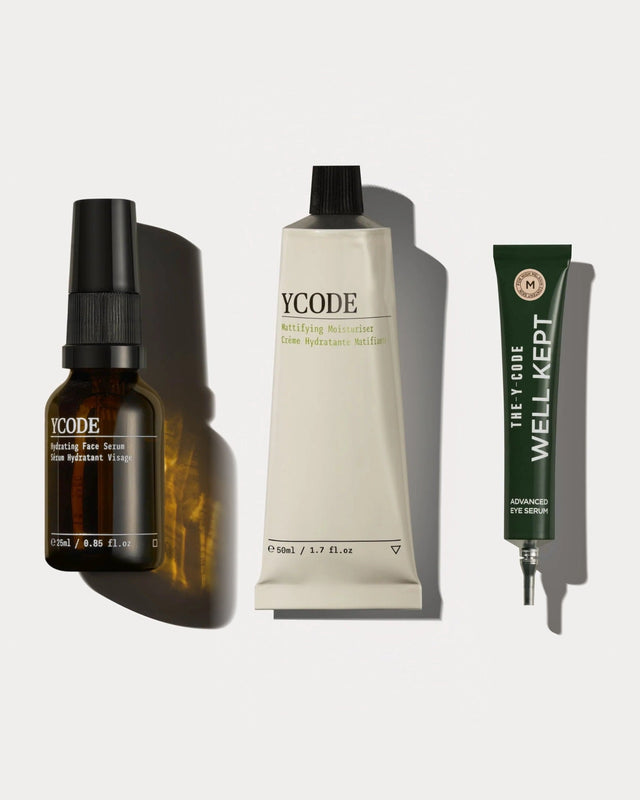
Three formulas focus on the major concerns men tend to see across the face...
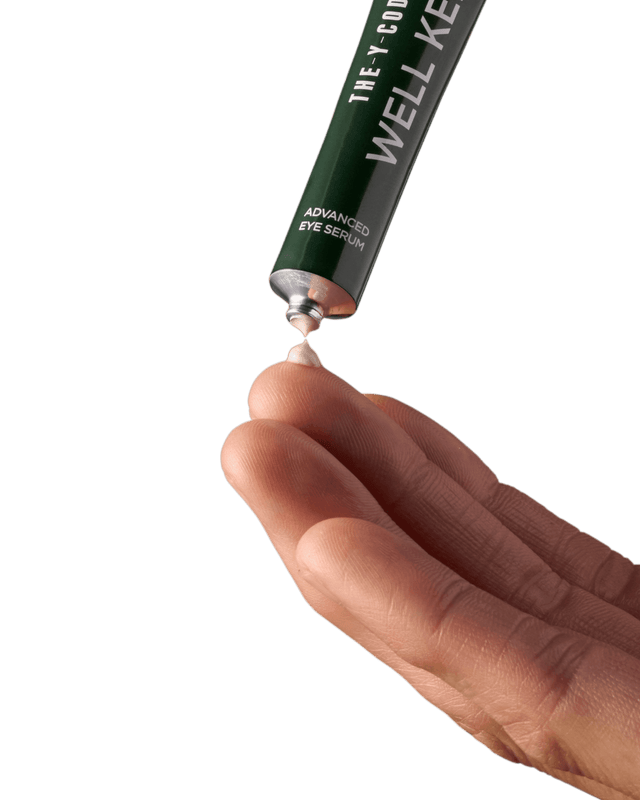
The Daily Essentials improves the face and neck. Advanced Eye Serum adds concentrated support...