

The Skin Barrier: What Every Man Should Know
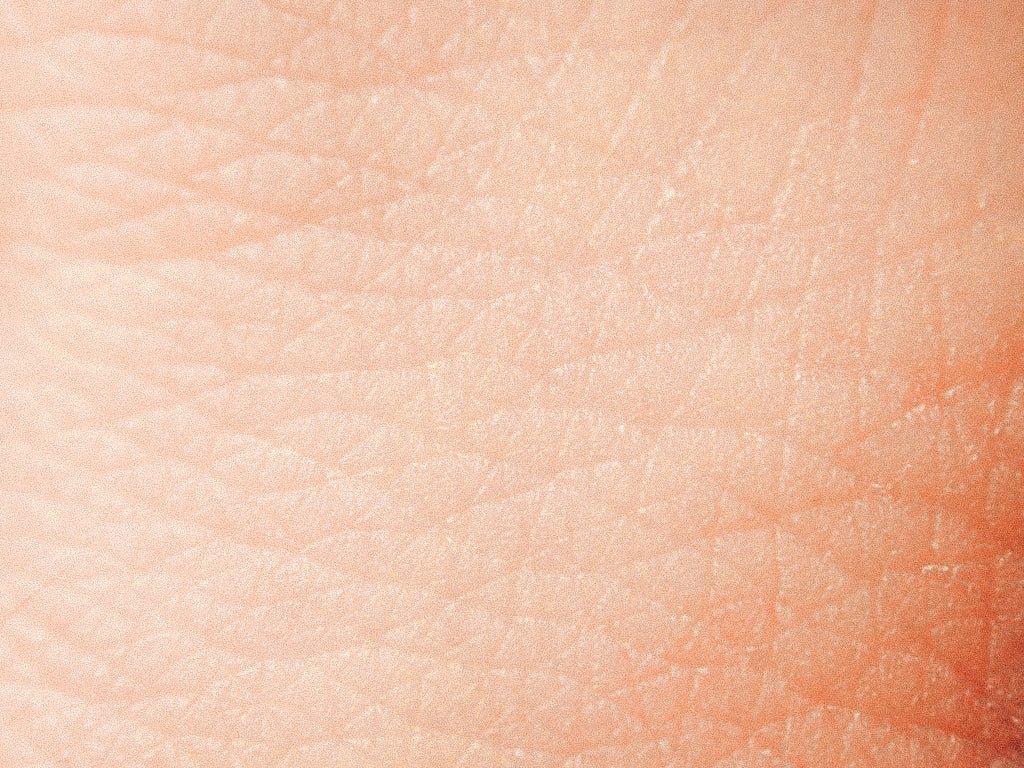
Every product you apply meets the same gatekeeper. The skin barrier is a thin, lipid-rich structure at the outermost edge of the epidermis, and it decides what enters and what stays. It regulates hydration. It manages oil. It absorbs the mechanical stress of a normal day and sets the pace at which the skin recovers from it.
Most men have never heard it named. They know its effects well enough: the tightness after washing, the midday shine, the redness along the jaw that refuses to settle. These are barrier signals, and learning to read them changes how you approach everything else on the shelf.
What is the skin barrier?
A matrix of skin cells held together by ceramides, cholesterol and fatty acids. Dermatology describes it as brick-and-mortar architecture: the cells are the bricks, the lipids are the mortar1. The mortar is where everything happens. When that lipid structure is intact, water stays in the skin and irritants stay out. When it is compromised, both directions fail at once. Hydration escapes. Environmental stress enters unopposed. The skin turns reactive and stays that way until the structure is repaired.
Beneath the lipid layer sits the microbiome, a community of beneficial bacteria that supports immune response, moderates inflammation and adds to the barrier's overall resilience. Strip the microbiome through over-cleansing or a harsh formula and the barrier weakens from the inside as well as the surface.
Why does men's skin face more pressure?
Male skin operates under a specific set of conditions. It runs 20 to 25% thicker5, which is more tissue to maintain and more cellular turnover to manage. It produces roughly twice the sebum of female skin, a difference driven by testosterone5. Sebum feeds the lipid layer, but in excess it destabilises the surface into shine and congestion, and it prompts the instinct to reach for products that strip rather than support. Those products speed up the damage they were meant to fix.
Then there is the razor. Shaving is a daily controlled abrasion. Every pass removes surface cells and disturbs the lipid matrix, and repeated five, six, seven times a week across years, that stress accumulates. The barrier absorbs it quietly until it can no longer compensate. Male skin also tends toward a sharper inflammatory response, so friction, heat and chemical disruption each land harder on a barrier that has already lost ground.
How does the barrier break down?
Rarely all at once. Barrier failure is almost always incremental, a daily erosion that eventually crosses a threshold. Over-cleansing with high-pH or sulphate-heavy products strips the lipid matrix faster than the skin can rebuild it2. Cold air, dry indoor heating and low winter humidity pull moisture out through the surface hour by hour4. Inconsistent routines add cycles of partial depletion and incomplete recovery, so the barrier never fully stabilises. It just manages.
- Tightness after washing, or a sting when products go on that once felt like nothing2. What you notice? The barrier has lost lipids and is reacting to what it used to tolerate.
- Oil that swings between extremes, shine on the surface over dryness underneath1. What you notice? A compromised barrier signals the skin to overproduce sebum to compensate.
- Redness that was occasional becoming persistent, and a roughness to the texture that settles in4. What you notice? Water is leaving faster than the surface can hold it, and inflammation follows.
Most men recognise the symptoms. Few connect them to the cause.
Skin is patient infrastructure. It records every day, and neglect accumulates invisibly until it becomes visible. Consistent repair reverses the process on the same timeline, quietly and structurally, one cycle at a time.
How do you rebuild and maintain it?
The repair itself is not complicated. The right ingredients, in the right order, applied every day.
Niacinamide increases ceramide production in the outer skin layer3. Ceramides are the mortar, so rebuilding them restores the lipid matrix that holds the barrier together. Niacinamide also regulates oil output and calms post-shave reactivity, which makes it particularly relevant for male skin. Sodium hyaluronate draws water into the upper epidermis and holds it there, addressing the dryness that sits beneath the oil. Prebiotics feed the microbiome, reinforcing barrier resilience from within for skin under daily shaving stress and environmental load.
Microalgae, specifically chlorella vulgaris, adds something different. Through a mechanism called osmoadaptation it adjusts its biochemical behaviour in response to changing external conditions, reading the skin and responding accordingly rather than delivering a fixed dose like a standard humectant.
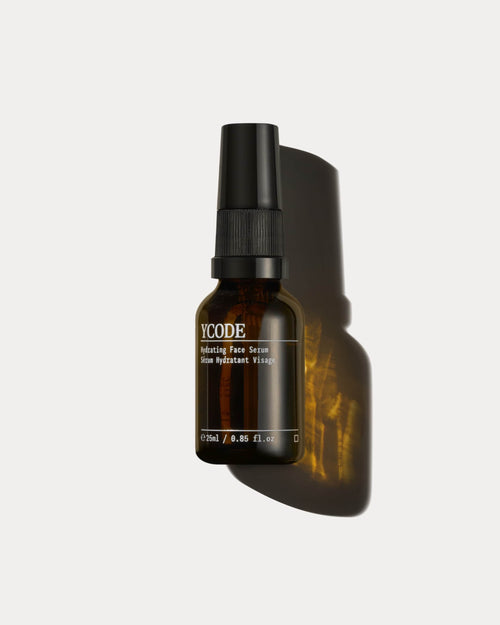
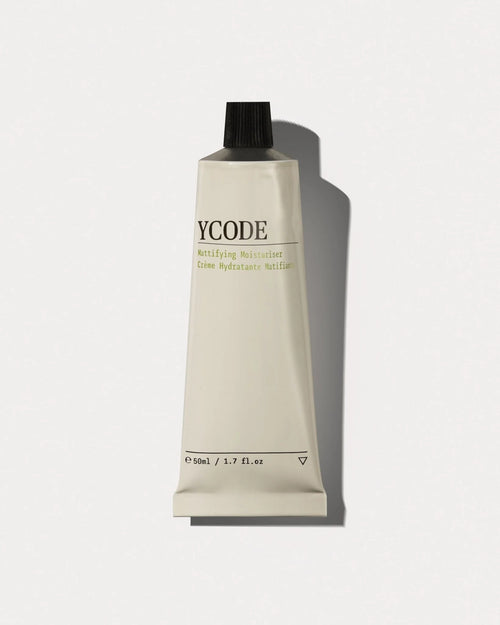
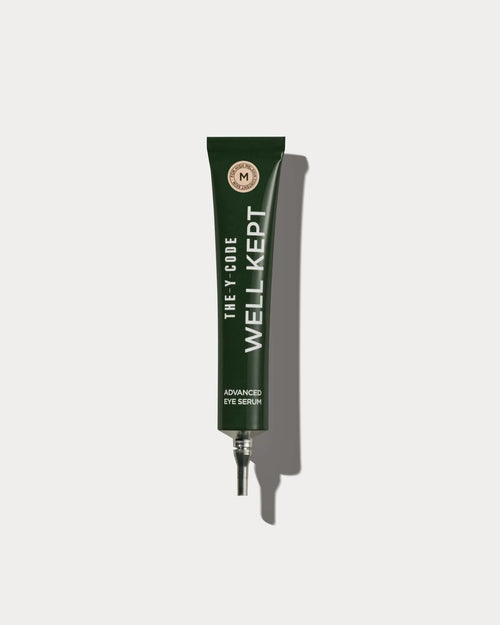
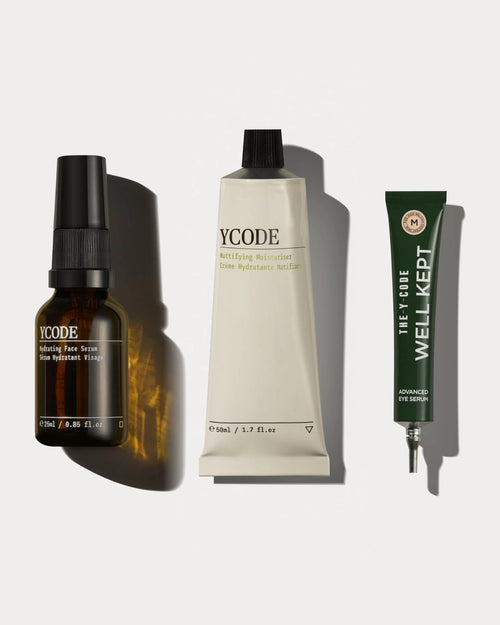
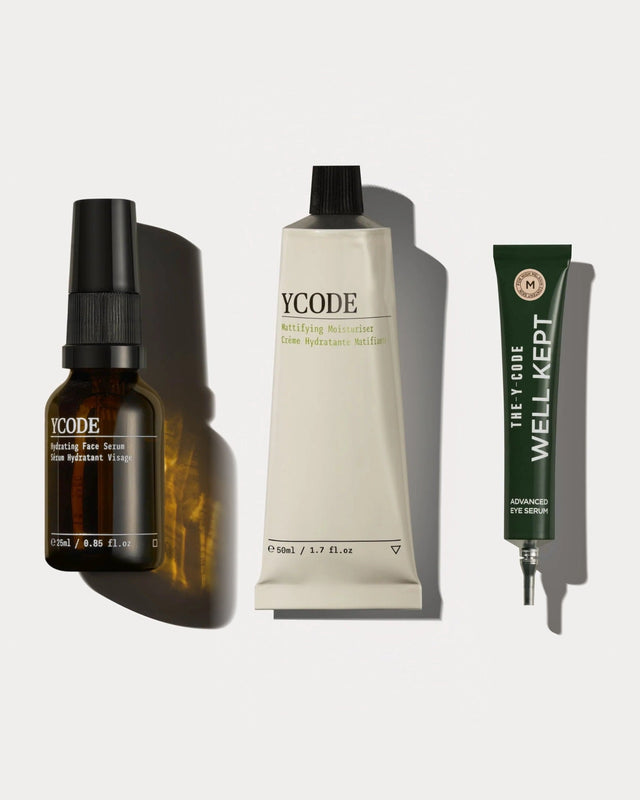
These four form the foundation of the YCODE system. The Hydrating Face Serum carries niacinamide, sodium hyaluronate, prebiotics and chlorella vulgaris extract. Applied first, to damp skin, it delivers actives where absorption is highest. The Mattifying Moisturiser follows, sealing hydration, managing surface oil with rice starch, and supporting structure with palmitoyl tripeptide-5. Two steps, under two minutes, each product compounding the one before it. If you want the full sequence with the eye step included, the Core Trio holds all three in one routine.
FAQ
Do I need both a serum and a moisturiser?
How do I know if my barrier is damaged?
How long does barrier repair take?
What ingredients rebuild the barrier most effectively?
Can oily skin have a damaged barrier?
Not sure where your barrier stands or which step to start with, take the two-minute routine finder and it will point you to the right sequence. When you are ready to put the full routine to work, the Core Trio gives you serum, moisturiser and eye step in the order the barrier wants them.
This article is for informational purposes only and is not intended as medical advice.
- Bouwstra JA, Ponec M. The skin barrier in healthy and diseased state. Biochimica et Biophysica Acta. 2006;1758(12):2080-2095. https://pubmed.ncbi.nlm.nih.gov/16945325/
- Ananthapadmanabhan KP, Moore DJ, Subramanyan K, Misra M, Meyer F. Cleansing without compromise: the impact of cleansers on the skin barrier and the technology of mild cleansing. Dermatologic Therapy. 2004;17(Suppl 1):16-25. https://pubmed.ncbi.nlm.nih.gov/14728695/
- Tanno O, Ota Y, Kitamura N, Katsube T, Inoue S. Nicotinamide increases biosynthesis of ceramides as well as other stratum corneum lipids to improve the epidermal permeability barrier. British Journal of Dermatology. 2000;143(3):524-531. https://pubmed.ncbi.nlm.nih.gov/10971324/
- Engebretsen KA, Johansen JD, Kezic S, Linneberg A, Thyssen JP. The effect of environmental humidity and temperature on skin barrier function and dermatitis. Journal of the European Academy of Dermatology and Venereology. 2016;30(2):223-249. https://pubmed.ncbi.nlm.nih.gov/26449379/
- Rahrovan S, Fanian F, Mehryan P, Humbert P, Firooz A. Male versus female skin: What dermatologists and cosmeticians should know. International Journal of Women's Dermatology. 2018;4(3):122-130. https://pmc.ncbi.nlm.nih.gov/articles/PMC6116811/

I started YCODE because most skincare was never designed for men’s skin. What I write here is what the formulators taught me, and what the trials actually found.
Continue reading
VIEW ALL →
Stress and poor sleep have a way of becoming visible. The eyes look heavier....

Your skin can notice the change of season before you reach for a coat....
Three formulas focus on the major concerns men tend to see across the face...












































































