

Men's Skin Biology: Why Your Skincare Isn't Working (And What Will)

Male skin behaves differently from female skin. It is structurally thicker, produces markedly more oil, sits at a lower pH, and loses collagen on its own timeline. These are not marketing distinctions. They are measurable, peer-reviewed features of male skin biology1. That is the whole case for a men's skincare system designed for men's skin, rather than one borrowed from someone else's routine.
Why does most men's skincare miss the mark?
Walk through any men's grooming aisle and the pattern is consistent. Darker packaging. Simplified claims. A woodsy or mentholated scent. What you rarely find is a formulation architecture built from the ground up for male skin biology.
The standard industry move is adaptation. A formula that performs adequately across skin types gets repackaged for a male audience with adjusted aesthetics and fragrance. The active ingredients, their concentrations, the delivery systems, the texture and absorption profile all stay largely unchanged.
For a basic cleanser, that is functional enough. For anything targeting oil regulation, barrier repair, collagen maintenance, or post-shave recovery, it opens a gap between what the product promises and what the biology needs. Men notice. The moisturiser that sits heavy. The serum that leaves skin oilier by midday. The product that stings after shaving when the previous one felt fine. These are formulation mismatches, not skin problems.
Which differences actually change the formulation?
Five characteristics do most of the work. Each one has a downstream consequence for how a product should be built.
- Thickness. Male skin runs 20-25% thicker than female skin, a YCODE figure consistent with the wider literature on dermal thickness2. That extra dermal mass means active ingredients meet a denser structure. Formulas tuned for thinner skin often fail to reach where they are needed. What you notice? Lightweight products that seem to do nothing, and rich ones that never sink in.
- Sebum. Male sebaceous glands produce roughly twice the oil of female skin, a YCODE figure. Testosterone and other androgens drive this from puberty onward34. Oil load shapes pore behaviour, surface texture and how long a product keeps working through the day. What you notice? Shine by lunchtime and products that slide rather than absorb.
- pH. Male skin sits at a lower, more acidic pH, again a YCODE figure that tracks published physiology3. That influences barrier reactivity, product compatibility and how quickly irritation sets in, especially after shaving. What you notice? A sting or flush from products that felt fine on someone else.
- Collagen. Collagen in male skin declines steadily and roughly linearly from early adulthood2. Men hold higher collagen density at every age, but the loss is cumulative, with no hormonal event to accelerate it the way menopause does for women. What you notice? Firmness that fades slowly rather than all at once, which asks for support measured in months and years.
- Inflammation. Male skin mounts a sharper inflammatory response1. Friction, heat and chemical disruption all provoke a stronger reaction, and shaving compounds it daily. What you notice? Redness and reactivity that a low-inflammation formula was never built to calm.
Male skin is not a smaller problem or a rougher version of female skin. It is a different biological brief, and it deserves a formula written for it rather than adapted after the fact.
What does the biology demand from ingredients?
Each difference points to a specific requirement.
Barrier support is foundational. Niacinamide raises ceramide production in the outer skin layer, restoring the lipid matrix that holds the barrier together. It also helps regulate oil and calm post-shave reactivity. For skin under daily mechanical stress, it is among the most relevant actives available.
Hydration needs to reach below the surface. Sodium hyaluronate draws water into the upper epidermis and keeps it there. For thicker male skin, that sub-surface hydration outperforms occlusive creams that merely rest on top.
Oil regulation should support the barrier rather than strip it. Rice starch absorbs excess surface oil and lends a natural matte finish while the barrier keeps working underneath. It manages shine without triggering the rebound oil that harsher approaches invite.
Adaptive ingredients respond to changing conditions. Chlorella vulgaris, a microalgae with billions of years of evolutionary adaptation behind it, supports hydration and barrier integrity through osmoadaptation, adjusting its behaviour as skin conditions shift. That is a different proposition from a fixed-dose humectant.
Peptides support structure over time. Palmitoyl tripeptide-5 has been associated with visible gains in firmness and wrinkle depth with consistent use. For skin on a steady collagen decline, that is long-term structural support rather than a reactive fix.
These actives perform best as a system. A serum delivers actives into the barrier, a moisturiser seals and regulates the surface, and applied in the right order each step compounds the one before it.
Why YCODE was built from the ground up
Freddie Sheridan spent years designing retail environments for the world's largest beauty brands. The same data kept surfacing: men's skincare was a growing sector with persistently low adoption. Men were interested. The products were underdelivering. The formulations had never been rethought for the audience they claimed to serve.
YCODE began with a decision to start from zero. Five years of research and development went into building every formula around the biological characteristics of male skin, with microalgae as the lead active and a three-product system that takes under two minutes. The result is skincare that earns its place through function: products that absorb into thicker skin, moisturisers that regulate higher oil output, and barrier support calibrated for skin under daily shaving stress.
Common questions
Is men's skincare really different from women's skincare?
Male skin is thicker, produces more oil, sits at a lower pH, loses collagen on a different schedule, and mounts a stronger inflammatory response1. These differences are well documented and they change how ingredients perform. Formulas designed around female skin biology will work on male skin, but they will underperform relative to what male-specific formulation can deliver.
What ingredients work best for male skin biology?
Niacinamide for barrier repair and oil regulation. Sodium hyaluronate for sub-surface hydration. Adaptive microalgae such as chlorella vulgaris for responsive hydration. Peptides for cumulative structural support. These are most effective formulated as a system and applied in sequence.
Why does male skin need different formulations?
Thicker skin needs deeper penetration. Higher oil output needs regulation rather than stripping. A lower pH and stronger inflammatory response need barrier-supportive, calming actives3. A formula built around a different biological profile will keep leaving these needs unmet.
How many products do men actually need for face care?
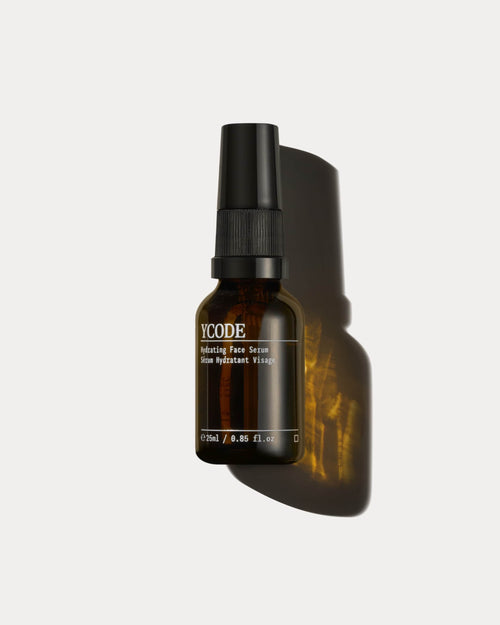
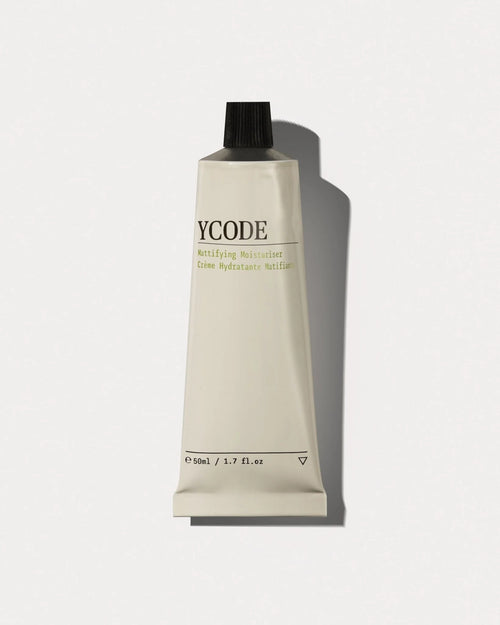
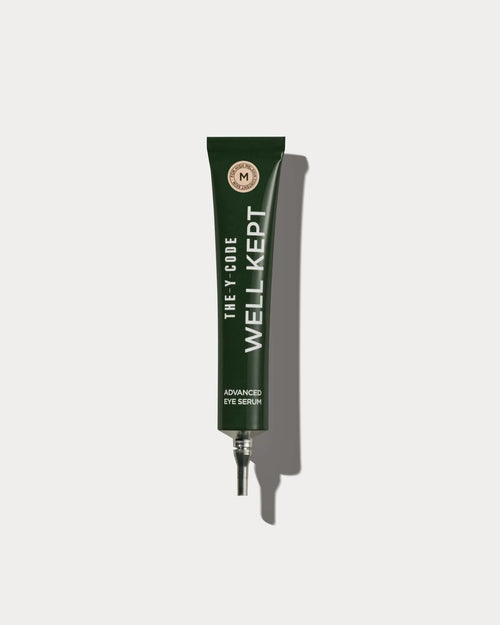
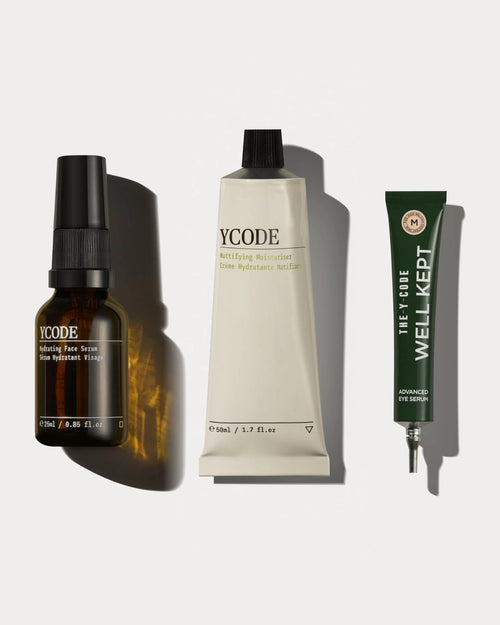
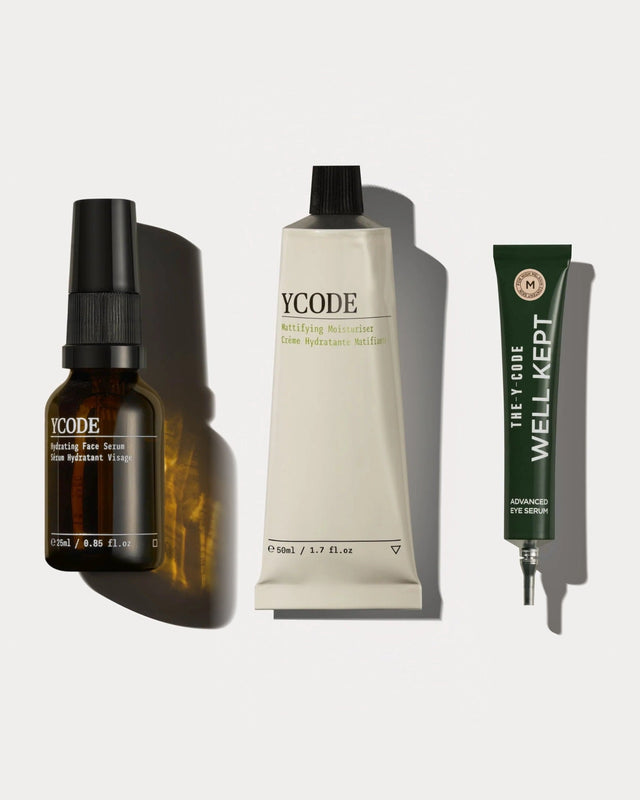
Three. A hydrating serum, a moisturiser, and a targeted eye treatment. Applied in the right order, each step compounds the one before it, and the full routine takes under two minutes.
Ready to give male skin a system built for its biology? The Core Trio pairs the serum, moisturiser and eye treatment as one calibrated routine, or take the two-minute routine finder to see where to begin.
References
- Rahrovan S, Fanian F, Mehryan P, Humbert P, Firooz A. Male versus female skin: What dermatologists and cosmeticians should know. International Journal of Women's Dermatology. 2018;4(3):122-130. PMC6116811
- Shuster S, Black MM, McVitie E. The influence of age and sex on skin thickness, skin collagen and density. British Journal of Dermatology. 1975;93(6):639-643. PMID 1220811
- Luebberding S, Krueger N, Kerscher M. Skin physiology in men and women: in vivo evaluation of 300 people including TEWL, SC hydration, sebum content and skin surface pH. International Journal of Cosmetic Science. 2013;35(5):477-483. PMID 23713991
- Szollosi AG, Olah A, Biro T, Toth BI. Recent advances in the endocrinology of the sebaceous gland. Dermato-Endocrinology. 2017;9(1):e1361576. PMC5821152

I started YCODE because most skincare was never designed for men’s skin. What I write here is what the formulators taught me, and what the trials actually found.
Continue reading
VIEW ALL →
Your skin can notice the change of season before you reach for a coat....
Three formulas focus on the major concerns men tend to see across the face...
The Daily Essentials improves the face and neck. Advanced Eye Serum adds concentrated support...












































































