

A skincare routine for men with oily skin, in three steps
Oily skin responds better to regulation than removal. Three steps, twice a day: a mild cleanse, a hydrating serum, then a mattifying moisturiser.
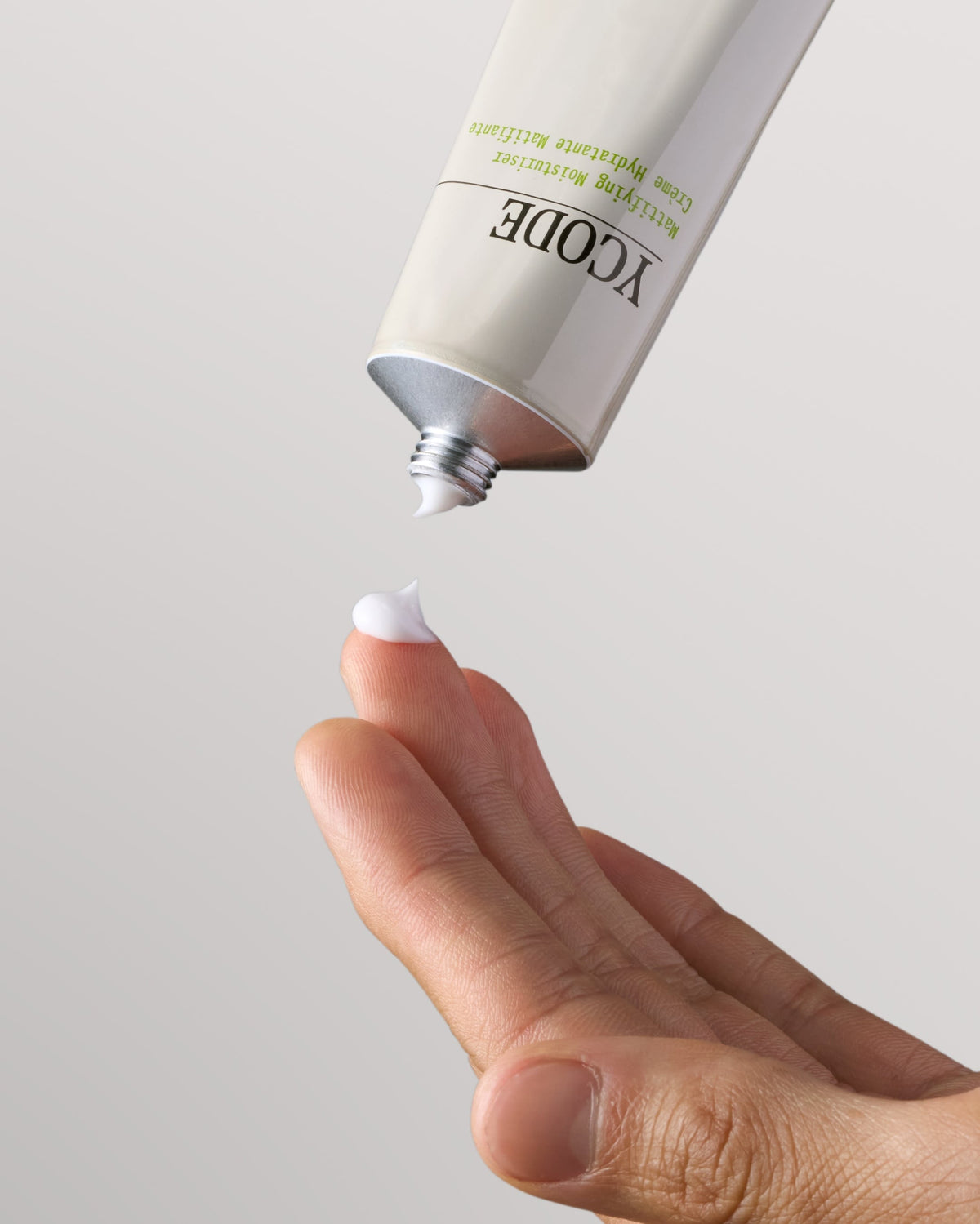
A skincare routine for men with oily skin needs three steps and about two minutes: cleanse with something mild, apply a lightweight hydrating serum, then seal with a mattifying moisturiser. The common instinct, which is to strip the oil away as aggressively as possible, is usually the thing keeping the shine in place. Oil is a symptom of how male skin is built and how it is being treated, and it responds better to regulation than to removal.
YCODE Mattifying Moisturiser, independent consumer trial, 53 men, four weeks.
Why Male Skin Is Oilier in the First Place
Sebum output is one of the few skin measurements where the difference between men and women is not subtle. In a study of 300 people assessing barrier function, hydration, sebum and pH at five sites on the body, sebum production in male skin was higher and stayed broadly stable across the lifespan, while in women it declined steadily.1 The same work found male skin surface pH sat below 5 across all sites and age groups, against above 5 in women.
The driver is androgenic. Sebaceous glands respond to testosterone and its derivatives, which is why male sebum rates hold up into middle age rather than falling away.2 Pore size follows the same line. A study of facial pores found enlarged pores were associated with higher sebum output, increasing age and male sex.3 So a man with a shiny forehead and visible pores across the nose is not doing anything wrong. He is reading a normal output level on skin that is thicker and more active than the skin most products are designed around. Skincare formulated for men starts from that number rather than treating it as a fault.
Does Oily Skin Still Need Moisturiser?
It does, and this is where most routines go wrong. Oil and water are separate measurements. Sebum sits on the surface as a lipid film; hydration is water held inside the stratum corneum. A face can carry plenty of one and very little of the other.
Recent work profiling oily skin against healthy skin found exactly that pattern: sebum content was raised, transepidermal water loss was raised, and hydration was lower.4 A raised water loss reading is the standard signal of a barrier that is not holding together properly. The skin was oily and dehydrated at the same time, with a compromised barrier underneath both.
Higher sebum output and a well-functioning barrier are not the same thing. Treating shine as the only problem tends to make the barrier worse, and a worse barrier produces more shine.
The Cycle That Keeps Oily Skin Shiny
The mechanism is unglamorous and self-reinforcing. Harsh cleansing removes surface lipids along with the dirt. The barrier weakens, water loss rises, and the skin becomes dehydrated beneath a layer of oil. Shine returns quickly, which reads as evidence that the skin is too oily, which prompts more stripping.
What Cleansing Does to Oily Skin
Cleansers fall broadly into two groups, and the difference matters more on oily skin than anywhere else. True soaps run at a pH of roughly 9 to 10. Male facial skin, as measured above, sits below 5. Applying the first to the second disrupts the barrier, dissolves intercellular lipids and shifts surface pH away from where the skin's enzymes work properly. Synthetic detergents, or syndets, are formulated closer to skin pH and largely preserve that structure.5
Practically: wash twice a day, morning and night, with a mild low-pH cleanser and lukewarm water. Not four times. Not with hot water and a scrub. Cleansing is the first and most important step in an oily-skin routine, because everything applied afterwards is working with or against whatever the cleanser left behind. A YCODE cleanser is coming soon. Until then, a fragrance-free syndet formula is the sensible choice.
Which Ingredients Regulate Oil Without Stripping It
- Niacinamide. The most studied ingredient for sebum control. In paired clinical trials of topical 2% niacinamide, sebum excretion rate fell significantly in the Japanese cohort and casual sebum levels fell in the Caucasian cohort, with the effect differing between the two groups.6 Worth setting expectations: this is measurable regulation over weeks, not an off switch. What you notice: less midday shine, pores that look less obvious.
- Marine humectants and microalgae extracts. These hold water in the stratum corneum without contributing lipids, which is the specific thing oily skin needs. Hydration goes up, oil does not. What you notice: skin that feels comfortable rather than tight after cleansing.
- Lightweight film formers. A moisturiser on oily skin should seal water in and then disappear. Heavy occlusives sit on top of existing sebum and read as grease within an hour. What you notice: a matte finish that stays put.
- What to use sparingly. Alcohol-heavy toners, physical scrubs and clay masks used daily all remove oil efficiently and cost barrier integrity doing it. They have an occasional place. They are a poor foundation.
The Routine, Step by Step
- Morning, step one. Cleanse with a mild low-pH formula and lukewarm water. Pat dry rather than rubbing.
- Morning, step two. Apply a hydrating serum to slightly damp skin. This is the water layer, and on oily skin it is the step most often skipped.
- Morning, step three. Apply a mattifying moisturiser. This seals the serum and controls surface shine through the day.
- Evening. Repeat the same three steps. The evening cleanse matters more, because it clears a full day of sebum, sunscreen and particulate.
- Weekly. One gentle exfoliation if pores are congesting. More than that works against you.
Three steps, twice a day. The restraint is the method, not a compromise on it.
How Long Before Oily Skin Looks Different?
Four weeks is a fair first assessment. Skin turnover, barrier repair and sebaceous adjustment all run on a scale of weeks, which is why the published sebum trials measured at two, three, four and six weeks.6 In YCODE's independent four-week trial of the Mattifying Moisturiser across 53 men, 74% reported skin looking more balanced and less shiny, 72% reported excess oil controlled, and 72% said skin was mattified without feeling dry. Barrier measures moved in the same window, with 79% reporting a stronger-feeling barrier.
Should men with oily skin skip moisturiser altogether?
How often should oily skin be washed?
Does oily skin age more slowly?
Why do pores look larger on oily skin?
Is a serum necessary if the moisturiser already hydrates?
Where to Start
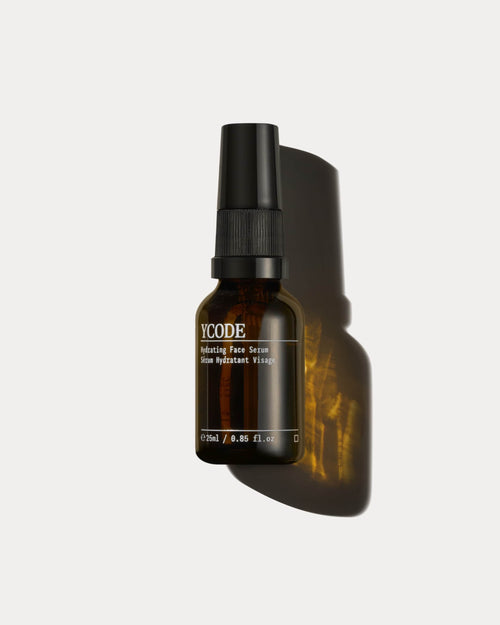
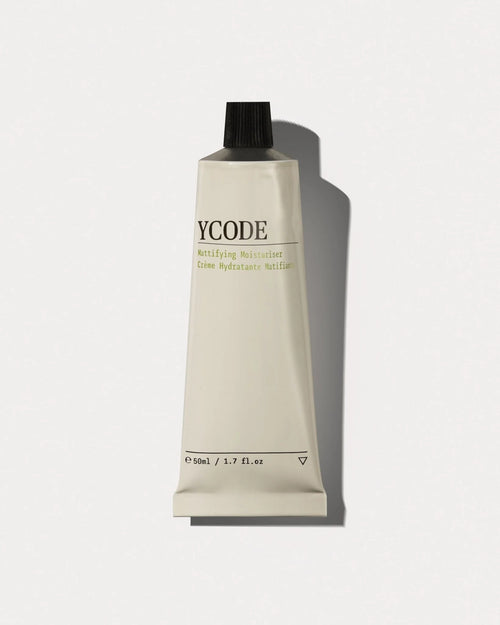
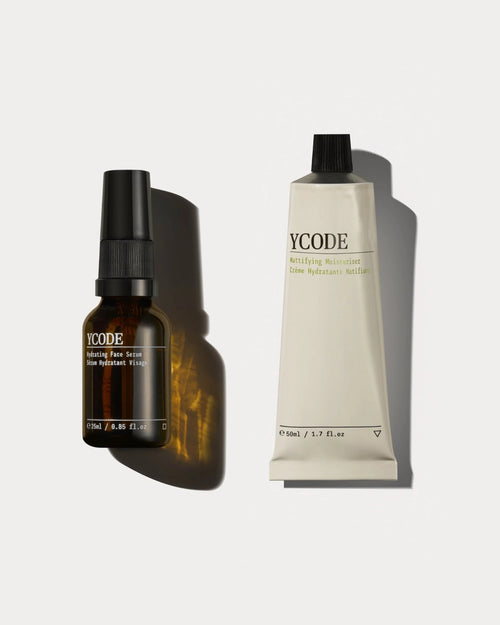
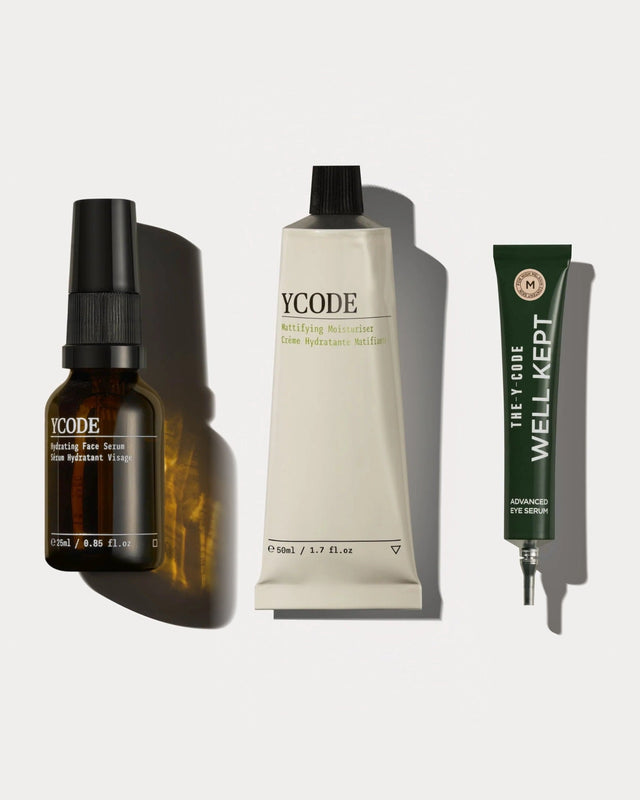
If the main complaint is shine, visible pores and a face that looks tired by mid-afternoon, the Mattifying Moisturiser is the step that changes the most, paired with the Hydrating Face Serum underneath it. If you are not certain whether you are dealing with oily skin, dehydrated skin or both, the Find What Works quiz will sort it in under a minute.
- Luebberding S, Krueger N, Kerscher M. Skin physiology in men and women: in vivo evaluation of 300 people including TEWL, SC hydration, sebum content and skin surface pH. International Journal of Cosmetic Science. 2013;35(5):477-483. PubMed
- Rahrovan S, Fanian F, Mehryan P, Humbert P, Firooz A. Male versus female skin: What dermatologists and cosmeticians should know. International Journal of Women's Dermatology. 2018;4(3):122-130. PubMed
- Roh M, Han M, Kim D, Chung K. Sebum output as a factor contributing to the size of facial pores. British Journal of Dermatology. 2006;155(5):890-894. PubMed
- Zhang J, Wu F, Wang J, Qin Y, Pan Y. Unveiling the Metabolomic Profile of Oily Sensitive Skin: A Non-Invasive Approach. International Journal of Molecular Sciences. 2024;25(20):11033. PMC
- Mijaljica D, Spada F, Harrison IP. Skin Cleansing without or with Compromise: Soaps and Syndets. Molecules. 2022;27(6):2010. PMC
- Draelos ZD, Matsubara A, Smiles K. The effect of 2% niacinamide on facial sebum production. Journal of Cosmetic and Laser Therapy. 2006;8(2):96-101. PubMed

I started YCODE because most skincare was never designed for men’s skin. What I write here is what the formulators taught me, and what the trials actually found.
Continue reading
VIEW ALL →
Your skin can notice the change of season before you reach for a coat....
Three formulas focus on the major concerns men tend to see across the face...
The Daily Essentials improves the face and neck. Advanced Eye Serum adds concentrated support...












































































