

Travel Skincare Routine for Men: Flights, Sun, and Sea
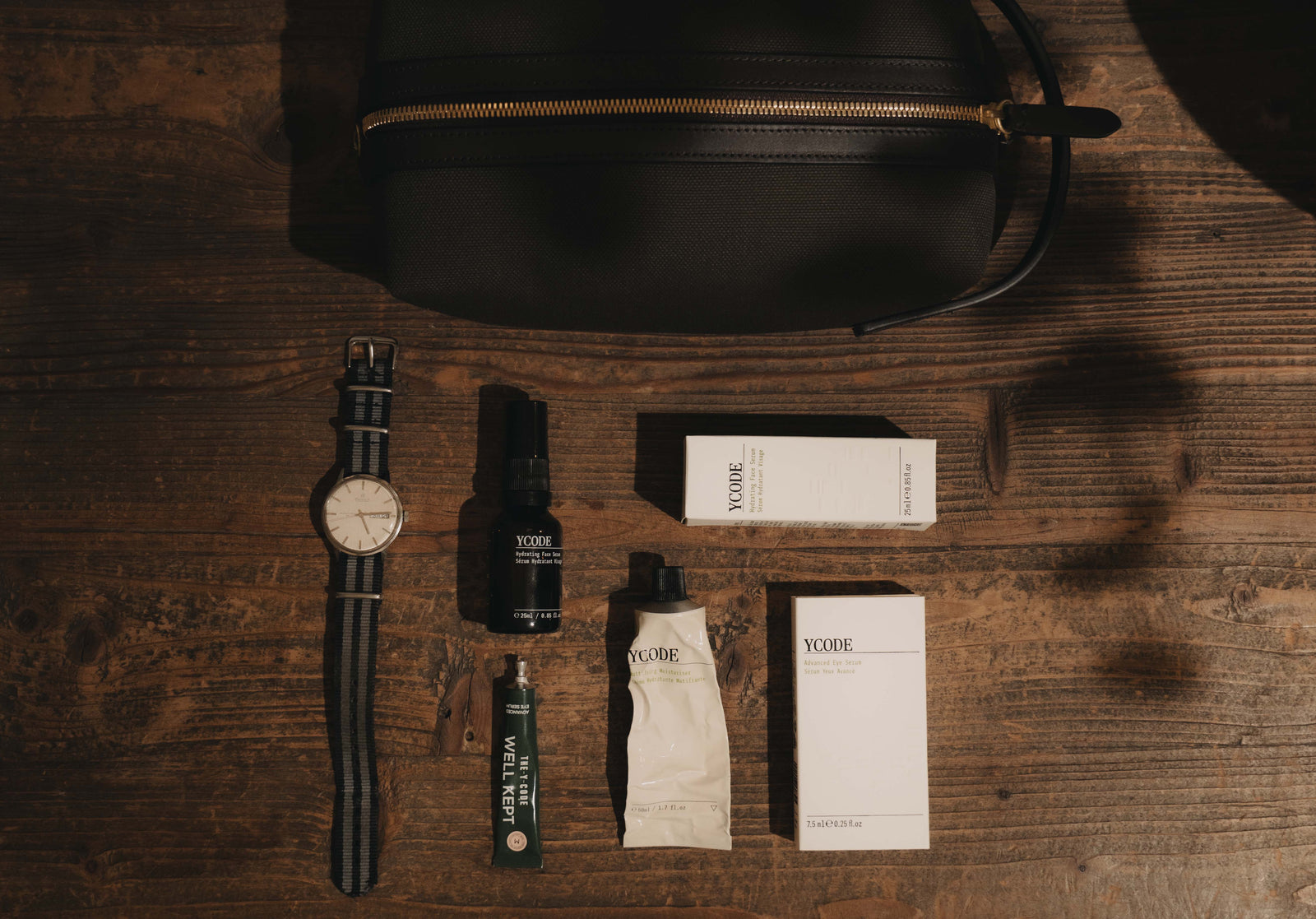
A men's travel skincare routine is usually treated as a packing problem: decant a few products into smaller bottles and hope they survive the week. That misses what is actually happening. Travel changes the work the skin has to do. Cabin air pulls moisture from the surface, ultraviolet exposure drives inflammation, and each new climate forces the barrier to adapt in real time. A routine built for the road needs ingredients that respond to those conditions, packaging that holds a formula together in transit, and a sequence quick enough to use in two minutes at six in the morning in an unfamiliar hotel bathroom. What follows is what happens to male skin on the move, which ingredients the biology calls for, and how to assemble a carry-on system that performs as well at altitude as it does at home.
What does a flight actually do to your skin?
Skin reacts to its surroundings faster than most people expect. A flight, a change of climate or a shift in altitude can move hydration levels, oil output and barrier function within hours rather than days.
Cabin air is the first pressure. Aircraft cabins hold relative humidity between 10 and 20 per cent, roughly a third of what skin is used to at ground level (YCODE)1. At that level, transepidermal water loss speeds up. The barrier gives up moisture from beneath the surface, and the skin answers by producing more oil. Because male skin already generates roughly twice the sebum of female skin (YCODE), that correction tends to overshoot. The result is a face that feels dehydrated and greasy at the same time.
Climate shifts add to the load. Moving between air-conditioned interiors and bright outdoor heat across a single day asks the barrier to adapt again and again, and low ambient humidity has been shown to reduce barrier function and raise reactivity to irritants2. Broken sleep from time zones slows the overnight repair window, which YCODE places between 11pm and 4am. These stresses accumulate. One flight leaves a temporary mark. A week of travel compounds dehydration, barrier fatigue and slowed recovery into something you can see.
Why do most travel routines fall apart?
The usual move is to shrink an existing routine. Decant the cleanser. Pack a moisturiser sample. Trust it to hold together for a week. It rarely does, for two reasons.
First, decanted products lose stability. Air introduced during the transfer speeds up the oxidation of active ingredients, so a serum poured into an open-necked travel bottle is weaker by the time it lands. Second, most routines are designed for stable conditions. They assume steady humidity, steady temperature and steady sleep. Travel removes all three at once. A system that works on the road has to be built for instability rather than against it.
What should a travel skincare system actually do?
Three principles separate a working travel system from a wash bag of small bottles.
- Adapt to shifting conditions. Microalgae-based actives keep a degree of biological intelligence after extraction. Through osmoadaptation they read the skin's surroundings and adjust: binding more water as humidity drops, easing off as oil rises. Ambient humidity has a measurable effect on the stratum corneum and its hydration, which is exactly the variable that changes most in transit3. What you notice? Skin that holds comfortable rather than tightening an hour into the flight.
- Support the barrier, not just the surface. The barrier is the first casualty of environmental change. Niacinamide increases ceramide biosynthesis in the outer skin layer, reinforcing barrier structure from within5, while sodium hyaluronate binds moisture below the surface where it resists evaporation. What you notice? Less flaking around the nose and jaw after a run of early flights.
- Fit the format to the trip. Every product under 100 ml. The full system carry-on compliant. Fast-absorbing formulas that work inside a two-minute window. What you notice? A routine that actually gets used at 6am rather than abandoned in the bag.
The organisms that spent billions of years adapting to the marine environment developed the precise compounds skin needs after a day spent in that same environment. From Sea to Cell™ is not a metaphor here. It is the mechanism.
How do you build the carry-on routine?
The system that works at home works on the road. Three products, two minutes, every formula under 100 ml by design.
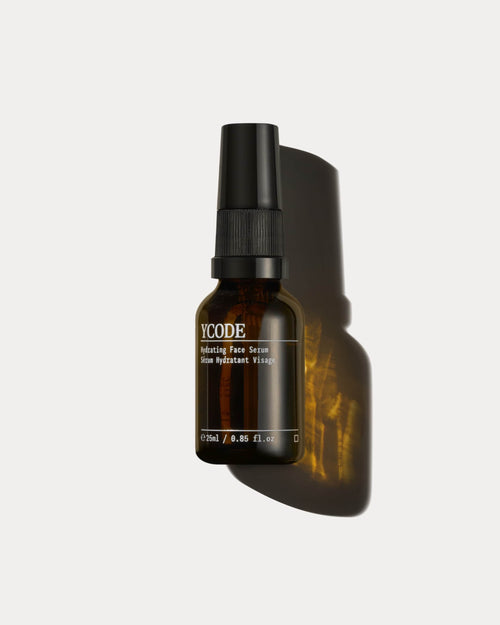
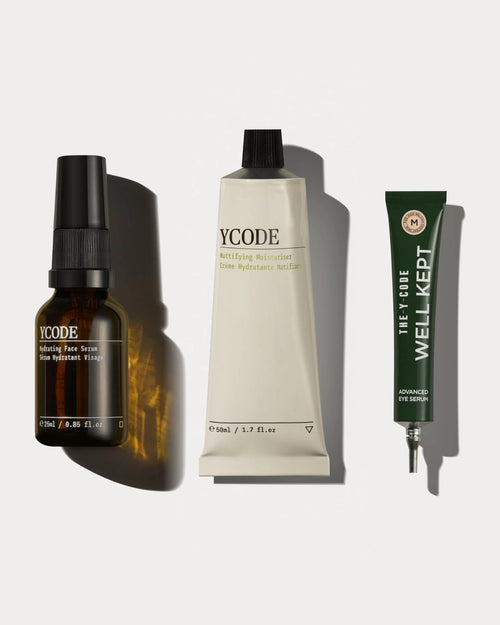
Step one, the Hydrating Face Serum (25 ml, amber glass). One to two pumps on damp skin. Chlorella vulgaris extract, niacinamide, sodium hyaluronate and saccharide isomerate deliver adaptive hydration that answers shifting conditions and reaches the layers where barrier repair begins. Apply it first so the moisturiser has something to seal.
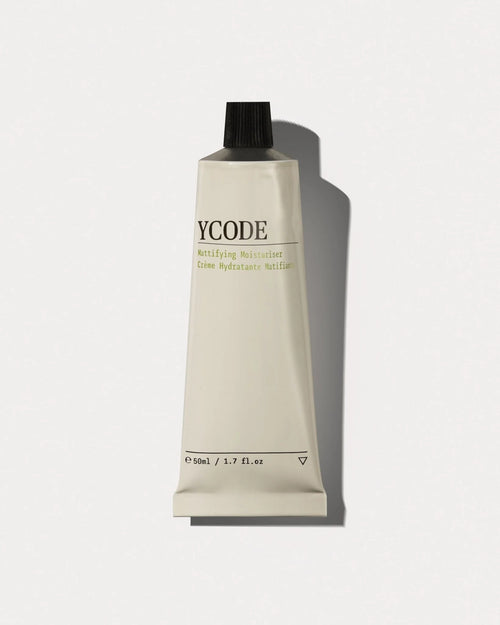
Step two, the Mattifying Moisturiser (50 ml, aluminium tube). It locks in hydration and manages oil as conditions change. Rice starch absorbs excess sebum without stripping, and palmitoyl tripeptide-5 supports collagen integrity with consistent use. The matte finish holds through long days and climate swings.
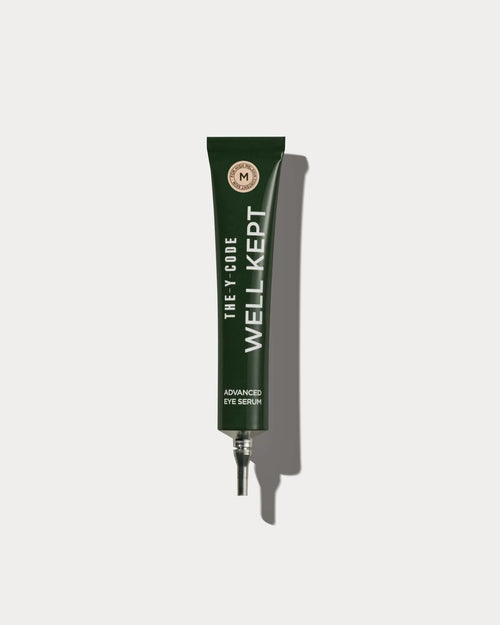
Step three, the Advanced Eye Serum (7.5 ml, aluminium tube). The eye area shows travel fatigue first. Marine bioactives calm inflammation on contact, a light-reflecting mineral complex softens the look of dark circles, and CO2-extracted wild ginger addresses puffiness.
Bought together, the Core Trio fits in a single dopp kit with no decanting and no compromise on concentration, whether it is used at home or at altitude. Same concentration, same formula stability, wherever the trip takes you.
What about sun, salt and sea?
Sun protection is the starting point. A broad-spectrum SPF applied before exposure remains the single most effective measure against ultraviolet damage, and the case for it is well established: UV is the most important modifiable driver of skin ageing and damage4. That is the baseline. What matters here is what happens afterwards.
A day in the water leaves its mark. Sea salt draws moisture from the barrier, ultraviolet exposure triggers inflammation and oxidative stress beneath the surface, and sand and wind cause micro-abrasion. By the time you rinse off, the skin is managing dehydration, irritation and cellular stress at once. The Chlorella vulgaris at the core of the Hydrating Face Serum evolved in marine environments under constant ultraviolet radiation, and the compounds it developed there read the skin's condition and respond: calming inflammation, binding hydration where it has been lost, and supporting the barrier as it recovers. Niacinamide reinforces that recovery by helping to restore the barrier lipids the day has depleted5. One to two pumps on damp skin after a swim, followed by the moisturiser to seal it, is the whole of it.
FAQ
What is the best travel skincare routine for men?
Three steps. A hydrating serum to carry actives below the surface, a moisturiser to seal and manage oil, and an eye treatment for the area that shows fatigue first. Applied in sequence it takes under two minutes, and every product is carry-on compliant at under 100 ml.
Does flying really affect your skin?
Yes. Aircraft cabins hold relative humidity between 10 and 20 per cent, well below normal conditions (YCODE)1. That accelerates moisture loss through the barrier and can prompt more oil as the skin compensates. Male skin, which already produces more oil, is especially prone to that imbalance in the air.
How do you keep skincare stable when travelling?
Packaging does the work. Aluminium tubes resist oxygen penetration and hold formula integrity across pressure and temperature changes, and amber glass shields light-sensitive ingredients from ultraviolet degradation. Avoiding open-necked travel bottles keeps the concentration and stability of active ingredients intact.
Can you take the serum in carry-on luggage?
The Hydrating Face Serum is 25 ml, comfortably within the 100 ml carry-on liquid limit for international flights (YCODE). All three YCODE products sit within that limit and fit inside a standard liquids bag, so nothing needs to be decanted.
This article is for informational purposes only and is not intended as medical advice.
Build a system that travels as well as you do. Start with the Starter Kit or step up to the carry-on Core Trio, and if you are unsure where to begin, take the two-minute skin quiz.
References
- Lindgren T, Norbäck D, Andersson K, Dammström BG. Cabin environment and perception of cabin air quality among commercial aircrew. Aviation, Space, and Environmental Medicine. 2000;71(8):774-782. https://pubmed.ncbi.nlm.nih.gov/10954352/
- Engebretsen KA, Johansen JD, Kezic S, Linneberg A, Thyssen JP. The effect of environmental humidity and temperature on skin barrier function and dermatitis. Journal of the European Academy of Dermatology and Venereology. 2016;30(2):223-249. https://pubmed.ncbi.nlm.nih.gov/26449379/
- Goad N, Gawkrodger DJ. Ambient humidity and the skin: the impact of air humidity in healthy and diseased states. Journal of the European Academy of Dermatology and Venereology. 2016;30(8):1285-1294. https://pubmed.ncbi.nlm.nih.gov/27306376/
- D'Orazio J, Jarrett S, Amaro-Ortiz A, Scott T. UV radiation and the skin. International Journal of Molecular Sciences. 2013;14(6):12222-12248. https://pubmed.ncbi.nlm.nih.gov/23749111/
- Tanno O, Ota Y, Kitamura N, Katsube T, Inoue S. Nicotinamide increases biosynthesis of ceramides as well as other stratum corneum lipids to improve the epidermal permeability barrier. British Journal of Dermatology. 2000;143(3):524-531. https://pubmed.ncbi.nlm.nih.gov/10971324/

I started YCODE because most skincare was never designed for men’s skin. What I write here is what the formulators taught me, and what the trials actually found.
Continue reading
VIEW ALL →
Stress and poor sleep have a way of becoming visible. The eyes look heavier....
Your skin can notice the change of season before you reach for a coat....
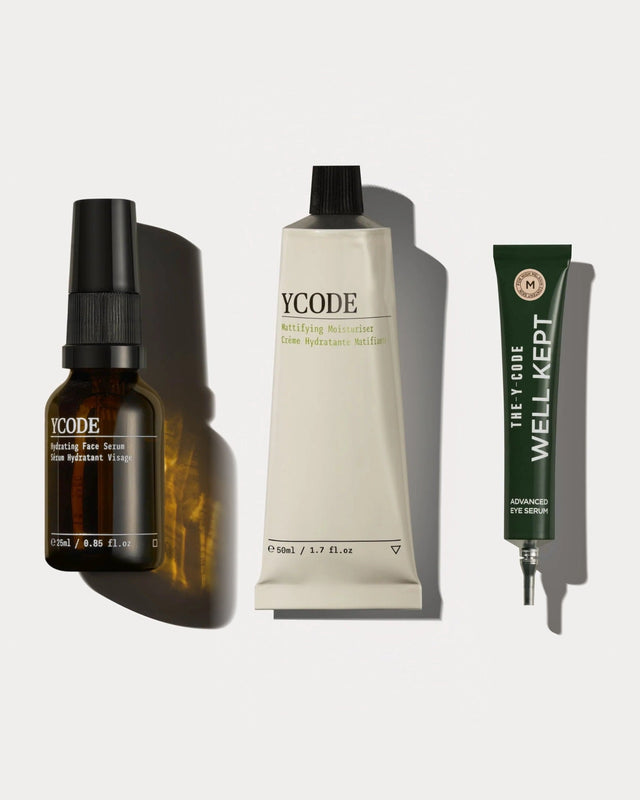
Three formulas focus on the major concerns men tend to see across the face...












































































