

How much eye serum to use, and exactly where to apply it
A rice grain for both eyes, smoothed all the way around the eye, above as well as below. Why the dose and the placement change the result as much as the formula does.
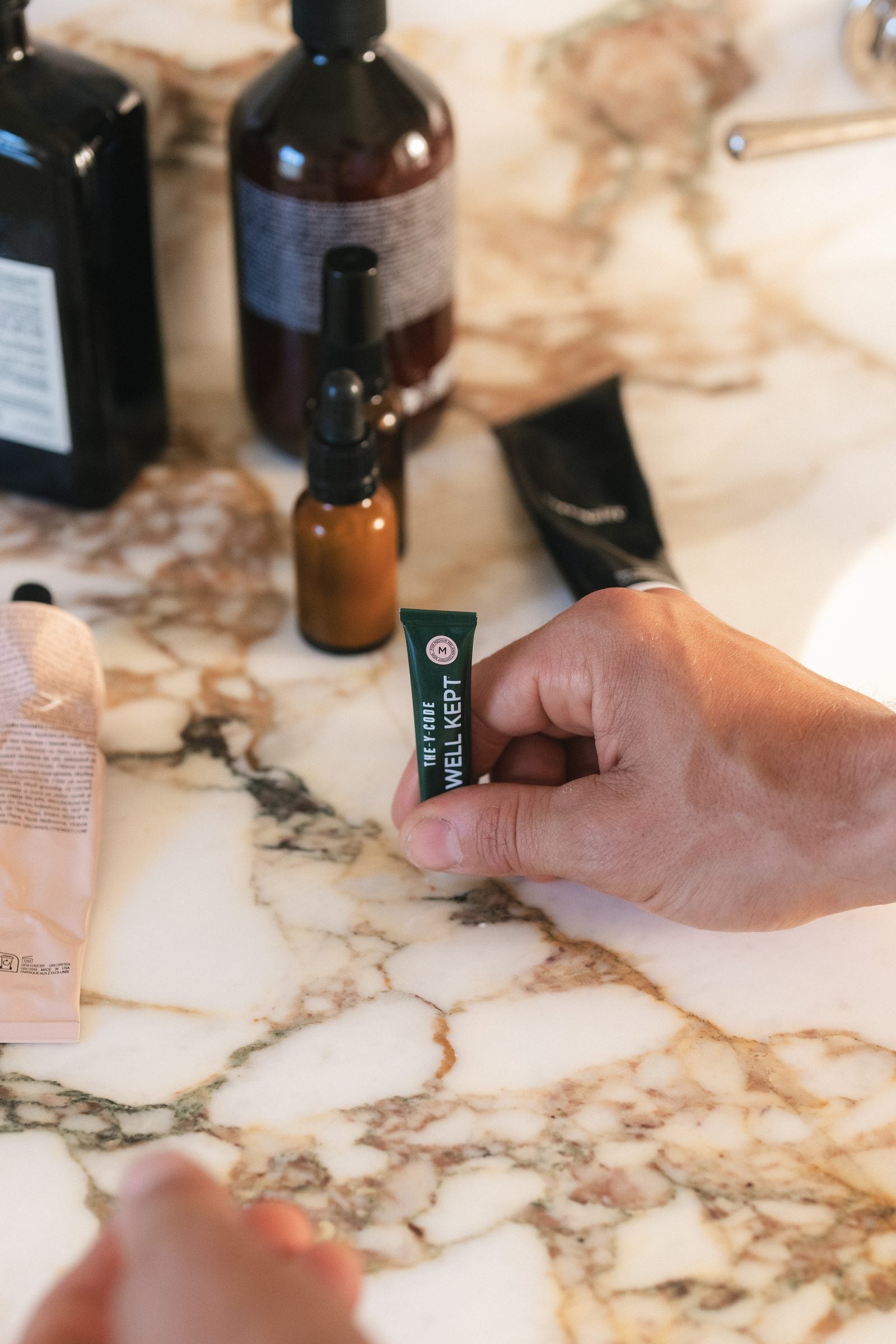
A rice-grain amount for both eyes, worked gently all the way around the eye, twice a day. That is the whole answer, and if you stop reading here you will already be doing it better than most men. Everything below is why those details matter, because getting them wrong is the reason eye products sting, migrate, or appear to do nothing at all.
Eye care is one of the few areas of skincare where the technique changes the outcome as much as the formula does. It is also the area where nobody ever explains the technique, so men either apply far too much or give up.
How much: a rice grain for both eyes
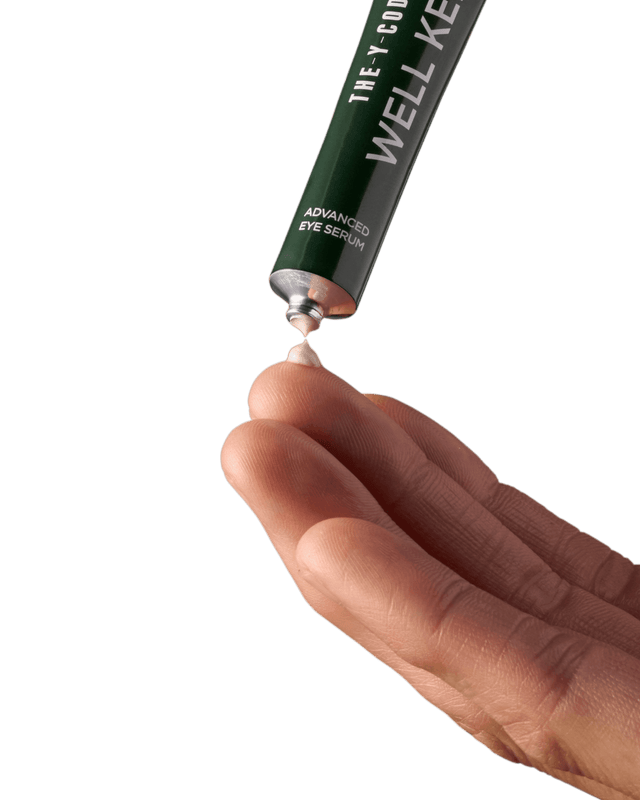
Not a pea. A pea is a moisturiser dose for a whole face. For the eye area you want roughly a grain of rice in total, split between the two sides, which looks almost insultingly small on your fingertip and is the correct amount.
The reason is the skin itself. Ultrasound measurement puts the upper eyelid at a median of about 574 micrometres, against roughly 1,907 at the tip of the nose, which makes the eye area more than three times thinner than skin a few centimetres away.1 Thin skin has a small capacity. It takes up what it can and the rest stays on the surface, where it warms, thins and travels. That travelling product is what ends up in your eye, and it is a common reason men blame a formula for stinging when the real cause is volume.
Too much also shows. An excess of any eye product sits on the surface rather than absorbing, which reads as shine rather than a rested face.
Where: the whole eye, not just underneath it
Squeeze the serum onto one middle finger, put the tube down, and dab it between your two middle fingers. That is one dose, split between the two eyes and ready to go.
Start underneath the eye and work it in, then up and over the top of the eye, along the lid, so it reaches the strip between the eyelash and the eyebrow. That strip is skin as well, and it responds like the rest. Then come back down and blend out into the cheekbone.
Men are often told to keep eye products on the orbital bone and nowhere near the lid. The caution behind that advice is about volume rather than territory: eyelid skin lets substances through more readily than the rest of the face,2 so a heavy dose placed there has somewhere unwelcome to go. At a rice grain split between both eyes there is no excess to travel, and the area above the eye is part of what you are treating.
The eye area is not a small face. Treat the whole ring of skin around the eye as its own area, with its own dose and its own technique, and it behaves.
How: gently, but properly in
Light pressure throughout. The skin around the eye is the thinnest on your body, so the aim is to work the serum into it without dragging or stretching anything.
It does need to go in. A film left sitting on the surface is not doing very much, and it is the residue that migrates. Blend it until it has disappeared, which takes about twenty seconds once the habit is there.
Chronic rubbing and physical trauma are recognised contributors to under-eye pigmentation over time,3 which is why the pressure matters more than the motion. Habitual hard rubbing, the kind that comes with allergies or tired eyes, is worth breaking as a habit. Twenty seconds of light application is a different thing entirely.
When: morning and night, as the final targeted step
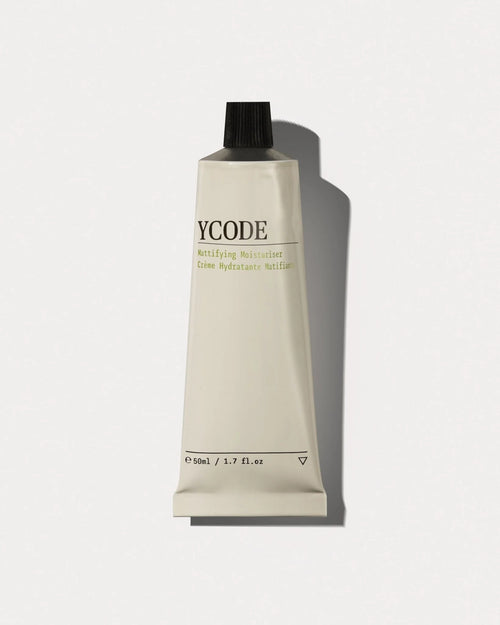
Twice a day, after you have applied Hydrating Face Serum and Mattifying Moisturiser. The face serum goes onto clean skin first, the moisturiser follows, and Advanced Eye Serum is then applied precisely around the eye area as the final targeted step for dark circles, puffiness and fine lines.
Let it settle for a minute before applying sunscreen. Ultraviolet exposure can worsen the appearance of dark circles, so photoprotection remains part of managing them properly.3
Consistency beats quantity by a distance. Twice a day at a rice grain will always outperform an occasional heavy application, and it makes a tube last far longer than most men expect.
The five-second version
A rice grain for both eyes. Onto one middle finger, dabbed between two. Under the eye, up and over the lid, back down to the cheekbone. Gently, but properly in. After your Hydrating Face Serum and Mattifying Moisturiser, morning and night.
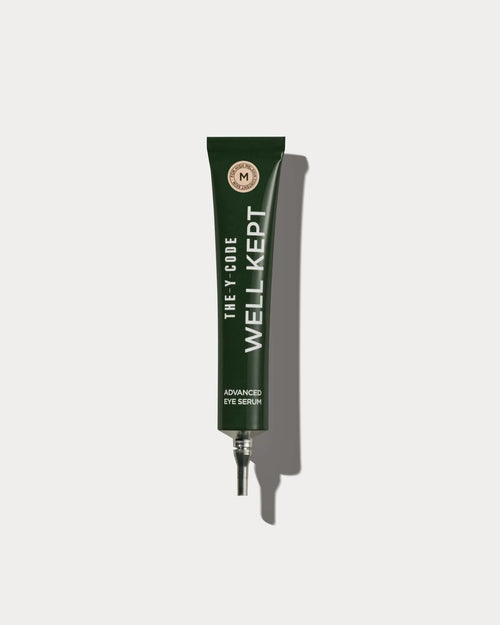
That is how we intend our Advanced Eye Serum to be used, and the dose is deliberate. The serum is fragrance-free and comes in three formulas, M, M+ and M-, developed around the different requirements of different skin tones under our Melanin Adaptive Technology. The minerals in it work with your own tone, so the point is not to apply more and get more, but to apply the right amount and let it read as your own skin looking more rested.
Figures from published ingredient studies of the supercritical CO2 wild ginger extract the serum is built on. Eurofins Dermscan, 111 volunteers, mean age 42, self-assessed at 15 days. These are ingredient-study results, not a YCODE consumer trial.
If you want the eye serum and a moisturiser as one habit rather than two decisions, The Starter Kit pairs them. If your under-eye is more about morning puffiness than anything else, read why your eyes look puffy in the morning. And if a previous eye product burned and put you off, we explained why eye serums sting separately.
How much eye serum should I actually use?
Where exactly do I put it?
Should I tap it on or rub it in?
Does eye serum go on before or after moisturiser?
What if I have been using too much?
- Korzekwa S, Matusz K, Kukulski M, et al. Quantitative Analysis of the Human Face Skin Thickness: A High-Frequency Ultrasound Study. Journal of Clinical Medicine. 2025;14(23):8401. Source
- Huang CX, Yiannias JA, Killian JM, Shen JF. Seven Common Allergen Groups Causing Eyelid Dermatitis: Education and Avoidance Strategies. Clinical Ophthalmology. 2021;15:1477-1490. Source
- Sarkar R, Ranjan R, Garg S, Garg VK, Sonthalia S, Bansal S. Periorbital Hyperpigmentation: A Comprehensive Review. Journal of Clinical and Aesthetic Dermatology. 2016;9(1):49-55. Source
- NHS. Eyelid problems. National Health Service, 2024. Source

I started YCODE because most skincare was never designed for men’s skin. What I write here is what the formulators taught me, and what the trials actually found.

Continue reading
VIEW ALL →
Your skin can notice the change of season before you reach for a coat....
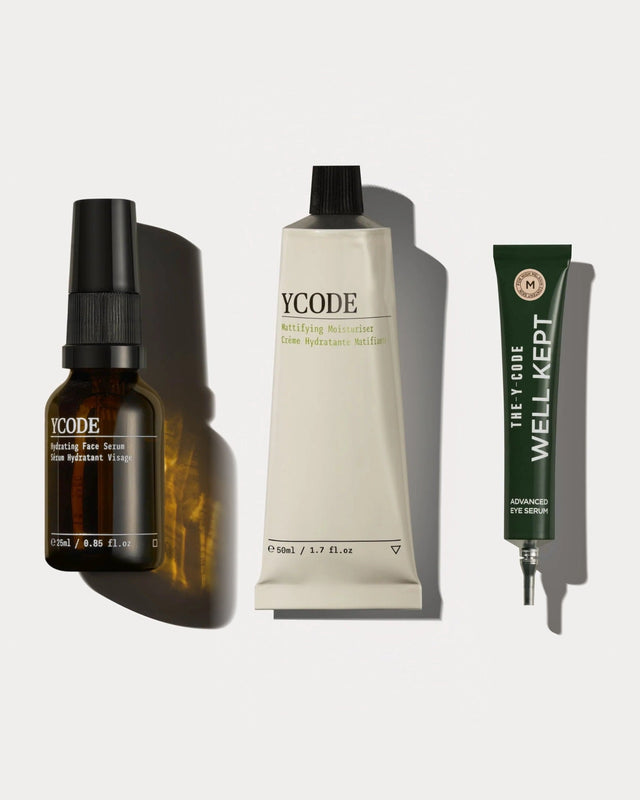
Three formulas focus on the major concerns men tend to see across the face...
The Daily Essentials improves the face and neck. Advanced Eye Serum adds concentrated support...












































































