

A two-product routine for men that actually works
Most routines fail because they are abandoned, not because they are wrong. Two products, twice a day, is the smallest thing that still does the whole job.
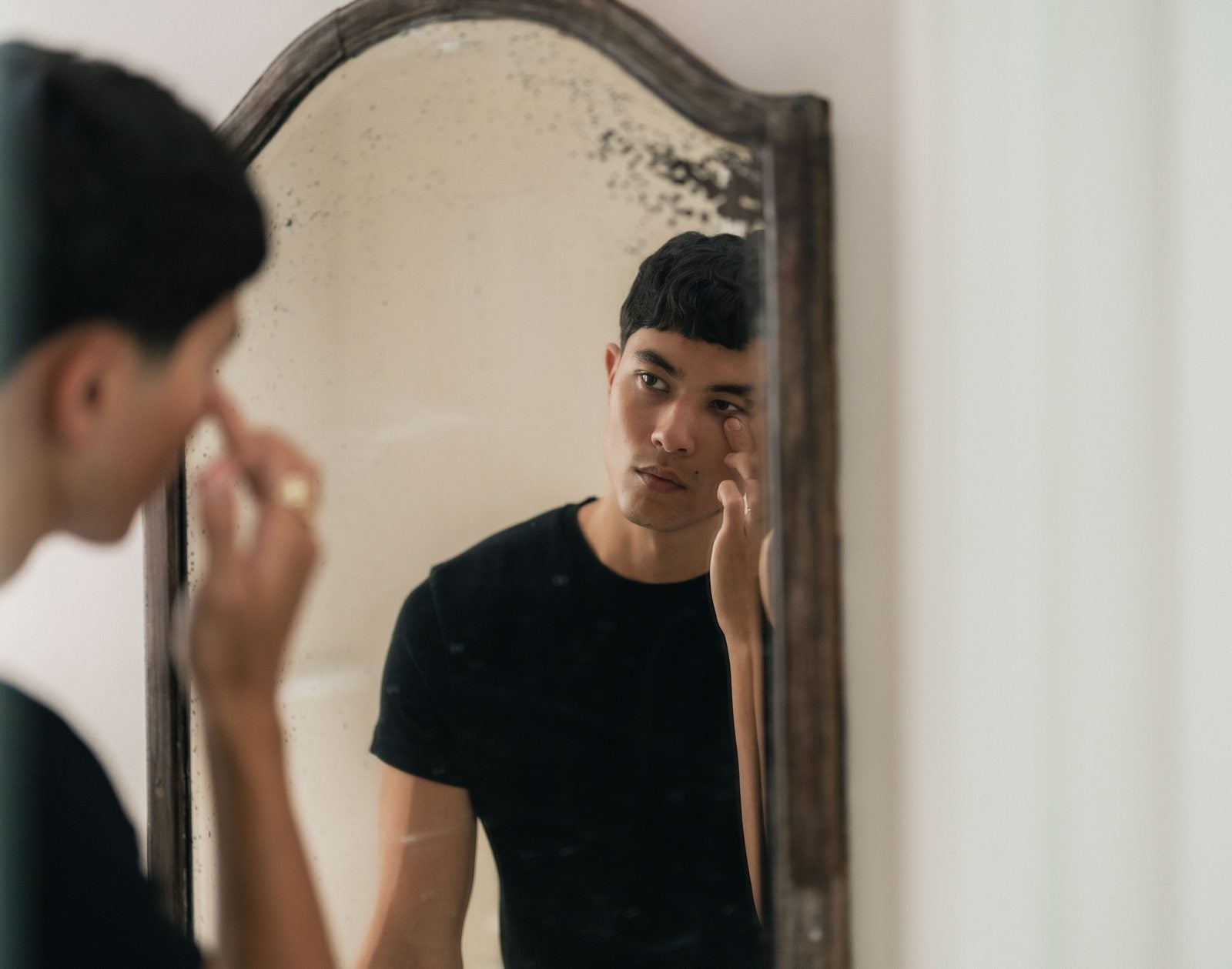
Most skincare routines do not fail because they were wrong. They fail because they were abandoned. Somebody was sold seven steps, did five of them for eleven days, then went back to soap and a bottle of something from an airport. The routine was never tested. It was just quietly dropped.
That is the case for two products rather than a shelf of them. Not that less is purer, or that men need something simplified for them. Simply that a routine you actually perform twice a day beats a better one you perform for a fortnight in January.
The evidence for keeping it short
The honest data on this comes from medicine rather than cosmetics, because that is where anyone bothers to measure whether people do what they said they would.
Adherence to topical treatment is poor even when the stakes are a diagnosed skin condition. A 2024 review of adherence across common dermatological conditions found patients in psoriasis studies applying between 50% and 60% of the expected number of applications, with adherence dropping from around 85% at the start to roughly half by week eight. The barriers people reported were the obvious ones: the time commitment, the fiddly application, and simply forgetting. And the fix that shows up repeatedly is regimen design, with once-daily regimens adhered to better than twice-daily ones 1.
If people struggle to apply one prescribed cream for a condition that visibly bothers them, the odds on a healthy man completing a six-step routine at half past six in the morning are not good. Design for the man who is late, not the man with a free evening.
What two products have to do between them
There is a floor below which a routine stops doing anything, and it is set by how skin holds water.
Moisturising works through three mechanisms. Humectants pull water into the outer layer. Occlusives sit above and slow its escape. Emollients settle into the lipid matrix, improve how the surface behaves and support the skin's own lipid production 2. Most of the water in that outer layer is bound inside the cells to natural moisturising factor, a mix of amino acids, urea and lactic acid, and when it is depleted the layer contracts and you feel it 3.
So the minimum viable routine is one product that puts water and actives in, and one that keeps them there. A serum and a moisturiser. One product doing both jobs is always a compromise, because the thin base that lets actives spread is the opposite of the richer base that holds them.
Two products is not a smaller version of a real routine. It is the smallest thing that still does the whole job, which is a different claim.
Why men in particular do not need more
Male and female skin measurably differ. Reviews of the comparative data describe differences in thickness, in sebum output and in surface pH, with men typically producing more sebum and running a slightly higher surface pH 4. Thicker, oilier skin does not need a stack of rich creams. What it needs is water, an active or two worth having, and something light enough to hold them without adding shine.
Add shaving, which is a mechanical pass over the barrier several times a week, and the argument for gentle and consistent over elaborate and occasional gets stronger.
The routine, timed honestly
Morning. Rinse or wash. On skin that is still slightly damp, half a pump of serum, pressed between the palms and smoothed over face and neck. Ten seconds. Wait while you brush your teeth. Moisturiser over the top, another ten seconds.
Night. The same, on a face that has had a day on it.
That is under a minute a side, twice a day. Two minutes total, and the second minute is mostly waiting.
The order is not a ritual. Thin first, so it reaches skin without an occlusive layer in the way. Rich second, so it can do the holding 2. If the second layer rolls into little balls on the way on, that is a film problem with a simple fix, covered in why serum pills under moisturiser.
What the pair was measured doing
Our two face products were trialled together, in that order, as a regime. That matters, because most brands trial products individually and then imply the combination.
YCODE serum and moisturiser used together, independent consumer trial, ADSL 2025-0162, 50 men, four weeks.
In the same trial, 84% said their skin looked less shiny and more balanced after four weeks, and after the very first use 88% said their skin instantly felt rehydrated using the serum followed by the cream.
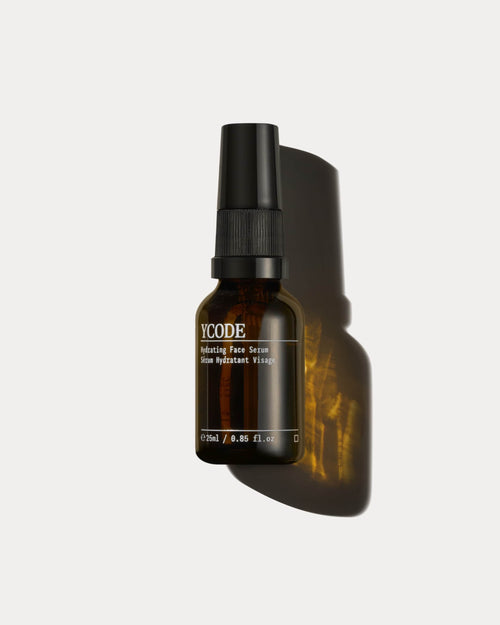
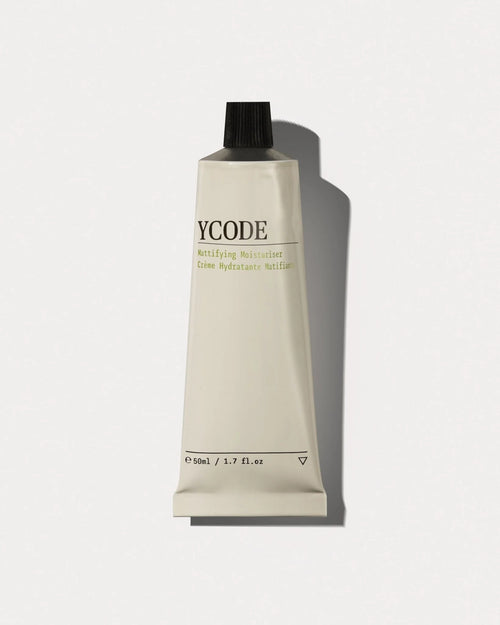
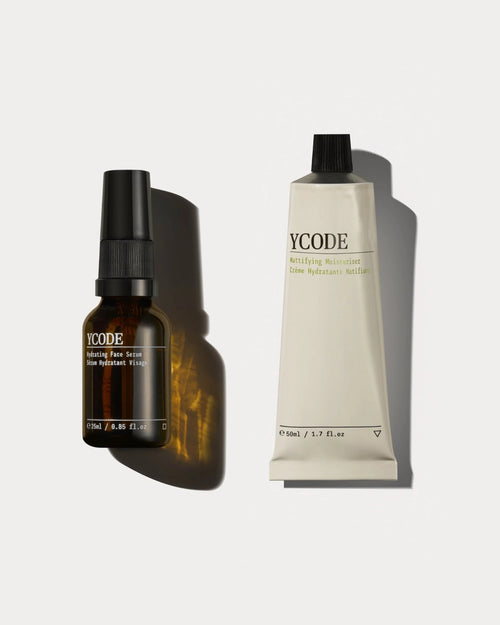
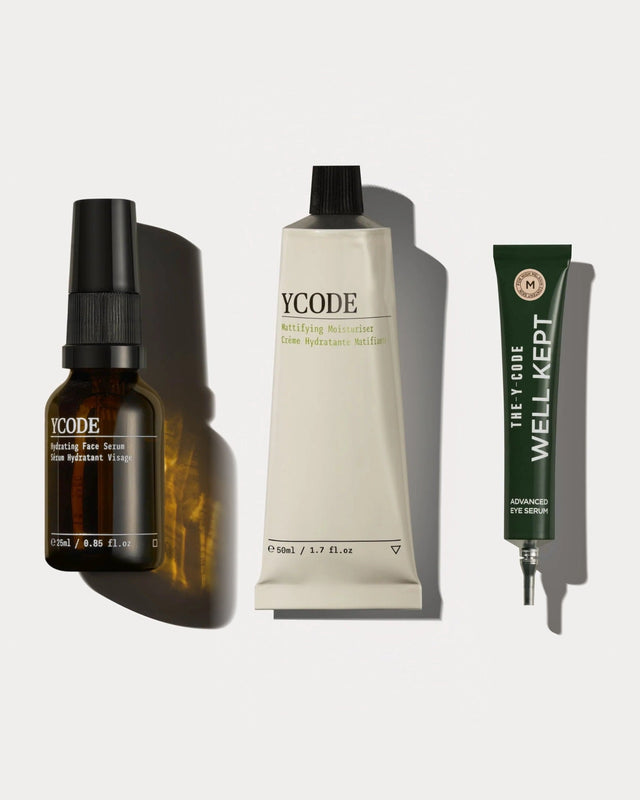
The two are the Hydrating Face Serum, which carries the water and the actives, and the Mattifying Moisturiser, which is a moisturiser first: deep hydration that holds all day, formulated for every skin type, with oil balanced and the look of pores refined. Together they are sold as The Daily Essentials.
How to judge whether it is working
Give it a fortnight before you have an opinion, and look in daylight rather than bathroom light.
The first thing to change is comfort. Skin that does not feel tight an hour after washing is the earliest signal, and it usually arrives within days. Texture and how rested your face looks take longer, which is why the trial figures above are measured at four weeks rather than four days.
On the habit itself, the research is reassuring. In a study tracking people forming a new daily behaviour, automaticity took a median of 66 days to plateau, with a wide spread between individuals, and missing a single day had no lasting cost 5. Two useful conclusions follow. It will feel like an effort for longer than a month, and one forgotten night does not reset anything.
Attach it to something you already do without deciding to do it. After brushing your teeth is the reliable one.
If you are still not convinced any of this applies to you, that is a fair position, and it is the subject of skincare for men who do not do skincare.
Is a two-product routine enough for men?
Which order do the two go on in?
How long does it take, honestly?
How long before I see anything?
- Cirstea N, Radu A, Vesa C, et al. Current Insights on Treatment Adherence in Prevalent Dermatological Conditions and Strategies To Optimize Adherence Rates. Cureus. 2024;16(9):e69764. Source
- Rajkumar J, Chandan N, Lio P, Shi V. The Skin Barrier and Moisturization: Function, Disruption, and Mechanisms of Repair. Skin Pharmacology and Physiology. 2023;36(4):174-185. Source
- Camilion JV, Khanna S, Anasseri S, Laney C, Mayrovitz HN. Physiological, Pathological, and Circadian Factors Impacting Skin Hydration. Cureus. 2022;14(8):e27666. Source
- Rahrovan S, Fanian F, Mehryan P, Humbert P, Firooz A. Male versus female skin: What dermatologists and cosmeticians should know. International Journal of Women's Dermatology. 2018;4(3):122-130. Source
- Lally P, van Jaarsveld CHM, Potts HWW, Wardle J. How are habits formed: Modelling habit formation in the real world. European Journal of Social Psychology. 2010;40(6):998-1009. Source

I started YCODE because most skincare was never designed for men’s skin. What I write here is what the formulators taught me, and what the trials actually found.
Continue reading
VIEW ALL →
Your skin can notice the change of season before you reach for a coat....
Three formulas focus on the major concerns men tend to see across the face...
The Daily Essentials improves the face and neck. Advanced Eye Serum adds concentrated support...












































































