

Marine actives for men: what they are, and what the evidence supports
Polysaccharides, antioxidants and mineral-rich algal extracts. What marine actives actually are, what the human research does and does not show, and why grown beats harvested.
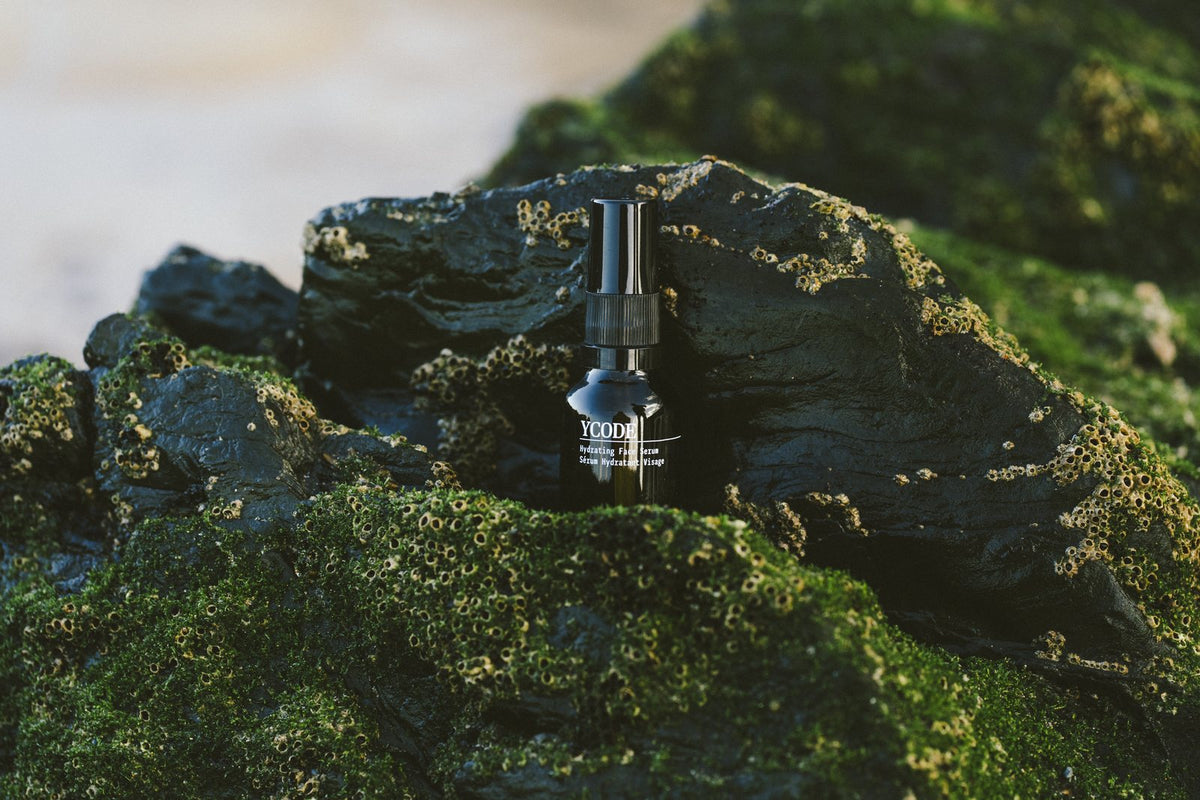
Marine actives are the compounds drawn from algae and other marine organisms and put to work in skincare. Polysaccharides that hold water. Antioxidants and pigments that mop up oxidative stress. Mineral-rich extracts from calcified algae. It is one of the most interesting ingredient categories in the industry, and one of the most loosely described, because almost nobody selling it separates what the evidence supports from what the marketing implies.
This page is our attempt to do that separation for men, honestly, including the parts that do not flatter us.
What actually counts as a marine active
Four families cover most of what you will meet on an ingredient list.
Polysaccharides. The long-chain sugars that make up much of algal structure: fucoidan from brown seaweeds, alginates, carrageenans, and the complex sugars inside microalgae. These are the humectants of the category. One review found that polysaccharides from certain marine algae outperformed hyaluronic acid as a humectant on water retention.1
Antioxidants and pigments. Carotenoids, polyphenols and the ultraviolet-absorbing amino acids that marine organisms evolved because they spend their lives in sunlit, oxygen-rich water. Chlorella vulgaris extract has been shown to protect cells against oxidative damage from hydrogen peroxide, a standard laboratory model of environmental stress.2
Mineral-rich extracts. Calcified red algae such as Lithothamnium calcareum carry calcium, magnesium and trace minerals in a structure the formula can work with. This is the part of the category with the least published human data, and we will come back to that.
Peptides and amino acids. Fragments of marine protein used for the same reasons as any other cosmetic peptide, with the same modest evidence base.
What the evidence supports
Three things stand up reasonably well.
Hydration. Marine polysaccharides behave as effective humectants, drawing and holding water in the upper layers of skin.1 In a review of human studies, one algal extract raised skin hydration by around 14% against placebo at two hours, with the effect still present at eight.3
Antioxidant activity and its downstream effects. Fucoidans suppress collagen breakdown by reducing matrix metalloproteinase expression while preserving pro-collagen, and they raise hyaluronic acid production in skin cells.1 In the human studies collected in that same review, a Fucus vesiculosus extract applied twice daily for five weeks produced a significant improvement in skin elasticity measured by cutometry.3
Effects on pigment. Certain marine oligosaccharides inhibit tyrosinase and reduce melanin synthesis in cell studies,1 and formulations containing Fucus vesiculosus have reported reductions in the appearance of skin spots over 60 days.3
What the evidence does not yet support
Here is the part most marine skincare pages leave out. The review that collected those human results found only eight human studies meeting its inclusion criteria, and concluded that further clinical research is needed on long-term safety, efficacy and optimal concentration.3 Most of what is known about marine actives comes from laboratory and cell work, not from people.
There is a second problem, and it is structural. Cosmetics generally use whole extracts containing unknown quantities of bioactive material rather than purified compounds, which makes it hard to attribute any result to any specific molecule.3 Algal composition also varies with species, season, water conditions and how the material is processed, which is a genuine analytical challenge for anyone trying to make a consistent product.4
So the fair summary is this. Marine actives have strong mechanisms, good tolerability and real but limited human data. They are not a replacement for the deeply evidenced classics, and we would rather say so than pretend the argument is settled.
The mechanisms are good. The human trials are few. The variability is the real problem, and it is a manufacturing problem before it is a marketing one.
Why marine actives suit men's skin specifically
Men's skin is not a different organ, but it runs differently. It is thicker, produces more sebum, and carries a denser collagen structure, and those differences are measurable rather than rhetorical.5 Add daily shaving, which is a mild controlled injury repeated several times a week, and you have skin that is robust in structure and easily provoked at the surface.
That combination rules out a lot. Actives that work by forcing turnover ask for an adjustment period of redness and flaking, and most men simply stop before it passes. Marine actives, on the whole, work by supporting the barrier and by managing oxidative stress rather than by controlled irritation. For a routine a man will still be doing in month six, tolerability is not a footnote. It is usually the deciding variable.
Grown, not harvested
Variability is the category's weakest point, so it is worth explaining how we deal with it.
Our microalgae never goes near the sea. The Chlorella vulgaris strain we use is grown in closed photobioreactors in Iceland and Barcelona, on a clean, defined feed, then cold-pressed and stabilised. Growing rather than harvesting removes the two problems at once. Material grown in a closed system cannot carry heavy metals, pesticides or microplastics from open water, and it does not vary with the season or the state of the tide, because there is no season and no tide. It also removes the marine smell that wild-harvested material often brings with it, which we cover in why some skincare smells of the sea.
Every formula we make is fragrance-free, so there is nothing sitting over the top of the ingredients to disguise them.
How marine actives are used across our formulas
Different products carry different marine material on purpose, so each earns its place rather than repeating the one before it.
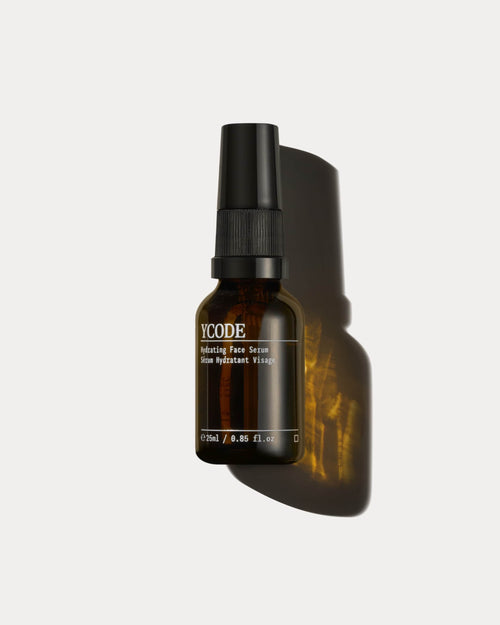
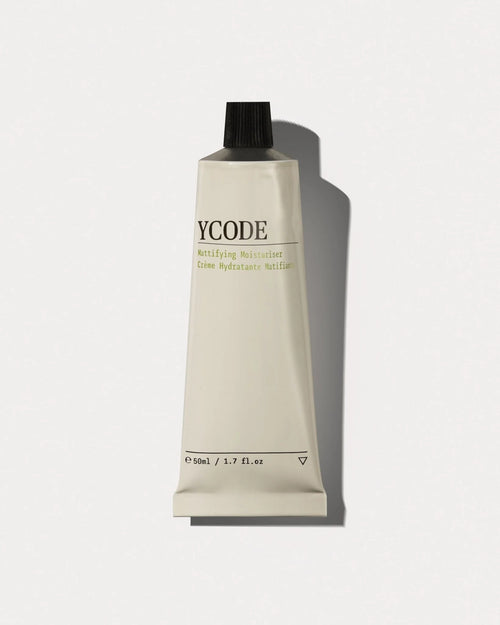
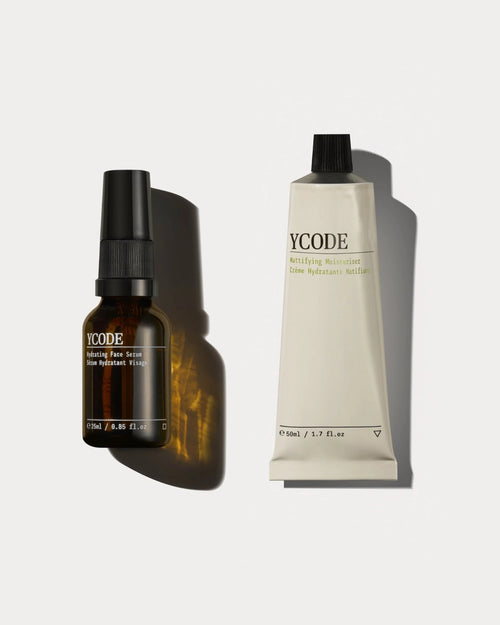
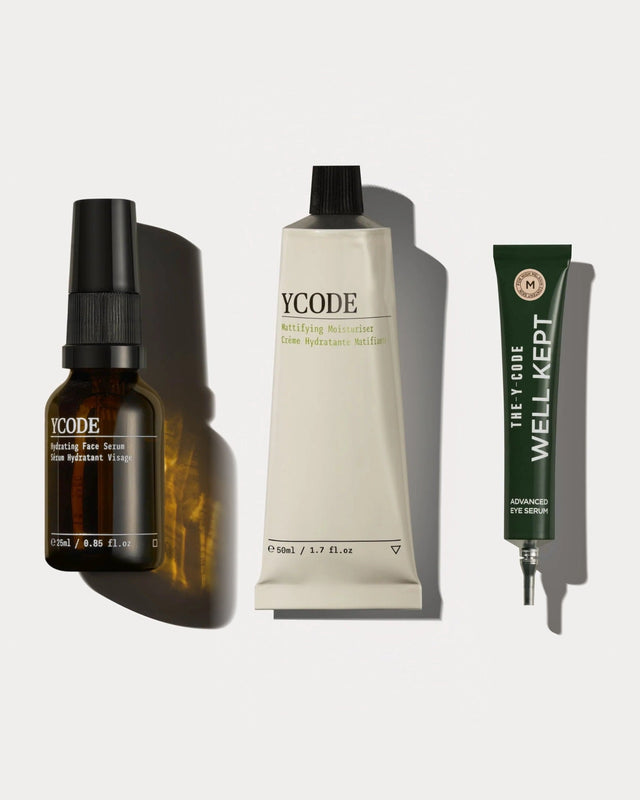
The Hydrating Face Serum and the Mattifying Moisturiser both build on Chlorella vulgaris extract, and are sold together as The Daily Essentials. The serum is the hydration and barrier step. The moisturiser is a moisturiser first: deep hydration that holds all day, suitable for every skin type, with oil balanced and pores refined rather than skin stripped. In their consumer trials, 98% of the 50 men testing the serum said their skin appeared rehydrated at four weeks and 96% said the barrier felt stronger, ADSL 2025-0056. Among the 53 men testing the moisturiser, 87% said their skin appeared rehydrated at four weeks, ADSL 2025-0057. Used together, in a separate trial of 50 men, 90% said their skin stayed moisturised all day and 88% said the barrier felt stronger, ADSL 2025-0162.
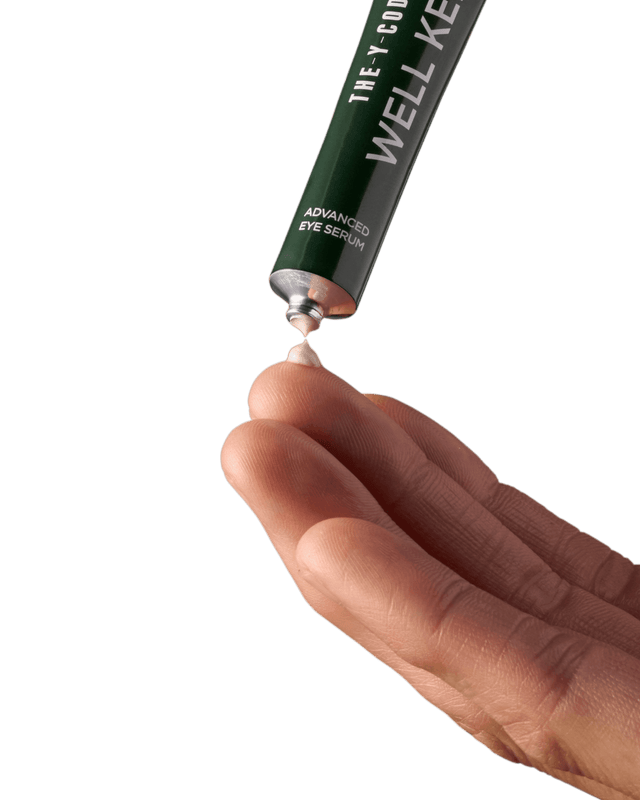
The Advanced Eye Serum uses a different marine set, built around a characterised Fucus vesiculosus extract and a mineral-rich Lithothamnium calcareum extract, alongside a supercritical CO2 extract of wild ginger. That is the product where we lean on the published ingredient studies rather than our own consumer data, and we say so on the page.
For how this category compares with retinol, vitamin C and peptides, we set out the argument in marine actives versus traditional anti-ageing ingredients. If the question you actually came with was about the eyes, we have written plainly about whether niacinamide helps dark circles, and about where a serum sits relative to a moisturiser once you have chosen one.
How to judge a marine active on a label
Three questions get you most of the way. Was it grown or harvested, and does the brand say. Is a species named, or does the label just say marine extract. And is the formula fragrance-free, or is a fragrance covering the raw material. A brand that has done the work will answer all three without hedging, and one that has not will change the subject to the ocean.
What are marine actives in skincare?
Do marine actives really work?
Are marine actives better for men's skin?
Is grown microalgae better than wild-harvested seaweed?
- Kim JH, Lee JE, Kim KH, Kang NJ. Beneficial effects of marine algae-derived carbohydrates for skin health. Mar Drugs. 2018;16(11):459. Source
- Extracts from Chlorella vulgaris protect mesenchymal stromal cells from oxidative stress induced by hydrogen peroxide. Plants. 2023;12(2):361. Source
- Murphy MJ, Dow AA. Clinical studies of the safety and efficacy of macroalgae extracts in cosmeceuticals. J Clin Aesthet Dermatol. 2021;14(10):37-41. Source
- Marine macroalgae in topical formulations: bioactive compounds, variability, analytical challenges and skin benefits. Pharmaceutics. 2025;17(9):1143. Source
- Rahrovan S, Fanian F, Mehryan P, Humbert P, Firooz A. Male versus female skin: what dermatologists and cosmeticians should know. Int J Womens Dermatol. 2018;4(3):122-130. doi:10.1016/j.ijwd.2018.03.002 PubMed

I started YCODE because most skincare was never designed for men’s skin. What I write here is what the formulators taught me, and what the trials actually found.
Continue reading
VIEW ALL →
Your skin can notice the change of season before you reach for a coat....
Three formulas focus on the major concerns men tend to see across the face...
The Daily Essentials improves the face and neck. Advanced Eye Serum adds concentrated support...












































































