

What one month of consistency changes
Skin replaces itself over roughly four weeks. What that means for judging any product, what the barrier actually does, and the measurement that shows hydration lasting five days after the last application.

At one month, the result begins to feel less like a particularly good morning and more like your normal baseline.
The skin's surface is continually renewing. What you see now has developed through a month of consistent use, supported each morning and night.
What to look for now
Look for skin that appears smoother and more even. Dark circles sitting lighter. An eye area that looks rested on an ordinary day, and recovers better after a short night.
Notice how the skin feels late in the afternoon. Better-supported hydration should leave it feeling less dry and papery.
Add a photograph to the ones taken on day one and day 15. Three points make the progression clearer than any single before-and-after image.
Red algae minerals, for hydration and barrier support
The skin barrier keeps water in and helps keep irritants out. It is often described as bricks and mortar: skin cells surrounded by the lipids that hold the structure together.
In a placebo-controlled study of 41 volunteers aged 40 to 60, the red algae material produced:6
Two instruments produced those figures. Corneometry measures how much water the outer layer is holding, by reading its electrical capacitance. Transepidermal water loss measures the opposite, the rate at which water evaporates out through the skin, which is the standard way of telling whether a barrier is doing its job. Both follow the European consensus protocol for measuring water in skin.5
The day-33 reading was taken five days after the final application. Nothing had been applied for 120 hours, so it shows that the hydration benefit remained measurable beyond the application period rather than sitting on the surface as a film.
In laboratory work on skin explants, the same material increased ceramide content and supported barrier recovery after controlled disruption.7 This helps explain the in-vivo hydration and water-loss results.
The role of pro-vitamin B5 and beetroot extract
Pro-vitamin B5 and beetroot extract work alongside the red algae material to support hydration and the condition of the skin barrier.
Their role is less theatrical than an immediate optical effect, but fundamental to how the surface feels and how consistently it holds water through the day.
What the skin cycle actually means
Twenty-eight days is useful shorthand, but skin renewal is not one universal clock.
Research distinguishes the movement through the outermost layer from the longer journey through the full epidermis. Tracked in living volunteers, the outer layer takes about twenty days in young adults and more than ten days longer in older ones.1 Turnover of the whole epidermis has been put at 45 days2 and, on recalculation, 47 to 48.3 Both slow with age, and neither happens uniformly across every person or every part of the face.
The useful point is simpler: after a month, the surface has had meaningful time to renew under the conditions created by consistent use.
Why the eye area matters so much
The skin around the eye is among the thinnest on the face,4 so changes in hydration, texture, blood vessels and the structure beneath it are particularly visible.
It is also where other people read tiredness. Studies comparing rested and sleep-deprived faces found visible differences around the eyes, including darker circles, swelling, hanging eyelids and more visible lines.8
How rested you look is largely decided within an inch of your eye.
What happens next
The next measured marker arrives at two months. Eye bags were scanned in three dimensions, with average volume reduction continuing to increase between one and two months.
There is no need to change the routine. One grain of rice, morning and night, then let consistency do its work.
Where the serum fits
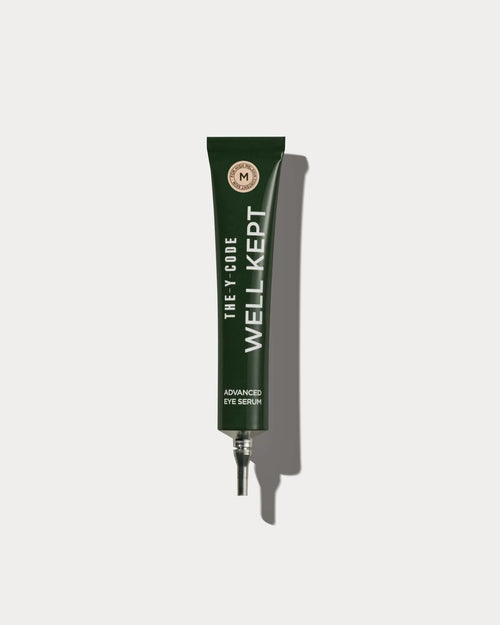
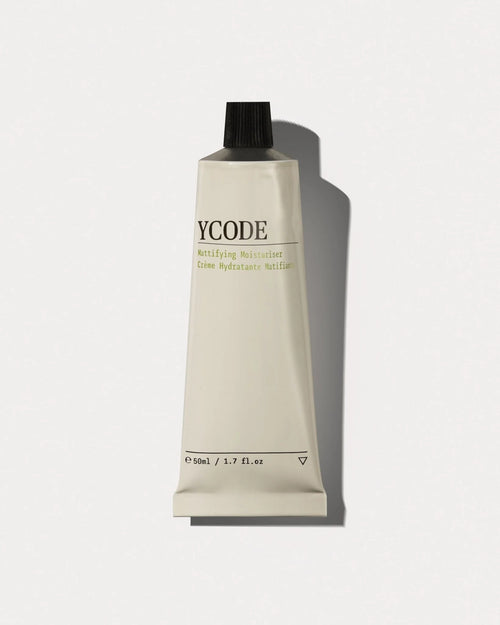
Advanced Eye Serum is the final targeted step of the routine. Apply Hydrating Face Serum first, follow with Mattifying Moisturiser, then use Advanced Eye Serum around the eye area to address dark circles, puffiness and fine lines. The complete routine takes about two minutes.
For the previous checkpoint, read what has changed at 15 days. If tightness or dehydration is your wider concern, why your skin feels tight after washing covers the barrier more generally. And to build the complete routine, start with the two-minute skin analysis.
A month in, it should have stopped being something you are trying and started being part of how you leave the house. That is the point at which it is working.
Freddie Sheridan
Founder
Is skin really on a 28-day cycle?
Why does the day-33 measurement matter?
Does skin turnover slow as I get older?
What does the skin barrier do?
What if I have not seen much at one month?
- Grove GL, Kligman AM. Age-associated changes in human epidermal cell renewal. Journal of Gerontology. 1983;38(2):137-142. Source
- Bergstresser PR, Taylor JR. Epidermal 'turnover time': a new examination. British Journal of Dermatology. 1977;96(5):503. Source
- Iizuka H. Epidermal turnover time. Journal of Dermatological Science. 1994;8(3):215-217. Source
- Chopra K, Calva D, Sosin M, et al. A comprehensive examination of topographic thickness of skin in the human face. Aesthetic Surgery Journal. 2015;35(8):1007-1013. Source
- Berardesca E, Loden M, Serup J, Masson P, Rodrigues LM. The revised EEMCO guidance for the in vivo measurement of water in the skin. Skin Research and Technology. 2018;24(3):351-358. The consensus protocol for corneometry and transepidermal water loss measurement. Source
- Supplier in vivo study of Lithothamnium calcareum with rice amylopectin, studied at 3%. 41 volunteers, 21 women and 20 men, aged 40 to 60, two daily applications against placebo for 28 days, final measurement at day 33. Hydration by corneometry, water loss by transepidermal water loss measurement.
- Supplier ex vivo study on skin explants, studied at 3% over six days, measuring ceramide content and barrier recovery following induced disruption.
- Sundelin T, Lekander M, Kecklund G, Van Someren EJW, Olsson A, Axelsson J. Cues of Fatigue: Effects of Sleep Deprivation on Facial Appearance. Sleep. 2013;36(9):1355-1360. Source

I started YCODE because most skincare was never designed for men’s skin. What I write here is what the formulators taught me, and what the trials actually found.

Continue reading
VIEW ALL →
Stress and poor sleep have a way of becoming visible. The eyes look heavier....

Your skin can notice the change of season before you reach for a coat....
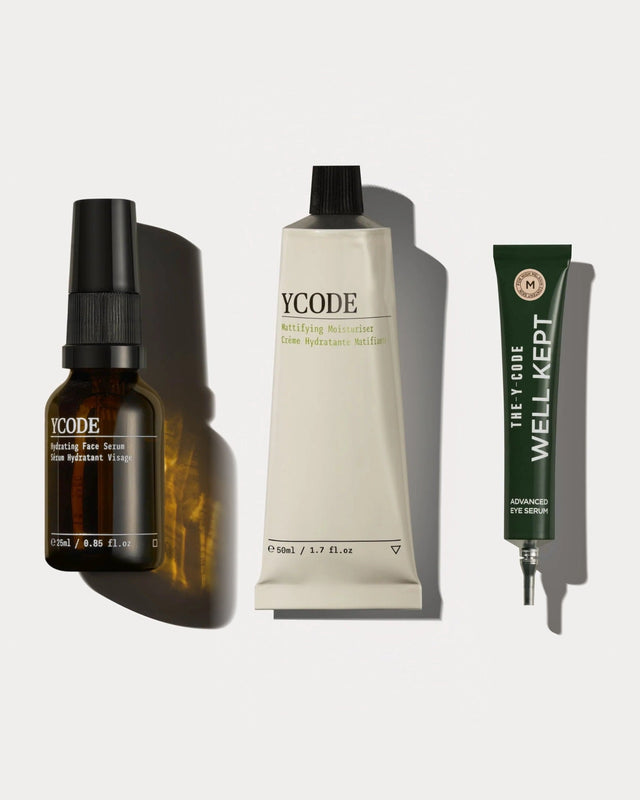
Three formulas focus on the major concerns men tend to see across the face...












































































