

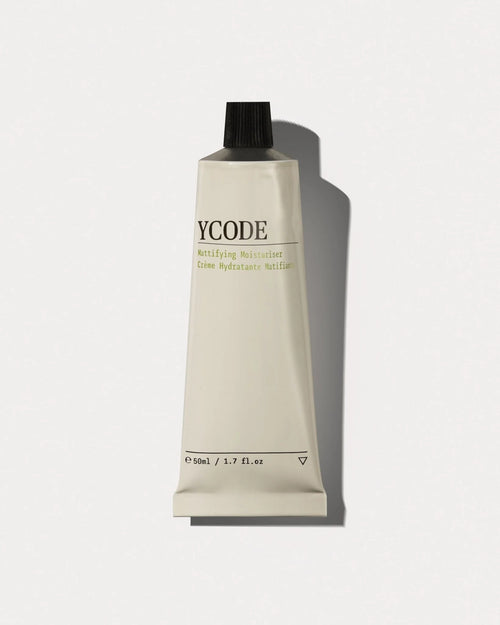
Inside Mattifying Moisturiser: microalgae and the craft of the formula
The Chlorella active scans the condition of the skin and supplies a unique blend of vitamins, minerals and peptides according to what it finds. It does this again as the skin's needs change.

Formulation is not made special by the number of ingredients on the label. It becomes special when every material has a defined job, when those jobs complement one another, and when the finished texture makes the whole system easy to use every day.
Mattifying Moisturiser was built around Chlorella vulgaris, then balanced with ingredients that control the surface, support water, feed the microbial environment and work on the longer structural clock.
This is what we mean by biologically intelligent skincare.
The organism at the centre
Chlorella vulgaris is a single-celled green microalga. Long before complex plants existed, microalgae had learned to survive changing light, temperature, nutrients and water conditions by adjusting their own chemistry.
That adaptive history is what makes microalgae interesting to skincare. Reviews of microalgal compounds in topical products describe a wide range of pigments, polysaccharides, lipids and peptides drawn from exactly that chemistry.12 The value is not simply that it came from water. The value is its ability to assess changing conditions and alter its biological response.
The Chlorella material used in the moisturiser was selected for measured effects across moisture, sebum, redness and the skin's microbial environment. Those are not separate cosmetic concerns. Together they describe balanced skin.
What biologically intelligent means
Most skincare ingredients deliver the same fixed contribution every time they are applied. The Chlorella active works differently.
It scans the skin's condition, then supplies a unique blend of vitamins, minerals and peptides according to the requirements it finds. This is biological sensing rather than an electronic scan: the active responds to signals in the environment at the surface of the skin.
The response is individual. Your skin may not require the same support as someone else's. More importantly, your own skin does not present the same conditions every day.
After a long flight, it may be dealing with dry cabin air and disrupted hydration. A change of country can bring different humidity, temperature, pollution and water. A period of poor sleep, heavy work, alcohol, illness or accumulated fatigue can alter how the face feels and behaves. Heat, cold, central heating and air conditioning create their own demands.
The active assesses those evolving conditions each time it encounters the skin and adjusts the blend of vitamins, minerals and peptides it supplies. It does not make one assessment on the first morning and continue repeating it. The responsiveness is ongoing.
That is what biologically intelligent means within Mattifying Moisturiser: support that is personal to the skin in front of it and capable of changing as that skin's needs change.
The same man, different skin
Skin after eight hours on an aircraft is not in the same condition as skin after a week at home. Skin following four hours of sleep does not behave exactly like skin following eight. The face at the end of a cold commute has faced different conditions from the face leaving a humid gym.
A conventional fixed-function ingredient continues doing its single job. That job may still be useful, but it does not change with the situation.
The Chlorella active brings an adaptive layer to the formula. It scans what the skin requires now and supplies its own responsive combination of vitamins, minerals and peptides. At the next application it meets the skin again, rather than relying on yesterday's answer.
That matters because the aim is not to create skin that performs well only under controlled conditions. It is to support a face moving through work, travel, climate, sleep and ordinary life.
What the measurements show
The Chlorella material was assessed in a double-blind split-face study, in which each volunteer's own placebo-treated side served as the comparison.3
Moisture rising while sebum and redness fall is the important pattern. It is control without punishment.
Those measurements do not capture every individual adjustment taking place at every application. They show the visible direction of travel created by an active designed to respond rather than deliver one fixed output.
Those figures belong to the raw material at its studied level, in that study, against that placebo. They are not a promise about the finished moisturiser, and they are not a promise about any individual face.3
What the published Chlorella literature does and does not say
We should be straight about the difference between a supplier study and the open literature.
The published research on Chlorella in skin is laboratory work. Two papers on cultured human skin fibroblasts tested a Chlorella-derived peptide, with no species named in either.45 One of them used UVC light, which does not reach the ground in sunlight, so it cannot support any claim about sun exposure or photoageing.4
That work is context for why microalgal materials are worth studying at all. It is not evidence about what happens on a face, and we are not going to present it as though it were. The measured human evidence for the material in this formula is the split-face study above.3
The immediate blend
Chlorella does not create the entire first-use result alone.
Rice starch takes up excess oil at the surface and creates the natural matte finish. That is a formulation function of the starch. There is no published human study of rice starch absorbing oil on facial skin, so we attach no figure and no citation to it. What we can report is that in the trial of the finished product, 75% of 53 men said shine was reduced immediately and that the cream was non-greasy and left the skin looking matte.6
Glycerin, propanediol, pentylene glycol and sodium hyaluronate form the immediate water-binding system. Human measurement of humectant combinations of this kind begins at 15 minutes.7
Shea butter, coconut oil and caprylic/capric triglyceride soften the surface and help reduce moisture escape. Binding water, softening the surface and slowing water loss are the three established jobs of a moisturiser.8
Cetearyl olivate and sorbitan olivate organise oil and water into a stable, skin-compatible emulsion. They help create a substantial cream that spreads into a fine, even layer.
The finished formula is the blend of those physical effects with Chlorella's longer biological clock.
A prebiotic surface
The inulin and fructose come from a chicory-derived prebiotic material.
The microorganisms on skin form an ecosystem. The aim is not to sterilise it. It is to support the conditions in which a balanced community can recover after washing, shaving and environmental stress.
Supplier research on this material includes microbial interaction modelling within hours and a 28-day study reporting greater microbial diversity alongside a reduction in the relative presence of C. acnes.9
The published field is younger than the marketing around it. A recent review of prebiotic oligosaccharides in skin found the evidence base still largely in vitro.10 The one properly controlled randomised trial in this area tested galacto-oligosaccharides rather than inulin or fructo-oligosaccharides,11 and the one clinical study naming inulin and FOS was open-label, uncontrolled and sponsor-authored.12 The early research explains interaction. The visible value belongs to continued use.
The longest ingredient clock
Palmitoyl tripeptide-5 is included for slower structural support.
Peptides are short chains of amino acids, used in cosmetic formulation as signalling fragments.1314 This one is associated with signalling involved in collagen production and with limiting collagen-degrading pathways; the published mechanism work behind that concept used a closely related thrombospondin-like tripeptide.15 Its controlled human research followed twice-daily use for 84 days, with skin-surface relief measured instrumentally rather than by asking anyone whether the skin looked smoother.16
What no study in this family shows is collagen rising in living human skin after topical use. The best-known human trial measured the appearance of photoaged facial skin in 93 women over 12 weeks,17 and the collagen measurements come from cultured fibroblasts in a dish.18
That long clock is deliberate. A daily moisturiser is used often enough to carry an ingredient whose value compounds gradually, without asking anyone to add another step to the morning.
Formulation as editing
Craft is often described as adding rare things. In formulation, it is just as often the discipline of removal and balance.
The moisturiser had to be substantial without remaining greasy, mattifying without becoming dry, supportive enough for the barrier and comfortable around facial hair. Every change to the oil phase altered the finish. Every humectant affected spread and dry-down. Every active had to survive in the same system without making the routine more difficult.
The result is not a hero ingredient suspended in filler. It is a set of materials, each working on its own part of the timeline.
Ingredients are the vocabulary. Formulation is the sentence. What matters is not only what is present, but how clearly the finished product says what it was built to do.
Where the moisturiser fits
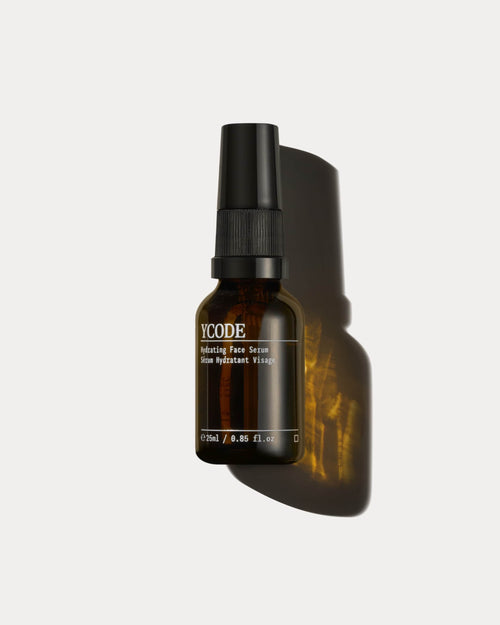
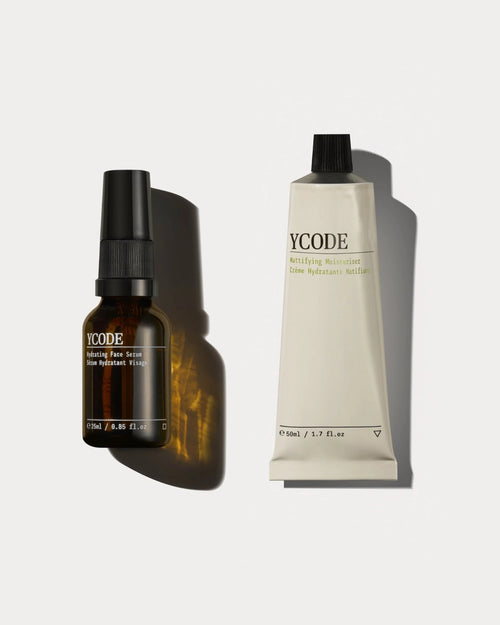
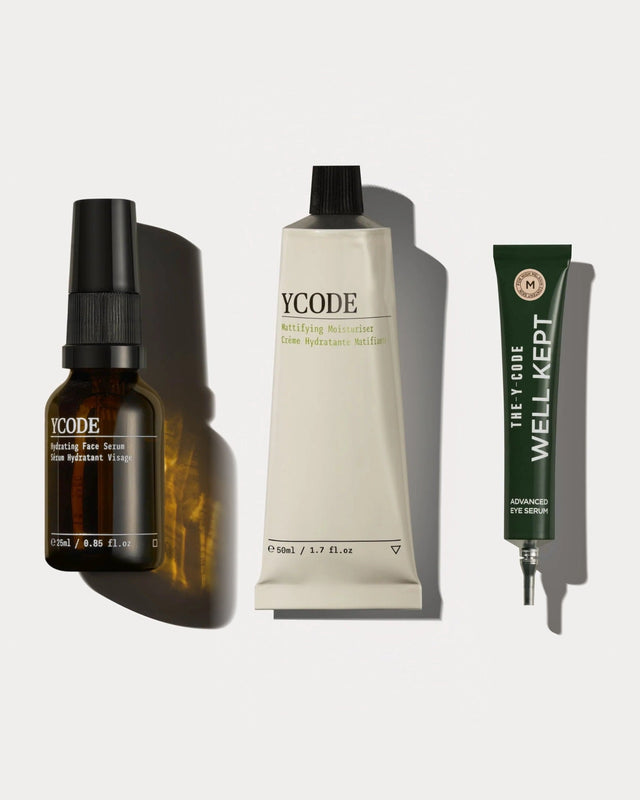
Mattifying Moisturiser is the second step of a routine that takes under two minutes, after Hydrating Face Serum and before Advanced Eye Serum.
For the method, read how to apply Mattifying Moisturiser. For the design brief behind the formula, read why men's skin needs a moisturiser built differently. For the first deeper checkpoint, continue to what has changed after 15 days.
This is the part of the work I am proudest of and the part nobody sees. Every line above is either a measured result or an honest note about where the measuring stops.
Freddie Sheridan
Founder
What is Chlorella vulgaris?
What does biologically intelligent skincare mean?
Does the Chlorella active respond differently when my circumstances change?
Does scanning mean there is a sensor in the product?
What makes the moisturiser matte immediately?
Why include both Chlorella and a peptide?
Are inulin and fructose exfoliants?
Do the ingredient studies apply to the finished moisturiser?
Was the Chlorella research done on men?
- Martinez-Ruiz M, Martinez-Gonzalez CA, Kim DH, et al. Microalgae Bioactive Compounds to Topical Applications Products: A Review. Molecules. 2022;27(11):3512. Source
- Mourelle ML, Gomez CP, Legido JL. The Potential Use of Marine Microalgae and Cyanobacteria in Cosmetics and Thalassotherapy. Cosmetics. 2017;4(4):46. Source
- Supplier dossier and efficacy portfolio for the Chlorella vulgaris material used in the formula. Double-blind split-face study, ten volunteers aged 40 to 55, twice daily against placebo, with corneometer measurement at day seven and Sebumeter and colorimeter measurements at day 14.
- Shih MF, Cherng JY. Protective effects of Chlorella-derived peptide against UVC-induced cytotoxicity through inhibition of caspase-3 activity and reduction of the expression of phosphorylated FADD and cleaved PARP-1 in skin fibroblasts. Molecules. 2012;17(8):9116-9128. In vitro; UVC, which is not present in sunlight. Source
- Chen CL, Liou SF, Chen SJ, Shih MF. Protective effects of Chlorella-derived peptide on UVB-induced production of MMP-1 and degradation of procollagen genes in human skin fibroblasts. Regulatory Toxicology and Pharmacology. 2011;60(1):112-119. In vitro; cited for context only, as we have not been able to read the full text. Source
- YCODE Mattifying Moisturiser independent consumer self-assessment, ADSL 2025-0057. Finished product, 53 men aged 18 to 50, morning and evening, assessed after first use and at four weeks. Participant self-assessment, reported as a complementary measure rather than instrumental efficacy data.
- Pinto JR, Monteiro e Silva SA, Leonardi GR. Effects of 1,3-propanediol associated, or not, with butylene glycol and/or glycerol on skin hydration and skin barrier function. International Journal of Cosmetic Science. 2024;46(1):85-95. Conducted in 30 healthy female subjects. Source
- Rajkumar J, Chandan N, Lio P, Shi V. The Skin Barrier and Moisturization: Function, Disruption, and Mechanisms of Repair. Skin Pharmacology and Physiology. 2023;36(4):174-185. Source
- Supplier technical dossier and microbiome research for the chicory-derived inulin and fructo-oligosaccharide material, including early microbial interaction modelling and a 28-day metagenomic assessment.
- Zeng M, Li Y, Cheng J, Wang J, Liu Q. Prebiotic Oligosaccharides in Skin Health: Benefits, Mechanisms, and Cosmetic Applications. Antioxidants. 2025;14(6):754. Evidence base largely in vitro. Source
- Hong KB, Hong YH, Jung EY, Jo K, Suh HJ. Changes in the Diversity of Human Skin Microbiota to Cosmetic Serum Containing Prebiotics: Results from a Randomized Controlled Trial. Journal of Personalized Medicine. 2020;10(3):91. Randomised, double-blind, 60 women, eight weeks; galacto-oligosaccharides, not inulin or FOS. Source
- Afzal L, Dulai AS, Khan ZH, et al. Open-Label, Prospective Study of a Prebiotic Gel Cream on Its Efficacy of Mild to Moderate Acne Management and Effects on the Functional Skin Microbiome. Journal of Cosmetic Dermatology. 2025;24(10):e70138. Open-label, uncontrolled and sponsor-authored. Source
- Errante F, Ledwon P, Latajka R, Rovero P, Papini AM. Cosmeceutical Peptides in the Framework of Sustainable Wellness Economy. Frontiers in Chemistry. 2020;8:572923. Source
- Schagen SK. Topical Peptide Treatments with Effective Anti-Aging Results. Cosmetics. 2017;4(2):16. Source
- Cauchard JH, Berton A, Godeau G, Hornebeck W, Bellon G. Activation of latent transforming growth factor beta 1 and inhibition of matrix metalloprotease activity by a thrombospondin-like tripeptide linked to elaidic acid. Biochemical Pharmacology. 2004;67(11):2013-2022. Mechanism work on an elaidic, not palmitoyl, tripeptide. Source
- Supplier technical and clinical documentation for palmitoyl tripeptide-5, including a controlled 84-day study of a cream containing the peptide with skin-surface relief assessed by PRIMOS.
- Robinson LR, Fitzgerald NC, Doughty DG, Dawes NC, Berge CA, Bissett DL. Topical palmitoyl pentapeptide provides improvement in photoaged human facial skin. International Journal of Cosmetic Science. 2005;27(3):155-160. 93 women, 12 weeks, split-face, placebo-controlled; wrinkle appearance, not collagen. Source
- Jones RR, Castelletto V, Connon CJ, Hamley IW. Collagen Stimulating Effect of Peptide Amphiphile C16-KTTKS on Human Fibroblasts. Molecular Pharmaceutics. 2013;10(3):1063-1069. In vitro only. Source

I started YCODE because most skincare was never designed for men’s skin. What I write here is what the formulators taught me, and what the trials actually found.
Continue reading
VIEW ALL →
Stress and poor sleep have a way of becoming visible. The eyes look heavier....
Your skin can notice the change of season before you reach for a coat....
Three formulas focus on the major concerns men tend to see across the face...












































































